Introduction
In the construction of modern infrastructure, only a perfectly compacted foundation layer can ensure its durability and safety. Choosing the right road roller, from a precision pneumatic roller to a heavy-duty vibratory roller, is key to balancing cost, time, and quality. This comprehensive guide covers equipment types, technical principles, and cost considerations. This article provides an in-depth technical analysis of XCMG’s XS series rollers, aiming to offer practical and professional references for your engineering projects.
The Compaction Toolkit: Understanding the Different Types of Road Rollers
Choosing a road roller is not about finding the most powerful machine, but about finding the “most suitable” model for a specific material and project phase. Road rollers are mainly classified according to their compaction mechanism and drum configuration. A thorough understanding of this is a prerequisite for selecting the appropriate equipment.
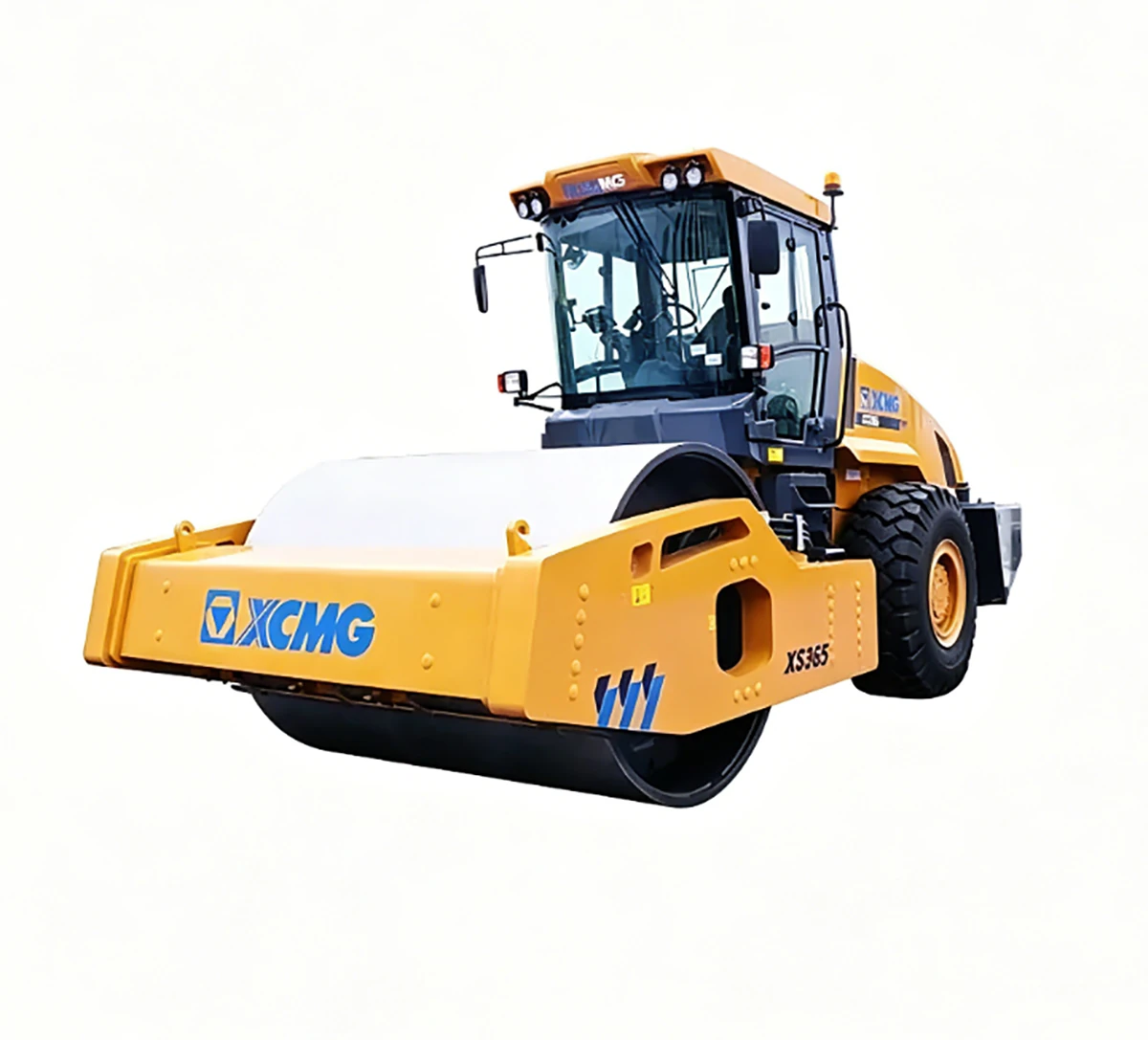
- Vibratory roller (single steel drum): This is the main machine for deep compaction of non-cohesive soil, gravel and rock fill. Taking XCMG’s models as an example, these machines are the preferred choice for constructing stable roadbeds, embankments, and the core of earth-rock dams. According to G. R. Komba’s book “Compaction of Soil and Granular Materials” (1999), vibration compaction technology is most effective for compacting granular materials because the rearrangement of particles is key to achieving effective compaction in such materials.
- Static Roller: Relying solely on the weight of the machine (often increased with ballast), these rollers apply pressure through pure mass. This category includes smooth-wheeled rollers, as well as padfoot and sheepfoot rollers used for cohesive soils. They are typically employed where vibration is prohibited due to nearby structures or for thin-layer compaction of certain materials.
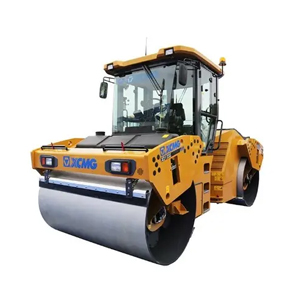
- Double-drum roller: This model is equipped with two vibratory drums arranged in a straight line and is the industry standard equipment for compacting asphalt pavement. Whether it’s the bonding layer or the surface layer, it can provide excellent compaction strength while ensuring that the asphalt layer surface achieves a smooth and dense compaction effect. In addition, its unique structural configuration gives it extremely high maneuverability.
- XCMG Pneumatic Road Roller: Distinct from steel-drum rollers, a XCMG pneumatic road roller utilizes multiple rows of inflatable rubber tires. Its compaction action is a combination of static pressure and a “kneading” effect as the flexible tires mold to the surface. This makes it exceptionally effective for the final sealing of asphalt mats, as it closes surface voids without fracturing aggregate, and for compacting sensitive or mixed materials where a kneading action is beneficial.
Technical Deep Dive: The XCMG XS Series Heavy-Duty Vibratory Roller
For projects that require extremely high standards in terms of scale, compaction depth, and material handling complexity, heavy-duty single-drum vibratory rollers are often the preferred compaction equipment. The XCMG XS series is an excellent product of this type, specially designed for large-scale projects such as hydropower dams, port reclamation, and mining infrastructure construction. The following section provides a comparative analysis of the technical performance of key models in this series, based on the specifications released by the road roller manufacturer.
| Model | Operating Weight (kg) | Maximum Excitation force / Excitation Force (kN) | Optimal Application Scenario | Key Differentiating Feature |
| XS265 | 26,000 | 405 | Large road subgrades, medium dam cores, industrial platform foundations. High mobility and efficiency for large-area projects. | High mobility and efficiency for large-area projects. |
| XS335 | 33,000 | 520 | Large earth-fill dams, port and airport earthworks, autonomous-ready operations. Ideal balance of power and versatility for major civil works. | Ideal balance of power and versatility for major civil works. |
| XS365 | 36,000 | 580 | Heavy rock fill, high embankments, and major reclamation projects. High excitation force for challenging granular materials. | High excitation force for challenging granular materials. |
| XS395 | 39,000 | 720 | Extreme applications: high rock-fill dams, deep-layer land reclamation, mining haul road construction. The series flagship, offering the highest compaction energy in its class. | The series flagship, offering the highest compaction energy in its class. |
Spotlight: The XCMG XS395 “The Density Master”
The XS395 is engineered as a benchmark machine in the 39-ton class, designed to tackle the most demanding compaction challenges.
- Performance and Powertrain: The XS395 is equipped with a 276 kW (370 hp) diesel engine capable of generating a class-leading excitation force of 720 kN. Powered by this immense force, the machine can efficiently achieve specified compaction requirements—such as reaching 98% of Modified Proctor density—even within well-graded rock fill layers exceeding 1.5 meters in thickness. Compared to less powerful models, it typically requires fewer passes to complete the job. The ultimate result is a significant reduction in the time required for compaction operations when handling large-scale earth-filling projects.
- Durability Engineering: The drum is fabricated from NM500 high-strength, abrasion-resistant steel, designed to withstand the extreme wear from rock fill. Critical components are designed for a B10 life target exceeding 20,000 hours under severe operating conditions. [Definition: B10 life is a reliability metric indicating the operating hours at which 10% of a population of components is expected to fail.]
- Operator-Centric & Smart Features: The cab is designed for all-day comfort and visibility, reducing operator fatigue. The machine is also equipped with a state-of-the-art control system featuring XCMG’s intelligent compaction assist technology, which can monitor parameters and optimize operation, and is platform-ready for future autonomous functionality in controlled environments.
Built for the Challenge: Engineering for Extreme Environments and Reliability
A vibratory roller on a mega-project cannot afford to be fragile. The XCMG XS series is designed with a systems-engineering approach to achieve a target operational reliability in excess of 99% in the world’s most challenging climates and sites.
- High-Temperature Operation (Up to 55°C / 131°F): In desert or tropical conditions, overheating is a primary failure mode. The XS series employs a multi-circuit, high-efficiency cooling system. This includes a large-capacity radiator and independent cooling circuits for the engine, hydraulic system, and torque converter. This design maintains hydraulic oil temperatures within a safe operating range, preventing viscosity breakdown and ensuring consistent performance.
- Low-Temperature Starting (Down to -30°C / -22°F): Arctic and high-altitude projects present the opposite challenge. The machines are equipped with a comprehensive pre-heating system for the engine coolant, engine oil, and fuel. This system allows the machine to reach optimal operating temperatures for reliable starting and immediate operation in freezing conditions, minimizing startup wear and downtime.
- Corrosion and Contamination Resistance: For coastal reclamation, mining, and dusty quarries, the XS series incorporates enhanced protection. This includes sealed and pressurized operator cabs with high-efficiency air filtration, critical electrical components with high IP (Ingress Protection) ratings against dust and water, and an advanced multi-layer paint and anti-corrosion treatment on the undercarriage and frame to resist saline and chemically aggressive environments.
The Economic Argument: Calculating the ROI of a High-Productivity Vibratory Roller
The true cost of a road roller should be measured by the cost per cubic meter of compaction, not just its purchase price. Large-tonnage, high-amplitude vibratory rollers like the XS365 and XS395 offer an attractive return on investment (ROI) by significantly reducing the number of compaction passes required to achieve the specified density.
Hypothetical Project Analysis: Dam Embankment Compaction
Scenario: Compacting a 1.0-meter (39-inch) lift of quarried rock fill to 98% Modified Proctor density across a 500,000 m³ embankment section.
Baseline (Standard 26-ton Roller): Achieving density may require 4 passes. Production rate: ~1,250 m³ per machine-hour (estimated).
Solution with XCMG XS395: Due to its superior 720 kN excitation force, the same density may be achieved in 2 passes. Production rate: ~2,500 m³ per machine-hour (estimated).
Economic Impact Analysis:
- Time Savings: The compaction phase could be completed in approximately half the time, potentially saving weeks or months on the critical path.
- Direct cost savings: Although the XS395 has a higher hourly fuel consumption, its fuel consumption per cubic meter is significantly lower. In addition, the reduction in labor hours and equipment rental time will result in considerable savings in the total project cost. For projects of this size, the direct cost savings in terms of machinery and labor alone can easily reach hundreds of thousands of dollars.
- Indirect Benefits: Early completion can reduce indirect costs, mitigate risks associated with weather conditions, and facilitate an earlier transition to subsequent project phases.
Compliance, Safety, and Global Standards
XCMG manufactures the XS series to comply with major international standards, ensuring they are suitable for global tenders and projects with stringent regulatory requirements.
- Emissions: Engines are certified to meet stringent global emissions standards, including U.S. EPA Tier 4 Final, EU Stage V, and China Non-Road Stage IV equivalent regulations, utilizing advanced after-treatment systems like SCR (Selective Catalytic Reduction).
- Safety: The machine is designed in accordance with international safety standards and has passed relevant tests, particularly ISO 3471:2020 for rollover protection structures (ROPS) and ISO 3449:2018 for falling object protection structures (FOPS), thus ensuring the safety of operators in harsh working environments.
- Quality System: The manufacturing process strictly follows international quality management standards (such as ISO 9001), and all parts are sourced from a global network of top-tier suppliers.
Frequently Asked Questions
Q 1: What is the Total Cost of Ownership (TCO) advantage of the XS395 over a standard 26-ton Vibratory Roller?
A: A: Although the initial capital expenditure of the XS395 is higher, it only requires two rolling strokes to achieve the specified density, while 26-ton equipment typically requires four to five strokes. For a 500,000 cubic meter rockfill project, this could save approximately $170,000 in fuel and labor costs and shorten the construction period by 25 days.
Q 2: What is the expected lifespan of the NM500 steel drum under high-frequency rock compaction?
A: The NM500 alloy is specifically engineered to withstand high-impact abrasive conditions. In standard rock-fill dam construction operations, its rollers maintain their structural integrity—without the need for surface refurbishment—even after exceeding 18,000 to 20,000 hours of service.
Q 3: What is the average lead time for an XS365 or XS395?
A: For standard configurations, we maintain stock on hand and can ship within 15 to 30 days. Custom discharge assemblies or specialized drums may require 45 to 60 days.
Q 4: Are the machines certified for government tenders?
A: Yes. Our equipment meets ISO 3471:2020 (ROPS) and ISO 3449:2018 (FOPS) standards. We provide all necessary documentation for customs and tender compliance.
Conclusion
The selection of compaction equipment is a critical decision, the impact of which extends throughout the entire lifecycle of an infrastructure project. XCMG’s tire rollers have excellent surface finishing capabilities, and their deep compaction technology is a solid foundation for project planning. When faced with challenging earthmoving tasks, XCMG’s XS series road rollers (especially its flagship model XS395) perform excellently. Our products can achieve excellent compaction density with very few compaction passes and exhibit robust reliability under extreme conditions. These devices can directly improve the economic benefits of a project and shorten the construction period. Fundamentally, investing in the right compaction technology is an investment in the success of the project itself.