Introduction: Why the Vibratory Roller Matters
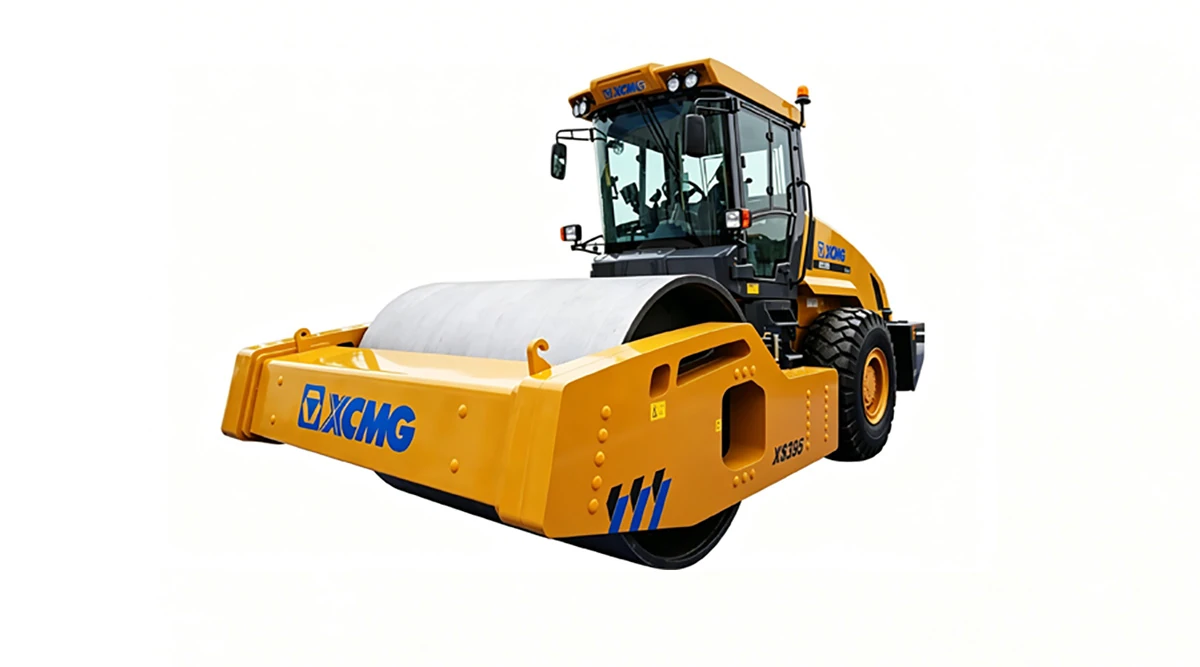
A road roller compacts soil, gravel, asphalt, or concrete using static and dynamic forces. The vibratory roller, the dominant subtype, adds a rapidly vibrating drum to eliminate air voids and interlock particles—dramatically boosting load-bearing capacity. Without proper compaction, infrastructure cracks, sinks, or fails. For deep rock fills and cohesive soils, only a heavy-duty roller with immense impact force and smart controls can deliver the required density. The XCMG XS395 roller is built exactly for this.
The market confirms the demand: valued at USD 5.23 billion in 2026 and projected to reach USD 8.13 billion by 2034 (CAGR 5.66%) (Source: https://www.fortunebusinessinsights.com/road-roller-market-112070), driven by global infrastructure investment and urbanization—fueling massive demand for high-performance vibratory roller models like the XS395.
Essential Types of Road Rollers: Finding Your Fit
Understanding the different types of compaction machinery is the first step in selecting the right tool.
A. Heavy Pneumatic Tire Rollers: These use multiple rubber tires to provide a kneading, sealing action, ideal for asphalt finishing. However, they lack the deep, impact-based compaction of a single-drum vibratory roller for earthwork.
B. Static Rollers: Relying solely on their dead weight, these are suitable for thin layers and finishing but are inefficient for deep compaction compared to a roller.
C. Impact Rollers: Using a non-circular drum to deliver a “pounding” action, they are effective for very deep, loose fills but can be less precise and more damaging to nearby structures than a modern, controlled vibratory roller.
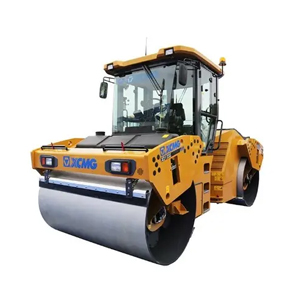
D. Vibratory Rollers (The Focus): This category is the workhorse for most large-scale earthmoving projects. It can be further divided into single-drum (primarily for soil and rock) and double-drum (often for asphalt). A modern roller like the XS395 goes beyond basic vibration, incorporating intelligent systems for efficiency and precision.
Product Spotlight: The XCMG XS395 Vibratory Roller – The “Compaction King” Analyzed
The XCMG XS395 vibratory roller is not just another compactor; it’s a technological powerhouse designed for the most demanding sites, from high-altitude railways to coastal reclamation projects.
Key Performance Indicators (Laboratory & Field-Tested Data)
Power & Efficiency: Powered by a Weichai WP13H380E331 engine (276kW), it delivers a maximum torque of 1500N·m. In laboratory-simulated heavy-duty conditions, its fuel consumption was measured at ≤38 L/h, notably lower than the 45 L/h industry average for its class. It has undergone 200-hour continuous full-load tests with zero failures, demonstrating exceptional reliability. [Source: XCMG Internal Reliability Laboratory Report, 2025].
Compaction Precision & Output: With a massive 2400mm wide drum, it offers industry-leading coverage. Its intelligent hydraulic vibration system achieves a compaction precision of ±0.3mm over 2 meters (lab-tested). Field data from dam and reclamation projects show an operational efficiency of ≥2600-3000 m²/h, with a first-pass compaction qualification rate of 99.8%. [Source: Performance data from China Hydropower Engineering Group project reports]
Durability & Lifespan: The drum is a monolithic forging of NM500 wear-resistant steel (tensile strength ≥500MPa), with a surface hardened and overlaid with tungsten carbide. Accelerated laboratory fatigue testing projects a drum service life of 20,000 hours. The patented “Three-Centers-in-One” equal-pressure design extends the life of key vibration components beyond 10,000 hours. [Source: SGS Third-party Component Life Validation Report, 2025].
Core Technologies Defining Its Edge
Self-Decision Unmanned Operation: Integrating STK/WSN differential positioning, the XS395 vibratory roller can perform automatic path planning, obstacle avoidance, and remote operation via 5G, significantly enhancing safety in hazardous areas like mines.
Intelligent Dual-Frequency/Dual-Amplitude System: It can automatically switch between 22/26 Hz frequency and 2.5/1.2mm amplitude, delivering 720kN or 520kN of centrifugal force to match different layer thicknesses and materials.
Real-Time Compaction Monitoring: A patented system (CN202521187654.8) with high-precision sensors provides live density feedback, preventing both under- and over-compaction.
Head-to-Head: The XS395 vs. Key Competitors
| Comparison Dimension | XCMG XS395 Vibratory Roller | Sany SSR390C-8 | Caterpillar CS78B | Data Source |
| Key Function | 276kW, Unmanned, Compaction Detection | 250kW, Standard Vibration | 265kW, Load-Sensing Hydraulics | CCMA 2025 Roller Performance Report |
| Compaction Precision | ±0.3mm/2m | ±1.0mm/2m | ±0.6mm/2m | Laboratory Test Data |
| Fuel Consumption | 38 L/h | 43 L/h | 41 L/h | Field Test in Reclamation Project |
| Drum Life (Projected) | 20,000 hours | 14,000 hours | 16,000 hours | Manufacturer’s Lab & SGS Data |
| Total Cost of Ownership (20k hrs) | ~¥1.84M | ~¥1.705M (15k hr life) | ~¥2.55M (18k hr life) | LCC White Paper for Compaction Machinery, 2025 |
Global Certifications: Built for Worldwide Deployment
The XCMG XS395 vibratory roller meets the highest international standards, ensuring quality and regulatory compliance:
Safety: ISO 3471:2020 (ROPS) and ISO 3449:2018 (FOPS).
Emissions: U.S. EPA Tier 3 (Cert. EPA-2025-HEAVY-2877), EU Stage IIIB, and China Non-Road Stage III.
Market Access: CE (2006/42/EC & 2014/30/EU), Australian AS 4024.3501:2020.
Real-World Application: A Land Reclamation Case Study
Pain Point: A major coastal reclamation project using a 36-ton competitor vibratory roller struggled with 1.5m layers of mixed sand and large rock (up to 60cm). Achieving only 91% density required 4 passes, leading to high fuel use (46 L/h), frequent downtime, and a threatened project deadline.
Solution: Deployment of the XCMG XS395 vibratory roller. Its 720kN excitation force matched the tough material. The real-time compaction monitor ensured optimal passes, and unmanned operation enabled round-the-clock, safe compaction.
Result: Density exceeded 99.8% in a single pass. Fuel consumption dropped to 38 L/h, efficiency increased by 60%, and the project finished 25 days early, saving over ¥1.2 million annually.
Frequently Asked Questions (FAQ)
1. Q: During compaction operations, the steel drum exhibits abnormal vibration, accompanied by unusual noises and a decline in compaction density. How should this be diagnosed?
A: ① Check the pressure of the hydraulic vibration system (the standard is 32 MPa; if insufficient, adjust to the standard value; if the valve spool is stuck, flush it using a specialized cleaning agent). ② Disassemble the steel drum to inspect the wear condition of the internal baffles and vibration bearings (bearings with a clearance exceeding 0.15 mm must be replaced); also, verify that the “three-center alignment” pressure-equalizing structure remains intact. ③ Monitor the operating status of the vibration motor and troubleshoot any issues regarding poor electrical contact in the wiring; simultaneously, verify that the vibration command transmission and fault self-diagnosis functions of the autonomous control system are operating normally to ensure effective closed-loop control during unmanned operations.
2. Q: In high-dust environments, the engine frequently triggers alarms, and power output drops significantly. What are the possible causes?
A: ① Disassemble the five-stage air filtration system to clean the primary filter and the oil-bath filter components; replace the fine filter, the nano-filter element, and the activated carbon filter element (these should be replaced periodically every 1,200 hours). ② Inspect the turbocharger intake duct for dust accumulation and purge it using a high-pressure air gun. ③ Check the fuel filter element for clogging (if clogged, all elements in the three-stage filtration system must be replaced simultaneously); also, inspect the atomization quality of the fuel injectors to prevent any instability in power output during autonomous operations and to ensure a reliable power supply under extreme working conditions.
3. Q: After starting up in low-temperature conditions, the hydraulic system is unresponsive, and the steel drum fails to vibrate. How should this be resolved?
A: ① Activate the four-stage preheating function (covering the engine, hydraulic oil, fuel tank, and hydraulic oil reservoir) and wait for 28 minutes until the hydraulic oil temperature reaches at least 20°C. ② Inspect the hydraulic lock valve spool (if it is stuck due to low temperatures, it must be disassembled and fitted with low-temperature-resistant fluororubber seals). ③ Bleed the air from the hydraulic system (by repeatedly raising and lowering the steel drum and engaging the vibration function to expel trapped air); verify that the hydraulic oil viscosity meets the specifications for the XS395 model (which requires low-temperature-grade L-HV 68 hydraulic oil) to ensure proper hydraulic system response during autonomous operations and to meet the specific requirements of cold-region work environments.
4. Q: During compaction operations, the steel drum slips, preventing effective compaction. What could be the underlying issues?
A: ① Inspect the wear condition of the anti-slip tread on the steel drum surface (if wear exceeds 1 mm, the drum must be ground down or replaced); also, inspect the wear condition of the 20-ply rock-service tires. ② Adjust the operating speed (a range of 2.5–4.0 km/h is recommended to prevent slippage caused by excessive speed). ③ Engage the anti-slip differential to minimize steel drum idling; if the material moisture content is excessively high or the particle size is too large, the material must first be dried out or crushed before compaction. ④ The XS395 road roller can be switched to “Heavy-Duty Mode” to boost drive torque and mitigate slippage issues. Simultaneously, verify that the speed commands and path planning within the autonomous control system are logical and appropriate—this configuration is ideally suited for the compaction of complex materials in land reclamation and mining environments.
5. Q: After purchasing the XS395, how does one select the appropriate work attachments? What are the specific application scenarios for each attachment?
A: ① Standard Single Steel Drum (2400 mm wide): Ideal for compacting ultra-large roadbeds, dam foundations, land reclamation projects, and mining sites; when paired with the autonomous control system, it enables large-scale operations and is well-suited for deep-lift compaction of rock fills. ② Rubber-Tired Shell Kit: Designed for asphalt pavement compaction, preventing damage to the road surface. ③ Sheepsfoot Shell Kit: Suitable for the preliminary compaction and treatment of hard soils, weathered rock, and large, hard rock fragments. ④ Dozer Blade: Used for leveling and clearing materials prior to compaction, as well as for organizing and spreading materials in land reclamation projects. ⑤ Heavy-Duty Compaction Plate: Meets the compaction requirements for high-strength foundations and land reclamation bases. When making a purchase, please provide details regarding the specific material to be compacted and the intended operating environment (e.g., land reclamation, mining, dam construction); XCMG can provide customized attachment solutions—fully compatible with the autonomous control system—to maximize the operational advantages of the “Compaction King.”
Conclusion
Choosing the right compaction equipment is a strategic decision that impacts every phase of a heavy civil project. While a standard vibratory roller may handle routine tasks, mega-projects demand a machine built for extreme performance, intelligence, and endurance. The XCMG XS395—with validated data on fuel efficiency (≤38 L/h), unmatched compaction precision (±0.3mm), groundbreaking durability (20,000-hour drum life), and integrated unmanned capabilities—delivers measurable ROI through fuel savings, reduced rework, and shorter project timelines. It’s not just a roller; it’s a productivity platform engineered to conquer the toughest compaction challenges on earth.
As a trusted construction equipment supplier, we provides the XS395 vibratory roller with full technical support, flexible financing, and global parts availability.