Key Takeaways
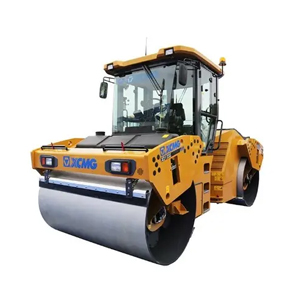
· The XCMG XS 83 is an 8-ton vibratory road roller engineered for confined-area road roller construction, featuring a 1.8 m narrow body and dual-frequency compaction.
· It delivers 18% lower fuel consumption (≤ 7.8 l/h) versus industry averages while achieving ≥ 95% compaction density, backed by ISO/CE certifications.
· It is specially designed for residential, municipal and landscaping projects.
What is the XCMG XS 83 roller?
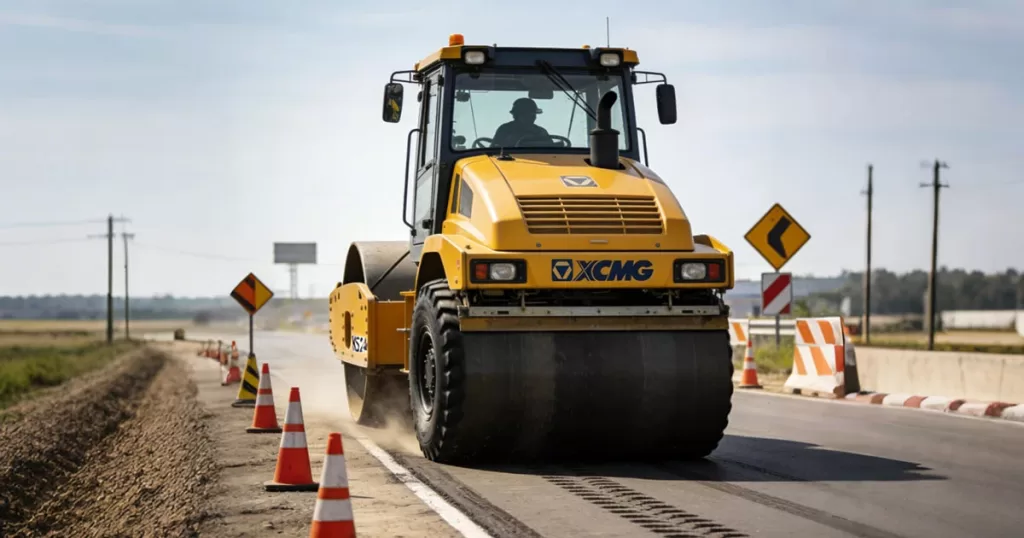
Roller, also known as a compactor or soil roller, is a key construction equipment, which is used to densify soil, gravel, asphalt and other materials in order to establish a stable foundation. The XCMG XS 83 road roller is a specific model within the 8-ton class of single-drum vibratory rollers. It is designed to solve a key B 2 B pain point: achieving high-standard compaction in spatially constrained project sites where larger, standard-sized rollers can not operate efficiently or access at all. This machine bridges the gap between manual compaction methods and oversized equipment, offering contractors a professional-grade solution for small-scale and confined-area road roller construction.
Why is XCMG XS 83 roller so important in road construction?
In the construction of micro-roller, the traditional small-sized roller often face prominent pain points: insufficient compaction strength leads to unqualified project acceptance, high oil consumption increases operating costs, and too large body size can not enter narrow spaces such as rural courtyards or small municipal driveways. If there is no special roller like XCMG XS 83, rural construction teams and small municipal departments will usually encounter problems such as construction delay, repeated compaction workloads and rising cost, and at the same time, they will face high risk of project rejection because of unqualified compaction quality.
The XCMG XS 83 road roller addresses these issues with multi-layered advantages, making it indispensable in micro road construction.
1. Guaranteed Compaction Quality (Core Performance Advantage)
It achieves a compaction degree of ≥ 95% for earth sub grades, fully meeting national and industry construction acceptance standards.This eliminates the risk of rework due to insufficient compaction, and ensures the structural stability of foundations and roads.
2. Reduced Operational Costs (Economic Advantage)
With a tested fuel consumption of ≤ 7.8 l/h, it is 18% more fuel-efficient than the industry average of 9.5 l/h for the same specification(Source:http://www.cncma.org) For teams with long-term daily operations, this translates to significant annual fuel savings, lowering the overall cost of road roller construction.
3. Enhance the construction adaptability (practical application advantage)
The compact, 1.8-meter-wide frame of the device is specially designed for navigation and operation in restricted areas that are common in rural areas, houses and landscaping projects. This includes easily entering and leaving the typical courtyard gates, crossing the narrow residential alley and working on small garden paths. Combined with a minimum turning radius of 4.2 meters, the construction efficiency is improved by 35% compared with the traditional small road rollers, especially in complex micro-construction scene.
Key Specifications
| Specification | Details |
| Working Weight | 8t (two-stage adjustable exciting force) |
| Static Linear Load | 320N/cm |
| Nominal Amplitude | 1.4mm/0.7mm (dual-amplitude design) |
| Vibration Frequency | 26Hz/33Hz (dual-frequency adjustable) |
| Engine | Quanchai Q23-65C32, National III, 48kW (65hp), max torque 220N・m (1200-1600r/min) |
| Fuel Consumption | ≤7.8L/h (average of the same specification in the industry: 9.5L/h) |
| Minimum Turning Radius | 4.2m |
| Body Width | 1.8m |
| Steel Wheel Service Life | 10000 hours (Q235B alloy steel + surface hardening treatment ,hardness HRC 40-45) |
Common Applications
1. Residential Plot & Homestead Renovation ( 45% of applications)
This is the dominant use case. Contractors use it for compacting foundations for self-built homes, hardening driveways and courtyards, and preparing ground for agricultural buildings. Its ability to pass the standard gates is priceless.
2. Small-Scale Municipal & Utility Maintenance ( 35% of applications)
City maintenance crews, utility companies, and community managers utilize it for backfilling and compacting trenches after pipe or cable laying, repairing sidewalks, and maintaining park pathways with minimal public disruption.
3. Landscaping & Mini-Project Support ( 20% of applications)
Landscaping firms, school grounds teams, and boutique construction crews use the road roller for creating stable bases for garden paths, patios, sports courts, and eco-tourism lodge grounds, where precision and access are paramount.
Standards, Certification and Compliance
In order to operate globally and ensure safety, XCMG XS 83 road roller meets major international standards. According to the mechanical directive (2006/42/EC) and EMC directive (2014/30/EU), it has a complete CE mark, which proves that it meets the requirements of the European market. Its safety structures meet ISO 3471: 2020 (ROPS) and ISO 3449: 2018 (FOPS) for operator protection.Furthermore, its performance testing aligns with ISO 14268: 2017, the international standard for roller performance evaluation methods.
These certifications are more than badges; They show that the roller construction conforms to globally recognized safety and quality agreement.
Frequently Asked Questions
Q 1: The vibration system stopped suddenly during operation, but it still doesn’t work after restart. How to eliminate the fault?
A: ①Check the state of the eccentric block clutch (rotate the steel wheel manually after stopping; If it’s stuck, remove and remove the foreign matter, and readjust the clearance of the eccentric block to 0.1-0.2 mm); ②check the vibration motor pressure (20 MPa standard; If it is insufficient, check the output pressure of the hydraulic pump or replace the motor seals); ③check the power supply of electromagnetic control valve (standard 24 v); If the voltage is abnormal, repair the circuit or replace the electromagnetic valve.
Q 2: When working in a narrow field, it is difficult for the road roller body to turn and the tires are worn too fast. What possible reasons are there?
A: ①Check the lubricating oil level of the drive axle (GL-5 85 w/90 gear oil is used; If the oil level is not enough, please add more); ②check the anti-skid mechanism of the differential (if it is locked too tightly, adjust the mechanical locking gap to 0.3-0.4 mm); ③check the tire pressure (standard 0.7-0.9 MPa; Excessive pressure will increase steering resistance, so the tire pressure should be calibrated).
Q 3: In the low temperature environment, the engine of machine starts normally, but the vibration system reacts slowly. How to deal with it?
A: ①Start the vibration system for preheating (wait for 8-10 minutes to ensure that the temperature of hydraulic oil rises above 10℃); ②check the viscosity of hydraulic oil (if it solidifies due to low temperature, replace the low temperature L-HV 46 hydraulic oil); ③clean the spool of electromagnetic control valve (low temperature may cause sludge condensation and blockage, so wash and dry it with kerosene).
Q 4: After compaction, the foundation of the residential land appears local settlement, indicating that the compaction is not enough. What problems might occur?
A: ①Adjust the working speed (reduce it to 1.5-2 km/h and extend the local compaction time); ②switch to low frequency and high amplitude mode (26 Hz/1.4 mm) to increase the compaction depth; ③check the water content of the basic material (the optimal water content is 10% -14%; If it is too low, spray water; If too high, let it dry).
Q 5: The hydraulic system leaked seriously during operation, and the road roller also suffered from insufficient power. How to solve this problem?
A: ①Check the pipe joints (if it is loose, tighten it, replace aging seals, and strengthen the seal with PTFE tape); ②check the wear of the hydraulic pump (if the gear clearance exceeds 0.15 mm, you need to replace the pump body); ③clean the hydraulic radiator (if the oil temperature is too high due to too much dust, clean it with a low-pressure water gun to ensure that the oil temperature is kept below 60℃).
Summary
Choosing the right equipment is the basis for the profitability and success of the roller construction projects, especially in the environment with limited space. The XCMG XS 83 road roller presents a compelling, data-backed solution engineered for this specific challenge. Its unique narrow body, proven fuel efficiency, strong compaction performance in line with international standards and its insistence on global certifications make it a strategically reasonable investment. For contractors and organizations focused on the residential, municipal and professional landscape fields, XS 83 provides a way to complete the projects according to specification and on time, and improves the operation economy, which can be proved by its calculated strong return on investment.