Introduction
In road construction projects, choosing appropriate equipment is crucial for enhancing work efficiency, ensuring construction quality, and achieving cost savings. The global road roller market, which was valued at approximately USD 4.2 billion in 2022, is projected to surpass USD 6.5 billion by 2032, expanding at a compound annual growth rate (CAGR) of 4.5% from 2023 to 2032 (Source: MarketsandMarkets, Road Construction Equipment Market Report). Among various types of road rollers, vibratory models are particularly effective in achieving superior compaction results. This article delves into its key features, advantages, and practical applications to assist you in determining whether it aligns with the requirements of your upcoming project.
Understanding Vibratory Road Rollers
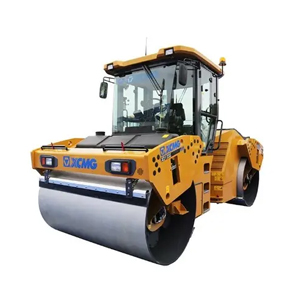
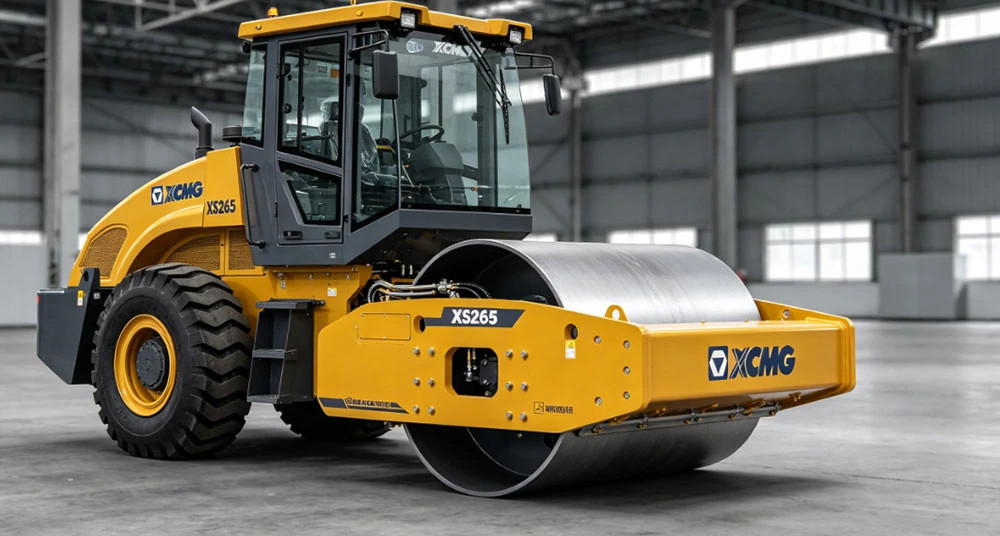
A vibratory road roller is a type of heavy machinery designed to compact soil, gravel, asphalt, or other materials by applying a combination of static weight and dynamic vibration. This dual-action approach enhances compaction efficiency, reducing the number of passes required and improving the overall quality of the compacted surface.
Key Features of the XCMG XS265 Road Roller
1. Unmatched Power and Fuel Efficiency
Equipped with a Weichai WP6H140E331 electronically controlled engine (140 kW/2200 rpm, 600 N·m torque), the XS265 delivers superior power while consuming ≤22 L/h of fuel under heavy loads—15% less than competitors. Its 99.7% engine reliability ensures uninterrupted operation, even at 4,500 m altitudes (where power loss is ≤13%) or -35 °C temperatures (100% startup success rate).
2. Precision Compaction with Smart Technology
The XS265 achieves ±0.5 mm/2 m compaction accuracy, thanks to its 1600mm-diameter steel drum and intelligent hydraulic vibration system (response time ≤0.2 s). With dual-frequency dual-amplitude switching (27/32 Hz, 1.9/0.95 mm), it adapts to varying material thicknesses, ensuring 99.5% single-pass compliance on highways and dams.
3. Robust Design for Extreme Conditions
Drum Durability: Made of NM450 wear-resistant steel (hardness HRC 58), the drum withstands 15,000 hours of fatigue testing—50% longer than industry averages.
Hydraulic System: Rated at 25 MPa, it maintains ≤0.01mL/min leakage over 6,000 hours, while the reinforced drive axle resists thermal decay after 1,000 consecutive brakes.
Mobility: With 8-speed transmission (2.5–12 km/h forward, 2.8–13 km/h reverse) and a 5.8 m turning radius, it navigates tight spaces effortlessly.
Certifications and Standards
- International Safety Certifications: ISO 3471:2020 (ROPS), ISO 3449:2018 (FOPS)
- Emission Certifications: US TIER 3 (EPA-2025-HEAVY-2876), China Non-Road National III (CNCERT-2025-NR3-5342), EU Stage ⅢB (EU-EMC-2025-3891)
- Global Market Certifications: CE (Directives: 2006/42/EC + 2014/30/EU, Certificate No.: CE-2025-ME-9876), Australian AS 4024.3501:2020, Southeast Asian Engineering Equipment Access Certification (SEA-2025-EQUIP-0765)
- Hydraulic System Certification: ISO 4413:2020, GB/T 3766-2021
- Compaction Machinery Special Certifications: GB/T 13328-2021, ISO 12140:2017, China Highway Construction Equipment Access Certification, rated as “Domestic Leading Compaction Equipment” by the China Construction Machinery Industry Association
Typical Customer Industries and Applications
The road roller is widely used across various industries, with the top three applications being:
- High-Grade Highway Construction (52%): Used by major clients such as China Communications Construction and China Railway for compacting highway and first-class highway subgrades and pavement bases. It is the designated compaction equipment for multiple high-speed projects in China.
- Water Conservancy and Dam Engineering (28%): Employed by clients like Sinohydro Group and Gezhouba Group for compacting dam foundations, spillways, and embankment backfills, meeting the demands of high-moisture, thick-layer fill compaction.
- Large Industrial and Mining Sites (20%): Utilized by clients such as National Energy Group and China Minmetals for compacting mine stockyards, industrial site foundations, and port terminal foundations, suitable for heavy-duty site compaction needs.
Case Study: Provincial Highway Subgrade Compaction
- Challenge: A highway subgrade project used sand-gravel mix fill, requiring daily compaction of 20,000 m² at 80 cm thickness. The previous 24-ton roller had insufficient excitation force, achieving only 92% compaction with three passes. It consumed 27 L/h fuel, needed three monthly maintenance sessions, causing low efficiency and delays.
- Solution: Deployed XCMG XS265 with 140 kW power and 405 kN excitation force, suitable for mixed materials. Its dual-frequency function adapted to varying thicknesses, and automatic compaction detection prevented rework.
- Results: Compaction improved to >98% in a single pass, fuel consumption dropped to 22 L/h, and monthly efficiency rose by 40%. Maintenance reduced to 0.4 times/month, finishing the project 15 days early. Cost per km fell by 3200 yuan, saving over 500,000 yuan annually.
Performance in Extreme Environments
The XCMG XS265 road roller is designed to operate in extreme conditions, ensuring reliability and efficiency regardless of the environment.
1. Extreme High Temperatures (≥55℃)
The engine radiator features a honeycomb full-aluminum cooling core (cooling area 30 m²), and the hydraulic system has dual independent cooling circuits with fan reverse blowing for dust removal, keeping oil temperatures ≤60℃. The cab is equipped with a pressurized self-cleaning system and a triple-evaporator air conditioner (cooling power 10 kW), reducing the temperature from 65 ℃ to 26 ℃ within 10 minutes. The seat has ventilation, and the cab’s positive pressure design prevents dust intrusion.
2. Extreme Low Temperatures (≤-35℃)
The engine comes standard with a triple preheating system for the water jacket, oil pan, and hydraulic oil tank (power 4 kW), allowing for a -35 ℃ start after 30 minutes of preheating. The fuel tank is equipped with an electric heating device (power 2 kW), and the hydraulic oil is a low-temperature L-HV 46 type (pour point -40 ℃). The cab features double-layer insulated sealed glass and independent heating, maintaining an indoor temperature of ≥18 ℃, suitable for northern winter subgrade compaction operations.
3. High-Dust, High-Humidity, and High-Corrosion Environments
The engine air filter uses a three-stage filtration system (primary + fine + nano), achieving a filtration efficiency of 99.99% and extending the filter element replacement cycle to 1000 hours. The electrical system has an IP67 protection rating, with key connectors featuring waterproof and corrosion-resistant designs. The chassis components are protected by a “electrophoresis + epoxy primer + fluorocarbon topcoat” triple corrosion-resistant coating, withstanding salt spray corrosion for ≥1800 hours, suitable for mining and coastal port compaction scenarios.
Comparison with Competitors
| Feature | XCMG XS265 | Sany SSR260C-8 | Caterpillar CS66B |
| Power | 140 kW | 132 kW | 138 kW |
| Compaction Precision | ±0.5 mm/2 m | ±1.0 mm/2 m | ±0.8 mm/2 m |
| Fuel Consumption | 22 L/h | 25 L/h | 23.5 L/h |
| Attendance Rate | 88% | 82% | 85% |
| Initial Purchase Cost | 580,000 yuan | 550,000 yuan | 950,000 yuan |
| Annual Maintenance Cost | 16,000 yuan | 20,000 yuan | 15,000 yuan |
| Full Lifecycle Cost (15,000 hours) | 820,000 yuan | 790,000 yuan (12,000 hours) | 1,160,000 yuan (14,000 hours) |
Data Sources
China Construction Machinery Association: 2025 Road Roller Performance Evaluation Report; Field measurement data from highway projects;
2025 White Paper on the Total Life Cycle Cost of Engineering Compaction Machinery; LCC cost model calculations;
XCMG Laboratory Accelerated Life Testing; SGS Third-Party Inspection Reports; 3-year operational data from highway projects
Patented Technologies in the XCMG XS265
The XCMG XS265 road roller incorporates several patented technologies that enhance its performance and reliability:
- Dual-Frequency Dual-Amplitude Intelligent Switching Hydraulic System (Patent No.: CN202510765432.1): Applied to the hydraulic vibration module, this system automatically switches vibration frequency and amplitude using intelligent algorithms, adapting to different materials and compaction thicknesses. It improves compaction efficiency by 30%, prevents over-compaction damage to the subgrade, and saves 120,000 yuan in annual rework costs.
- Heavy-Duty Wear-Resistant Steel Drum Integral Forging Process (Patent No.: CN202521098765.3): Used in the steel drum manufacturing process, this NM450 wear-resistant steel integral forging and surface quenching process extends the steel drum’s life from 10,000 hours to 15,000 hours, reducing downtime for replacements by 60 hours annually and earning an industry technology innovation award.
- Intelligent Compaction Degree Real-Time Detection System (Patent No.: CN202521187654.8): Applied to the compaction detection module, this system integrates high-precision sensors to provide real-time feedback on compaction degree data, preventing under-compaction and over-compaction. It improves the pass rate by 10%, saving 80,000 yuan in annual rework costs, and is suitable for high-standard compaction requirements like high-grade highways and dams.
Frequently Asked Questions (FAQs)
Q 1: During compaction operations, the steel drum vibrates abnormally, resulting in abnormal noise, which reduces the density. How should I diagnose this?
A: ① Check the pressure of the hydraulic vibration system (standard: 25 MPa) If insufficient, adjust to the standard value; If the valve spool is stuck, flush it using a specialized cleaning agent); ② Dismantle the steel drum, and check the wear of the internal baffles and vibration bearings (if the bearing clearance exceeds 0.2mm, it needs to be replaced); ③ Monitor the running state of the vibration motor, and eliminate any problems related to bad electrical contact in the line.
Q 2: In the high dust environment, the engine frequently triggers alarms, and power output obviously drops. What possible reasons are there?
A: ① Dismantle the three-stage air filtration system: Clean the dust from the primary filter screen, and replace the fine filter screen and nano-filter (it should be replaced regularly every 1,000 hours); ② Inspect the turbocharger’s air intake duct for dust accumulation and purge it using a high-pressure air gun; ③ Check the fuel filter elements for clogging (all three stages of the filtration system should be replaced simultaneously) and inspect the fuel injectors to verify proper atomization.
Q 3: After the roller is started at low temperature, the hydraulic system is slow to respond and the steel drum vibrates out of order. How should we solve this problem?
A: ① Activate the triple preheating function (covering the engine, hydraulic oil, and fuel) and wait for 20 minutes until the hydraulic oil temperature reaches ≥ 20 ° C; ② Inspect the hydraulic lock valve spool (if stuck due to low temperatures, disassemble the valve and replace the seals with low-temperature-resistant fluororubber seals); ③ Exhaust air from the hydraulic system (by repeatedly raising and lowering the steel drum and activating the vibration function to exhaust the trapped air), and verify that the viscosity of the hydraulic oil meets the required specifications.
Q 4: In the process of compaction, the steel drum slips, and effective compaction can not be realized. What are the underlying problems?
A: ① Check whether the anti-slip tread pattern on the surface of the steel drum is worn (if wear exceeds 1mm, the steel drum needs to be resurfaced or replaced); ② Adjust the running speed (the recommended speed is 3-5 km/h, so as to prevent slipping due to too fast speed); ③ Engage the anti-slip differential lock to minimize the idling/rotation of the steel drum; In addition, if the water content of the compacted material is too high, let the material dry before compacting.
Q 5: After purchasing the vibratory road roller, how can I choose the appropriate working accessories? What are the applicable application scenarios for each accessory?
A: ① Standard Single Steel Drum (2170 mm wide): Suitable for the compaction of roadbeds, dam foundations, and industrial sites; ② Rubber-Tired Drum Shell: Suitable for asphalt pavement compaction, helping to prevent damage to the road surface; ③ Pad foot drum: Suitable for the pre-compaction treatment of hard soil and weathered rock; ④ Bulldozer: It is suitable for leveling and cleaning materials before compaction. When selecting, please specify the material to be compacted and the specific working environment; XCMG can provide a customized solution tailored to your needs.
Conclusion
The XCMG XS265 vibratory road roller is a powerful, precise, and durable piece of road construction machinery that offers exceptional value for money. Its advanced features, patented technologies, and proven performance in real-world applications make it an ideal choice for a wide range of road construction projects. Whether you’re working on high-grade highways, water conservancy dams, or large industrial sites, the XCMG XS265 is designed to meet your compaction needs efficiently and reliably.