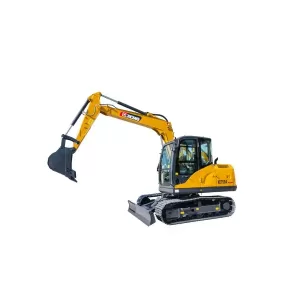
Loaders and skid steer loaders are two common pieces of construction machinery widely used in infrastructure construction, municipal maintenance, garden renovation and factory cleaning. Many contractors and equipment buyers confuse the two machines and often select the wrong model, resulting in low construction efficiency, uncompleted working tasks and increased operating costs.
Although both machines can complete shoveling, loading and ground leveling work, they have essential differences in structural design, operating performance, working strength and applicable scenarios. This article analyzes the core differences between ordinary loaders and skid steer loaders based on practical construction experience, and provides professional selection advice for engineering teams.
1. Differences in Structural Design & Steering Mode
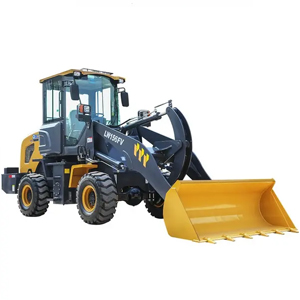
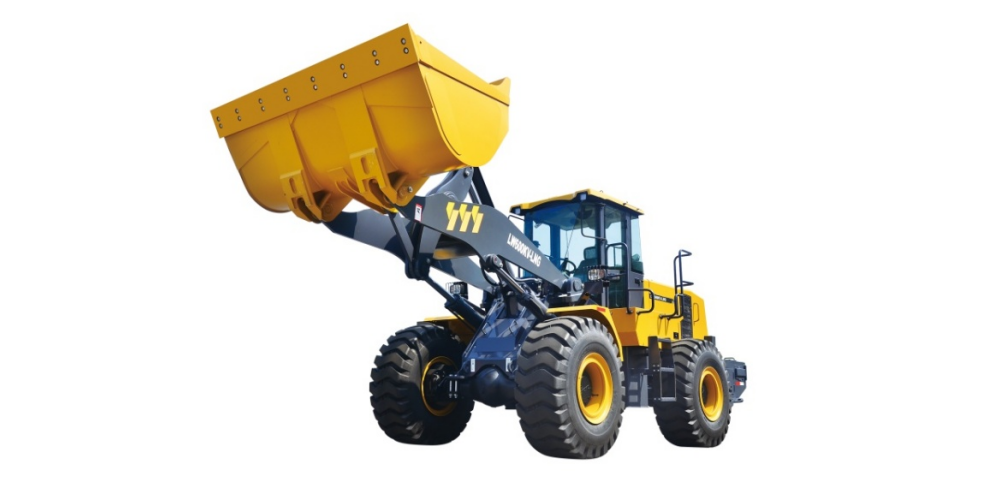
Ordinary loaders generally refer to wheel loaders, which adopt an articulated body and steering wheel control structure. They feature large body size, long wheelbase and heavy weight. The steering is realized by front wheel deflection, requiring a large turning space. With large bucket capacity and strong load-bearing structure, they are designed for heavy-load and high-throughput earthwork operations.
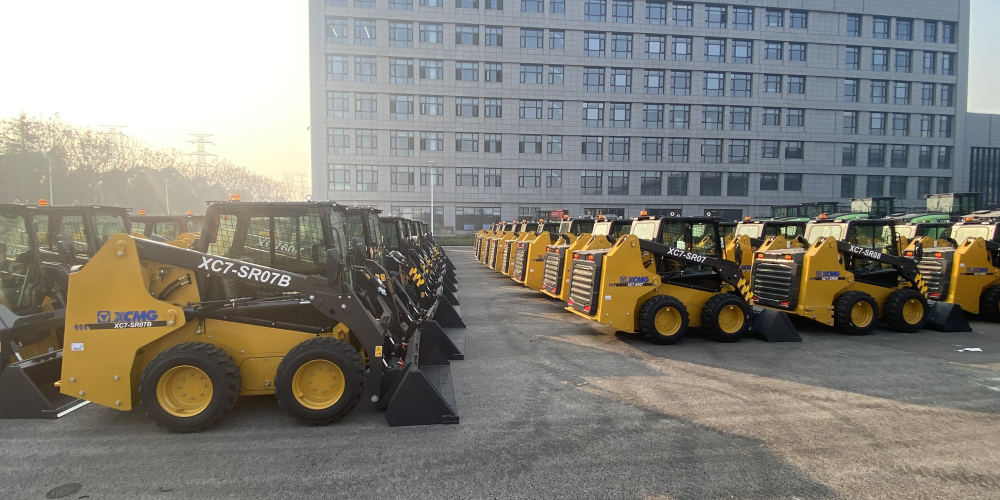
Skid steer loaders are compact multi-functional mini construction machines. Without articulated structure and traditional steering wheels, they achieve zero-radius turning through the speed difference between left and right wheels. The ultra-compact body and flexible steering system enable them to work in extremely narrow spaces where ordinary loaders cannot enter, which is their most essential structural advantage.
2. Operation Mode & Learning Difficulty
Wheel loaders require coordinated operation of the steering wheel, accelerator, brake, gear lever and working handle. The operation system is relatively complex, requiring professional operating experience and long-term practice for new operators. However, they provide a wide field of vision and stable operating state, suitable for long-term high-intensity construction.
Skid steer loaders adopt a simple dual-handle control system. All walking, lifting and shoveling actions are controlled by handles with stepless speed change. The operation logic is intuitive and easy to learn. New workers can master basic operations after short-term training. The machine supports precise micro-operation, which is more suitable for refined construction tasks.
3. Operating Performance & Functional Orientation
Wheel loaders focus on heavy-duty and high-efficiency earthwork. They are equipped with powerful power systems, large-capacity buckets and high-lifting booms, with strong traction and loading capacity. They excel in large-scale earthwork transportation, sand and stone loading, stockpile leveling and other high-volume operations, ensuring efficient and continuous construction. Their functional expansion is limited, and they are only suitable for basic loading and leveling work.
Skid steer loaders are positioned for multi-functional and diversified operations. Their basic shoveling and loading capacity is only suitable for small-volume material handling, unable to undertake heavy-load earthwork. The biggest advantage is the quick replacement of various attachments, including breakers, sweepers, grapples, snow plows and fork attachments. One machine can realize multiple functions such as crushing, cleaning, material grabbing and snow removal, meeting diverse construction needs.
4. Site Adaptability & Working Scenarios
Wheel loaders have a large turning radius and high requirements for working space. They are only applicable to open construction sites, such as large-scale foundation construction, sand and gravel yards, mine stockpiles and road base leveling projects. They perform stably on open and flat ground with strong bearing capacity, but cannot adapt to narrow and confined working environments.
Skid steer loaders are tailor-made for narrow and complex working spaces. They can flexibly operate in residential alleys, indoor renovation sites, factory warehouses, narrow municipal roads and dense garden areas. They are the preferred equipment for urban refined maintenance, old community reconstruction and small-scale pavement repair projects.
5. Mobility & Transfer Conditions
Wheel loaders have fast driving speed and stable chassis performance, suitable for long-term fixed-site construction. Due to their oversized body and weight, they cannot drive on public roads legally and need flatbed trailers for cross-region transportation, with high transfer costs and low flexibility for scattered projects.
Skid steer loaders are light in weight and easy to load and unload. Although their driving speed is low and road driving is not allowed, they can complete rapid turnover between multiple scattered construction points. They are very suitable for short-distance, multi-point and small-batch engineering operations.
6. Procurement & Operation Cost
Wheel loaders have high purchase prices, high fuel consumption and high maintenance costs. They are suitable for large engineering enterprises with long-term, high-intensity and large-volume construction demands, and can create high benefits through continuous heavy-load operation.
Skid steer loaders have low entry thresholds, economical fuel consumption and simple daily maintenance. The accessories are cheap and versatile. For small and medium-sized construction teams and individual contractors, they can replace multiple pieces of single-function equipment, greatly reducing comprehensive equipment investment and operating costs.
7. Professional Selection Guide
Choose a wheel loader if: your project is dominated by large-scale earthwork, sand and stone loading and heavy-load stockpile sorting; the construction site is open with large engineering volume and centralized construction period; you need continuous high-efficiency operation to increase daily construction output.
Choose a skid steer loader if: the working site is narrow and confined, such as indoor and urban road construction; the project types are diverse requiring multiple operation functions; the construction points are scattered with small single engineering volume; you need one machine for multiple uses to save equipment costs.
8. Conclusion
In summary, wheel loaders are professional heavy-duty equipment for large-scale open-pit earthwork projects, featuring high efficiency and strong loading capacity. Skid steer loaders are flexible multi-functional equipment for refined and narrow-space construction, with outstanding versatility and cost performance. Reasonable equipment selection according to actual site conditions and construction demands is the key to improving construction efficiency and reducing project costs.