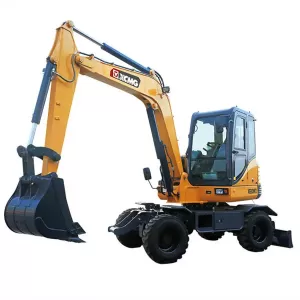
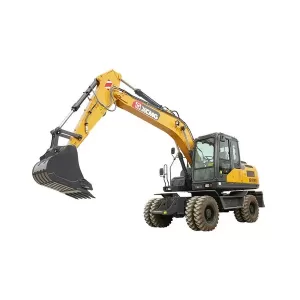
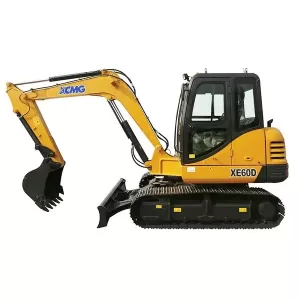
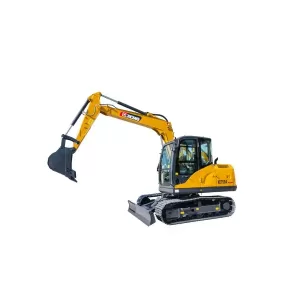
Skid steer loaders and backhoe loaders are two of the most widely used multi-functional small and medium-sized construction machinery. Both feature compact size and flexible operation, and are commonly applied in municipal construction, garden renovation, rural infrastructure, and factory cleaning. However, many construction practitioners cannot clearly distinguish the differences between skid steer loaders and backhoe loaders, which leads to incorrect equipment selection, low operating efficiency and increased construction costs.
This article elaborates on the core differences between skid steer loaders and backhoe loaders from structural design, operating performance, applicable working conditions, mobility and use cost, and provides practical selection suggestions to help users choose suitable equipment accurately.
1. Core Structural & Definition Differences
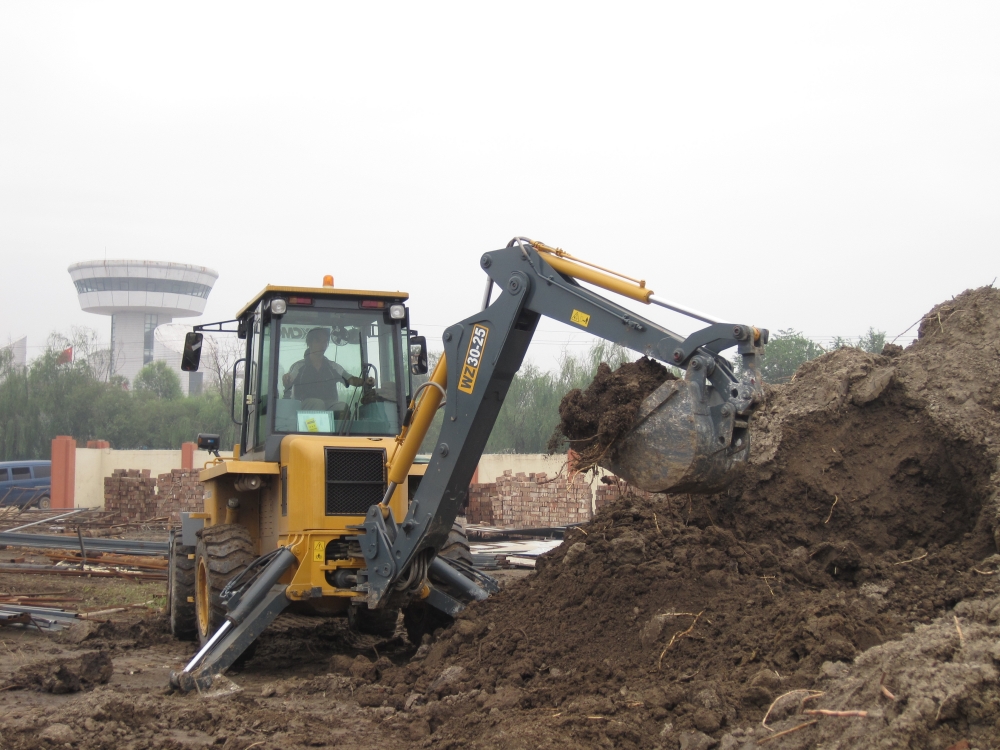
1.1 Backhoe Loader
The backhoe loader is professionally named excavator loader, featuring a classic front-loading and rear-excavating integrated structure. It is equipped with fixed working devices at both ends: the front bucket is used for loading, pushing and material handling, while the rear excavating arm and bucket complete earthwork excavation, ditching, demolition and slope trimming. Adopting a standard wheeled chassis and steering wheel design, it has a longer body and stable structure. It is a composite construction machine that balances excavation and loading without additional modification.
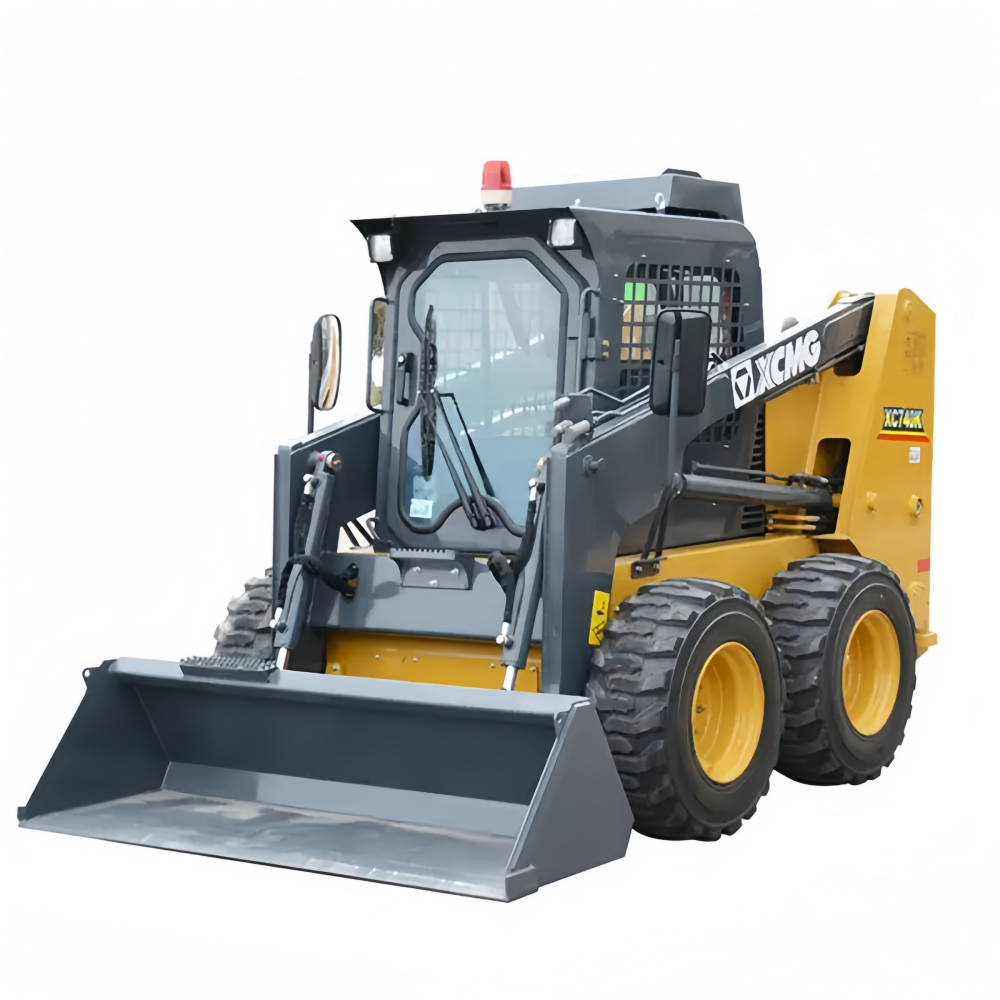
1.2 Skid Steer Loader
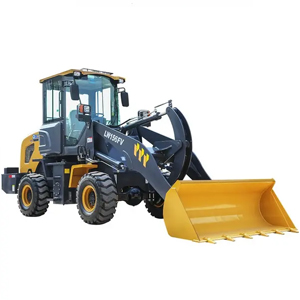
The skid steer loader is a compact multi-functional engineering machine without a traditional steering wheel. It realizes steering through the speed difference of wheels on both sides, achieving a zero-turn radius. Its biggest advantage is the fast replacement of various attachments. Without fixed excavation and loading structures, it can be equipped with sweeper, breaker, grapple, fork lift, snow plow and other accessories to adapt to diverse working scenarios, focusing on multi-scene adaptation rather than single fixed operation.
2. Differences in Operating Performance & Functions
2.1 Functional Focus
The backhoe loader excels in stable two-way operation of excavation and loading. It has stronger excavating depth, lifting force and loading capacity, with outstanding efficiency in earthwork construction. It can operate alternately front and rear without replacing parts, ensuring continuous construction. Nevertheless, it has limited expandable functions and is only suitable for basic earthwork tasks.
The skid steer loader is designed for diversified operations. Its basic loading and leveling performance meets daily needs, but its heavy-duty excavation capacity is insufficient. With rich supporting attachments, it can complete cleaning, pavement breaking, material stacking, tree transplanting, snow removal and other refined operations, covering a wider range of auxiliary construction scenarios.
2.2 Working Space Adaptability
Thanks to the ultra-compact body and zero-turn design, skid steer loaders can flexibly operate in narrow spaces, such as indoor workshops, residential alleys, dense garden areas and narrow foundation pits, where large and medium-sized machinery cannot enter.
Backhoe loaders have a longer body and larger turning radius, with lower flexibility in narrow spaces. But they own better operation stability and bearing performance, making them more suitable for open-air large-area earthwork and outdoor infrastructure construction.
3. Mobility & Transfer Capacity Differences
Backhoe loaders adopt standard road wheel design with a maximum speed of about 40km/h. They can be licensed for legal road driving and realize fast short-distance transfer without trailers, ideal for multi-point and long-distance outdoor construction.
Skid steer loaders have low driving speed and no road driving qualification. Long-distance transportation requires trailers. However, they are light in weight and easy to load and unload, suitable for short-distance and fixed-site narrow-space operations.
4. Applicable Working Conditions
4.1 Backhoe Loader Application Scenarios
It is mainly used for outdoor infrastructure projects dominated by earthwork, including rural road construction, farmland water conservancy renovation, pipe trench excavation, foundation backfilling, roadbed leveling and small foundation pit excavation, suitable for high-intensity continuous earthwork operation.
4.2 Skid Steer Loader Application Scenarios
It is widely used for refined and diversified operations in limited spaces, such as municipal sanitation cleaning, garden maintenance, indoor demolition and renovation, factory material handling, winter snow removal, pavement repair and seedling transplantation, meeting the multi-functional construction needs of complex scenarios.
5. Procurement & Operation Cost Differences
In terms of procurement cost, backhoe loaders have higher overall prices due to their large tonnage and high-cost core components. Skid steer loaders are cost-effective with lower entry thresholds, suitable for small engineering teams and individual contractors.
In terms of daily operation and maintenance, backhoe loaders have strong power but high fuel consumption, matching high-intensity earthwork. Skid steer loaders feature low fuel consumption, simple maintenance and versatile accessories, reducing long-term operating costs. One skid steer loader can replace multiple devices such as sweepers, breakers and forklifts, saving additional equipment procurement and storage costs.
6. Final Selection Guide
Choose a backhoe loader if your core work is high-intensity earthwork excavation, backfilling and ditching, most operations are in open outdoor sites, and you need frequent short-distance road transfer with sufficient budget.
Choose a skid steer loader if your construction sites are narrow (indoor, residential or garden scenarios), operation types are diverse, you need one machine for multiple uses, and you pursue low maintenance costs without heavy excavation demands.
In short, skid steer loaders are superior in flexibility, multi-functionality and cost performance, while backhoe loaders have stronger earthwork operation capacity and better mobility. Selecting equipment according to actual construction needs can maximize equipment utilization and reduce comprehensive construction costs.