Product Overview
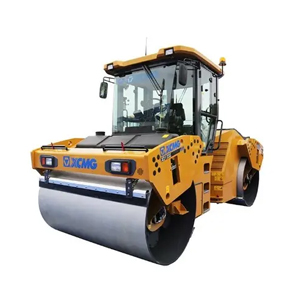
As the core flagship product of XCMG Road Machinery, XCMG rollers are deeply engaged in core compaction scenarios such as subgrade and pavement compaction. Featuring two star models: XS263J (26 tons) and XS365J (36 tons), covering the mainstream compaction tonnage of 20-40 tons, they are suitable for construction needs in various fields such as expressways, municipal engineering, mine sites, and airport runways, and are key equipment for “compaction forming” in infrastructure projects. Relying on the accumulation of XCMG’s national-level technology R&D center and decades of experience in road construction equipment manufacturing, XCMG rollers integrate core technologies such as intelligent compaction, heavy-duty durability, and high efficiency and energy conservation. In the competition with domestic similar brands (Sany Heavy Industry, Liugong) and foreign brands (Bomag), they form absolute differentiated advantages in multiple dimensions such as technology, performance, adaptability, and service guarantee, becoming the preferred equipment for construction units in compaction operations, helping projects improve quality and efficiency, and reduce costs and consumption.
Currently, the roller market is highly competitive. Domestic brands focus on high cost performance but lack core technologies, while foreign brands have mature technologies but poor adaptability and high costs. Most brands have shortcomings such as “insufficient compaction accuracy, poor durability, high energy consumption, and delayed service”. XCMG rollers accurately identify industry pain points, optimize design for Chinese construction conditions, and take into account refined compaction and high-intensity operations. They can not only achieve high-standard compaction results, but also adapt to complex terrain and extreme environments. Their comprehensive strength completely surpasses peers, demonstrating the strong strength of Chinese road construction equipment.
2. Detailed Introduction of Core Products (XS263J/XS365J)
(1)Basic Parameters of Core Models
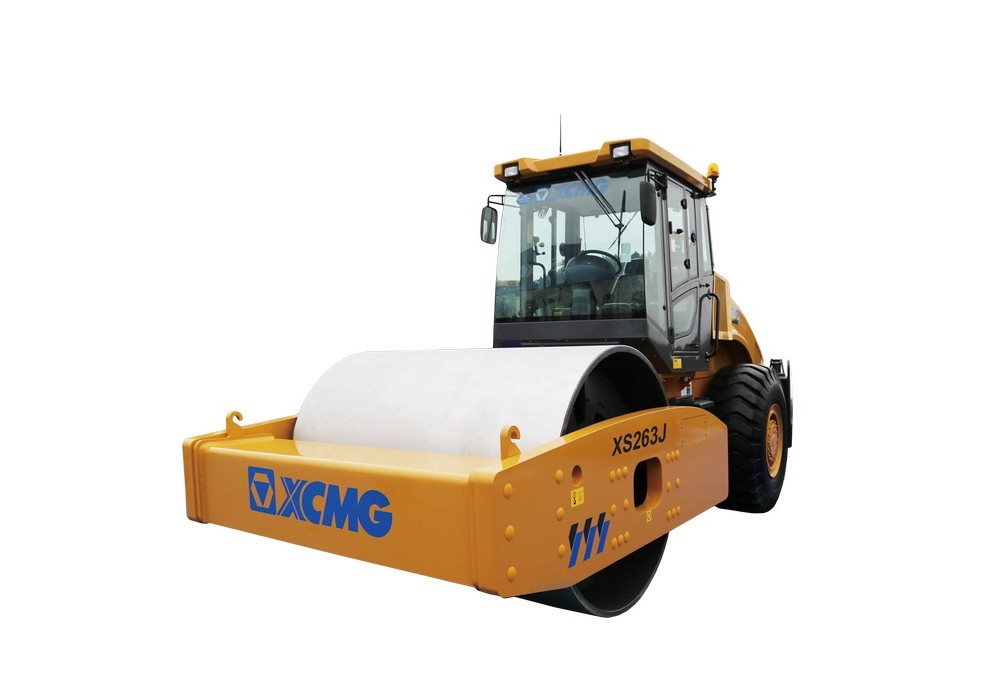
Model XS263J: Operating weight 26t, vibration frequency 28/32Hz, amplitude 1.8/0.9mm, exciting force 520/280kN, compaction width 2130mm, equipped with National Ⅵ emission standard engine, rated power 162kW. Suitable for medium-sized compaction projects such as expressway subgrades, municipal roads, and rural highways, with a balance of flexibility and compaction efficiency, and outstanding cost performance.
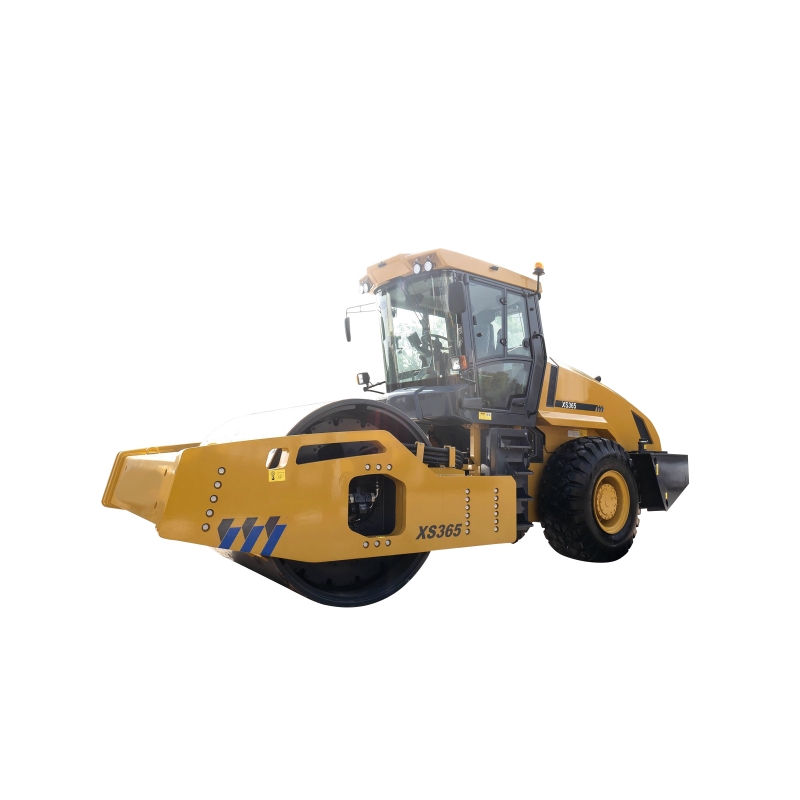
Model XS365J: Operating weight 36t, vibration frequency 25/30Hz, amplitude 2.2/1.1mm, exciting force 720/380kN, compaction width 2400mm, rated power 213kW, equipped with a high-power National Ⅵ engine. Suitable for large-scale high-standard compaction projects such as mine sites, airport runways, and high-grade highway subgrades, with strong power and excellent compaction effect.
(2)Highlights of Core Functions
Intelligent Precision Compaction: Equipped with XCMG independently developed intelligent compaction control system, it can real-time collect parameters such as compaction degree, vibration frequency, and compaction speed, which are synchronously displayed on the high-definition touch screen. It supports automatic adjustment of exciting force and compaction speed, with a compaction degree error of ≤±2%, avoiding over-compaction and under-compaction problems, greatly improving compaction quality and reducing rework costs; supports remote monitoring and fault early warning, allowing managers to grasp the equipment operation status in real time and reduce on-site duty costs.
Heavy-Duty Durable Design: The body is made of high-strength manganese steel, through integral welding and aging treatment, impact resistance, vibration resistance, and corrosion resistance, adapting to complex working conditions such as high dust and strong vibration in mines; the vibration wheel adopts wear-resistant layer surfacing technology, and its service life is 35% longer than that of similar models of Sany and Liugong, and 15% longer than that of Bomag; the optimized hydraulic vibration system runs stably, without leakage or jamming, and the equipment attendance rate can reach more than 97%, with no faults during long-term high-intensity operation.
High Efficiency and Energy Conservation: The whole series is equipped with National Ⅵ emission standard engine, optimized power transmission system, fuel consumption is 8%-10% lower than similar models of Sany, 5%-7% lower than Bomag, noise ≤76dB, and emission is fully up to standard; equipped with intelligent energy-saving mode, it can automatically adjust power output according to compaction load, further reducing energy consumption, and taking into account environmental protection and economy; adopting high-efficiency heat dissipation system, adapting to extreme environment operations of -40℃~55℃, without overheating faults, and adaptability far surpassing peers.
Flexible and Multi-Functional Adaptation: Supports multiple compaction modes such as static rolling, vibratory rolling, and impact rolling, and can adapt to various compaction materials such as asphalt, cement stabilized soil, and gravel; the compaction width can be flexibly adjusted to adapt to complex operation scenarios such as narrow sites, slopes, and curves; it can be equipped with auxiliary devices such as convex wheels and rubber wheels to achieve multi-purpose, eliminating the need for additional compaction equipment, greatly improving operation efficiency and reducing equipment investment costs.
Convenient Operation and Maintenance: Adopting humanized cab design, wide field of vision, equipped with air conditioning, shock-absorbing seats and suspended operation platform, greatly reducing the labor intensity of operators; the operation panel is reasonably arranged, with simple buttons, easy to learn and use, reducing training costs; optimized equipment structure, strong versatility of parts, easy disassembly, daily maintenance without complex tools, equipped with fault self-diagnosis system, which can quickly locate fault points, and the average maintenance time is ≤24 hours, far lower than Sany, Liugong and Bomag.
3. Core Advantage Comparison Between XCMG Rollers and Similar Brands (Sany Heavy Industry, Liugong, Bomag)
To clearly highlight the core competitiveness of XCMG rollers, the following selects domestic mainstream brands Sany Heavy Industry, Liugong, and foreign well-known brand Bomag as comparison objects, and conducts a comprehensive comparison from five core dimensions: technical strength, performance, adaptability, service guarantee, and cost performance, to intuitively show the differentiated advantages of XCMG rollers and provide reference for construction units in model selection.
(1)Comparison of Technical Strength
XCMG: Relying on the national-level technology R&D center, it has an independently developed intelligent compaction control system and hydraulic vibration system with independent intellectual property rights. The core technology is independently controllable, and can be continuously iterated and upgraded according to Chinese construction conditions (complex terrain, high-intensity operations); optimized design for extreme environments, with a number of patented technologies, adaptable to full-temperature operation of -40℃~55℃, and strong technical adaptability; invests a lot of R&D funds every year, and the product function upgrade speed is fast, which is in line with market demand.
Sany Heavy Industry: Some technologies rely on external introduction, no independent core compaction control system, and insufficient intelligent control accuracy; slow technology iteration speed, single product function, only suitable for conventional working conditions, unable to cope with extreme environment operations such as extreme cold and high temperature; core hydraulic components rely on imports, and maintenance and upgrading costs are high.
Liugong: Insufficient investment in R&D, relatively backward core technologies, no intelligent compaction function, compaction parameters need to be adjusted manually, with large errors; traditional product design, insufficient optimization for complex working conditions, poor technical adaptability; no perfect technology upgrade system, long product update cycle.
Bomag (Foreign): It has mature compaction technology and strong stability of the vibration system, but the core technology is blocked from the Chinese market. Maintenance and upgrading depend on the original factory, with high cost; the technical design is adapted to foreign construction conditions (low-intensity, standardized operations), unable to fully match the complex terrain and high-intensity operation needs of Chinese mines and rural highways, and insufficient flexibility in parameter adjustment.
(2)Comparison of Performance
XCMG: Compaction degree error ≤±2%, compaction qualification rate above 99%, no over-compaction, under-compaction, pavement sanding and other problems; continuous operation time up to 24 hours, low equipment failure rate (monthly failure rate ≤2%); vibration wheel service life up to 8000 hours, body impact resistance and vibration resistance, no faults during long-term high-intensity operation; operation efficiency is 15%-20% higher than Sany and Liugong, and about 10% higher than Bomag, with a compaction area of 2000-2500㎡ per hour.
Sany Heavy Industry: Compaction degree error ≤±4%, compaction qualification rate about 90%, prone to local under-compaction and over-compaction, requiring repeated rolling; continuous operation time no more than 12 hours, high equipment failure rate (monthly failure rate ≥7%); vibration wheel service life only 5000-6000 hours, easy to wear and deform, requiring frequent replacement; low operation efficiency, with a compaction area of only 1500-1800㎡ per hour.
Liugong: Compaction degree error ≤±5%, compaction qualification rate about 85%, poor pavement flatness, high rework rate; continuous operation time no more than 10 hours, high equipment failure rate (monthly failure rate ≥10%); vibration wheel service life only 4000-5000 hours, core components are prone to faults; the lowest operation efficiency, with a compaction area of only 1200-1500㎡ per hour.
Bomag (Foreign): Compaction degree error ≤±2%, excellent compaction performance, but insufficient continuous operation capacity, unable to adapt to 24-hour high-intensity construction; poor body adaptability, prone to hydraulic system leakage, circuit faults and other problems in high dust and strong vibration working conditions, long maintenance cycle (average maintenance time ≥72 hours); operation efficiency is equivalent to XCMG, but energy consumption is high, and long-term operation cost is high.
(3)Comparison of Adaptability
XCMG: Wide adaptation scenarios, covering expressway subgrades, municipal roads, mine sites, airport runways, rural highways, slope trimming and other multi-scenario operations; can adapt to various compaction materials such as asphalt, cement stabilized soil, and gravel, support multiple compaction modes, and adapt to complex terrain (mountains, hills, plateaus) and extreme environments (extreme cold, high temperature, high altitude); can be equipped with a variety of auxiliary devices to achieve multi-purpose, flexibly meeting different construction needs.
Sany Heavy Industry: Relatively single adaptation scenarios, mainly suitable for medium and low-intensity compaction operations such as conventional subgrades and municipal roads, unable to adapt to complex working conditions such as mines and plateaus; only able to adapt to a few types of compaction materials, single compaction mode; general environmental adaptability, prone to difficulty in starting, insufficient power and other problems in low and high temperature environments.
Liugong: Narrow adaptation scenarios, only able to cope with low-intensity compaction operations such as rural highways and small sites, unable to adapt to large-scale projects such as high-grade highways and mines; poor adaptability to compaction materials, only able to handle conventional materials such as gravel and soil; poor environmental adaptability, unable to work normally in extreme environments.
Bomag (Foreign): Wide adaptation scenarios, but high requirements for construction environment, unable to adapt to mine working conditions with high dust and strong vibration; general adaptability to compaction materials, insufficient adaptability to cement stabilized soil commonly used in China; when operating in high-altitude areas, power attenuation is obvious, operation efficiency is greatly reduced, and unable to adapt to complex operation scenarios such as narrow sites and slopes.
(4)Comparison of Service Guarantee
XCMG: It has more than 300 after-sales service outlets nationwide, covering all provinces, cities and counties, with service coverage in remote areas, 24-hour response, maintenance personnel on-site service, average maintenance time ≤24 hours; sufficient supply of parts, strong versatility, low maintenance cost, and can quickly allocate accessories to ensure equipment attendance; provides value-added services such as free technical training, regular inspections, and lifelong maintenance consulting, helping construction units standardize operations and reduce maintenance costs.
Sany Heavy Industry: More than 180 after-sales service outlets, mainly concentrated in first-tier cities and key provinces, insufficient service coverage in remote areas, response time ≥36 hours; unstable supply of parts, some core parts need to be customized, long waiting cycle (≥5 days); high maintenance cost, few value-added services, technical training and inspections need to be paid extra.
Liugong: More than 100 after-sales service outlets, limited service coverage, no service outlets in remote areas, response time ≥48 hours; uneven quality of parts, insufficient supply, long maintenance cycle; no perfect value-added services, weak technical support, and it is difficult for operators to get started.
Bomag (Foreign): Very few after-sales service outlets, only service stations in a few first-tier cities, maintenance personnel need to be dispatched by the original factory, response time ≥72 hours, extremely high maintenance cost (3 times higher than XCMG); parts rely on imports, long supply cycle (≥15 days), seriously affecting equipment attendance; no targeted technical training, operators need long-term training to get started, and technical support is delayed.
(5)Comparison of Cost Performance
XCMG: Reasonable product pricing, 30%-40% cheaper than Bomag, 15% higher cost performance than Sany Heavy Industry, and 25% higher cost performance than Liugong under the same configuration; strong equipment durability, low failure rate, low long-term maintenance cost, service life 30% longer than Sany and Liugong, 15% longer than Bomag; multi-purpose, can reduce equipment investment cost, and comprehensive cost performance is far superior to peers, making it a cost-effective choice for construction units.
Sany Heavy Industry: High pricing, 15% higher than XCMG under the same configuration; high equipment failure rate, high maintenance cost, core components rely on imports, and long-term use cost is high; general product value retention rate, the residual value is only about 45% of the original price after 3 years of use.
Liugong: Low pricing, but insufficient performance and durability, high long-term failure rate, high maintenance cost, single function, need to add additional equipment, high comprehensive use cost; low product value retention rate, the residual value is only about 35% of the original price after 3 years of use.
Bomag (Foreign): High pricing, cost far exceeding domestic brands (30% higher than XCMG) under the same configuration, high initial equipment investment cost; extremely high maintenance cost and accessory cost, high long-term use cost; poor product adaptability, unable to give full play to equipment value, extremely low cost performance, only suitable for a few high-end projects with special brand requirements.
4. Application Scenarios and Core Value
(1)Core Application Scenarios
Compaction of subgrades and pavements of expressways and national provincial trunk highways, requiring high precision and high compactness, laying a solid foundation for pavement paving;
Urban municipal engineering, including road construction, expansion, maintenance, and compaction of squares and parking lots, adapting to environmental protection construction requirements;
Compaction and leveling of mine and port sites, adapting to complex working conditions with high dust and strong vibration, improving site bearing capacity;
Compaction operations of airport runways and aprons, requiring extremely high compactness and flatness, adapting to high-standard construction needs;
New construction and upgrading of rural highways and county-township roads, adapting to complex terrain such as mountains and hills, flexibly adjusting compaction parameters;
Compaction operations in extreme environments such as plateaus, extreme cold and high temperatures, relying on strong environmental adaptability to ensure the smooth progress of construction.
(2)Core Value
XCMG rollers accurately solve the core pain points of similar brands in the industry (Sany Heavy Industry, Liugong, Bomag) such as “insufficient compaction accuracy, poor adaptability, high failure rate, delayed service, and high cost”. With the core advantages of “intelligent precision, heavy-duty durability, high efficiency and energy conservation, and high cost performance”, they help construction units reduce equipment investment cost, labor cost, maintenance cost and rework cost, improve construction efficiency and project quality, shorten the construction cycle, and achieve the core goal of “efficient compaction, controllable quality and cost saving”.
From technology to performance, from adaptability to service guarantee, XCMG rollers (XS263J/XS365J) completely surpass peers such as Sany Heavy Industry, Liugong, and Bomag. With independent core technology, perfect service system and high cost performance, they continue to lead the development of China’s roller industry and become an indispensable Chinese equipment force in global infrastructure projects.