Key Takeaways for Global B2B Buyers
Selecting the right lifting equipment requires evaluating working height, outreach, platform capacity, power system, and jobsite conditions.
For companies operating in diversified environments, a hybrid solution is worth considering as it offers an effective balance between operational flexibility, energy efficiency, and application adaptability.
Understanding Different Types of Aerial Boom Lifts
An aerial boom lift is a mobile elevated work platform (MEWP) designed to safely lift operators, tools, and materials to elevated working areas. Unlike traditional lifting equipment that mainly focuses on vertical movement, boom lifts provide both vertical and horizontal positioning capabilities, allowing workers to access areas that are difficult to reach with standard platforms.
According to the International Powered Access Federation (IPAF), MEWPs are widely used across construction, maintenance, industrial, and infrastructure sectors because they provide safer alternatives to traditional access methods such as ladders and scaffolding. Work height, mobility flexibility, and on-site environment are the three factors that directly determine whether equipment selection is correct.
Articulating Boom Lift: Flexible Access for Complex Work Environments
Articulating boom lifts, also known as knuckle boom lifts, use multiple boom sections connected by joints. This design allows operators to move upward and around obstacles, making them suitable for environments where direct access is limited.
Typical applications include industrial maintenance, building facade work, warehouse equipment inspection, and structural installation projects. Their main advantage is positioning flexibility, especially when workers need to reach over machinery, structures, or other obstacles.
For projects with limited space, crowded industrial areas, or complex building layouts, articulated configurations offer greater mobility advantages than straight-arm equipment.
Telescopic Boom Lift: Long Reach Performance for Large Construction Projects
A telescopic boom lift uses a straight boom structure that extends outward in a linear direction. The advantage of this design lies in its wide horizontal span and its extensive application in scenarios such as bridges, airports, large-scale infrastructure, road construction, and open construction sites.
Compared with articulating models, telescopic equipment usually prioritizes maximum reach and faster positioning in open areas. Contractors often choose this type when the main requirement is reaching high elevations with fewer obstacles around the working area.
The selection between articulating and telescopic designs should be based on actual project conditions. A machine with greater reach is not always the best solution if the working environment requires frequent movement around obstacles.
| Boom Lift Type | Main Advantage | Typical Applications |
| Articulating Boom Lift | Flexible positioning around obstacles | Industrial maintenance, facilities, complex structures |
| Telescopic Boom Lift | Longer straight-line reach | Construction sites, infrastructure projects |
Key Specifications to Evaluate Before Purchasing an Aerial Boom Lift
When purchasing lifting equipment, the maximum height is just one of the reference points. Enterprises should comprehensively evaluate various requirements in actual operations. Important factors include working height, horizontal outreach, platform capacity, power system, and stability performance.
Working Height, Horizontal Outreach, and Platform Capacity Requirements
Working height represents the maximum elevation that operators can safely reach, while horizontal outreach determines how far the platform can extend from the machine base.
The platform’s capacity is equally critical; it directly determines how many people, tools, and materials it can carry. Buyers should not just look at the rated maximum capacity value but should also take the actual workload into account.
A professional procurement process usually follows these steps:
- Define the highest and most difficult working locations.
- Calculate required outreach and platform load.
- Compare machine dimensions with transportation and site limitations.
A boom truck crane is sometimes considered for similar lifting-related tasks, but the two equipment categories serve different purposes. Boom trucks are generally designed for lifting loads, while aerial work platforms focus on safely positioning personnel for elevated operations.
Power System Selection: Diesel, Electric, and Hybrid Boom Lift Solutions
The power system directly influences operating cost, environmental impact, and application flexibility.
| Power System | Advantages | Suitable Environments |
| Diesel | Strong outdoor performance and high endurance | Construction sites and rough terrain |
| Electric | Low noise and zero direct emissions during operation | Indoor facilities and sensitive environments |
| Hybrid | Combines flexibility with improved efficiency | Mixed indoor and outdoor projects |
If a company needs to perform outdoor work while also reducing emissions, hybrid power systems are highly attractive. They can provide greater flexibility for fleet operators across multiple project types.
The global construction equipment market continues to focus on efficiency and lower-emission technologies. According to Fortune Business Insights, increasing demand for advanced construction equipment is being driven by infrastructure development and technology upgrades in the industry.
Stability Performance, Tire Selection, and Ground Condition Considerations
Stability is essential for safe elevated operations. Machine weight, chassis design, tire selection, and ground conditions all influence equipment performance.
For example:
- Indoor concrete floors may require non-marking tires to protect surfaces.
- Outdoor construction environments may require stronger traction and durability.
- Uneven terrain requires careful evaluation of stability and support conditions.
The best equipment doesn’t necessarily have to be the highest, but it must be most suitable for the on-site conditions.
CNFORCE XGS5100JGKQ6 Hybrid Boom Lift Aerial Work Vehicle: A Reliable Solution for Modern Fleets
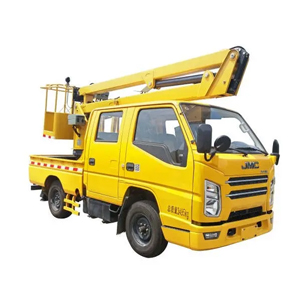
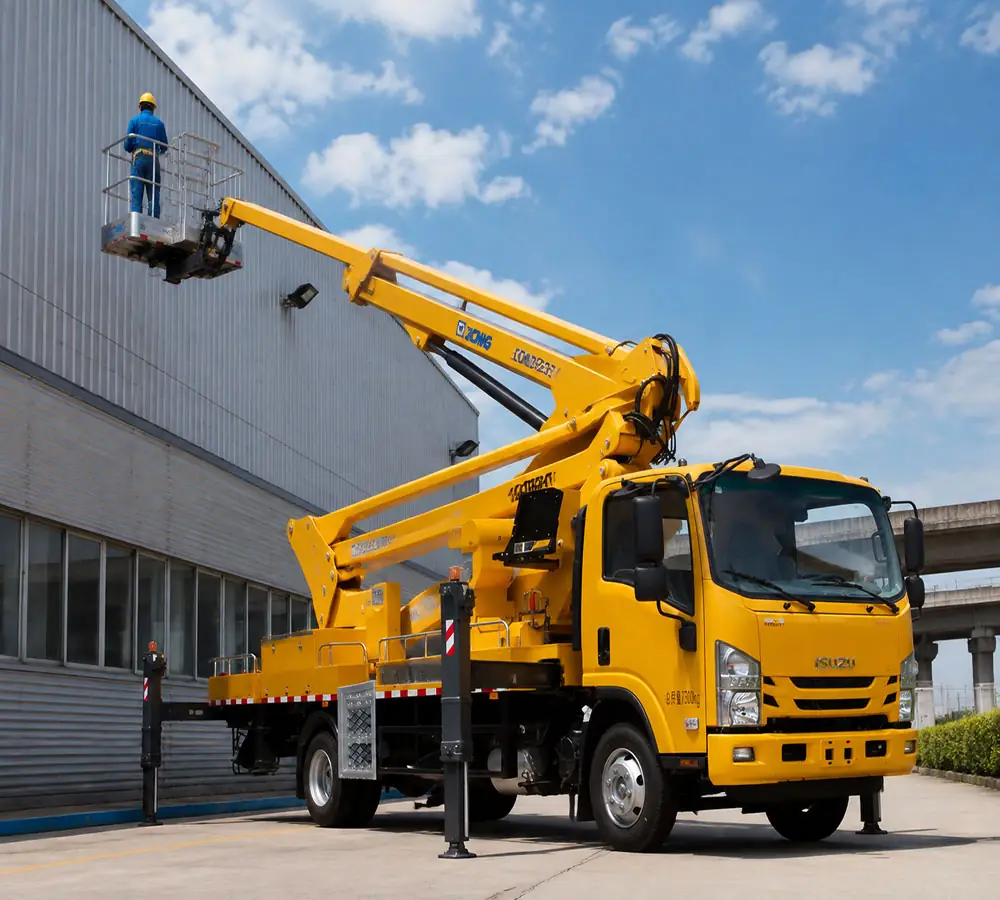
For companies looking for flexible high-altitude operation solutions, Xuzhou CNFORCE Construction Machinery Co., Ltd. provides the XGS5100JGKQ6 Hybrid Boom Lift Aerial Work Vehicle.
This model is designed for customers requiring elevated working capability with hybrid power advantages. It combines the functions of a mobile aerial work vehicle with a hybrid energy system, allowing it to adapt to different working environments.
The main product advantages include:
- Hybrid power technology designed to improve operational flexibility.
- Suitable for applications requiring both mobility and elevated access capability.
The XGS5100JGKQ6 can be applied in areas such as:
| Application Area | Usage Examples |
| Construction | High-level installation and maintenance work |
| Industrial Facilities | Equipment inspection and repair |
| Municipal Projects | Infrastructure maintenance operations |
| Commercial Buildings | Exterior maintenance and service work |
For fleet managers, selecting a hybrid aerial work vehicle can help improve equipment utilization by allowing one machine to support multiple operating scenarios.
Aerial Boom Lift Procurement Checklist for B2B Buyers
Before ordering equipment, buyers should evaluate technical requirements, supplier capability, and long-term operating conditions.
Key Factors to Evaluate Before Ordering an Aerial Boom Lift
A practical procurement checklist includes:
- Required working height, outreach, and platform capacity.
- Safety certifications, maintenance support, and spare parts availability.
In addition, buyers should consider transportation requirements, service capability, and whether the equipment matches future project needs.
The choice of supplier is related to the long-term operational performance of the equipment. Reliable support is more decisive than the machine itself in determining the user experience.
FAQ About Aerial Boom Lift
What Is the Difference Between an Articulating Boom Lift and a Telescopic Boom Lift?
A: An articulating boom lift uses jointed boom sections to move around obstacles and provide flexible positioning. A telescopic boom lift uses a straight extending boom to achieve longer horizontal reach, making it suitable for open work areas.
What Specifications Should I Consider Before Buying an Aerial Boom Lift?
A: Buyers should evaluate working height, horizontal outreach, platform capacity, power system, stability requirements, safety features, and application environment before selecting equipment.
Are Hybrid Boom Lifts Suitable for Construction and Industrial Applications?
A: Yes. Hybrid boom lifts can be suitable for companies that need both outdoor operating capability and improved efficiency in mixed working environments, including road construction, industrial facilities, and municipal projects.
How Often Should an Aerial Boom Lift Be Inspected and Maintained?
A: Inspection and maintenance frequency should follow manufacturer recommendations and regional regulations. Regular checks of structural components, safety systems, and operating functions help maintain reliable performance.
Conclusion
Choosing an aerial work solution requires a clear understanding of the working environment, access requirements, safety standards, and long-term operating costs. Instead of focusing on a single specification, companies should consider how the equipment performs in real project conditions and whether it can support future operational needs.
A well-matched aerial boom lift can help improve work efficiency, provide safer and more direct access to elevated work areas, and offer a superior solution for construction, industrial maintenance, and infrastructure projects. For businesses looking for flexible equipment across different applications, hybrid models such as the XGS5100JGKQ6 offer a practical balance between performance, adaptability, and operating efficiency.
Working with an experienced manufacturer also helps ensure better equipment selection, technical support, and after-sales service throughout the product lifecycle. If you are looking for a reliable hybrid boom lift solution or need assistance selecting the right model for your project, please contact us for professional guidance and product details.