Key Takeaways
An asphalt paver is a key machine for road construction projects because it helps place and level paving materials with consistent thickness and quality.
Selecting the right paving equipment requires evaluating project size, paving width, material feeding performance, and operating conditions.
Tracked and wheeled paving machines have different advantages depending on terrain, transportation requirements, and construction environments.
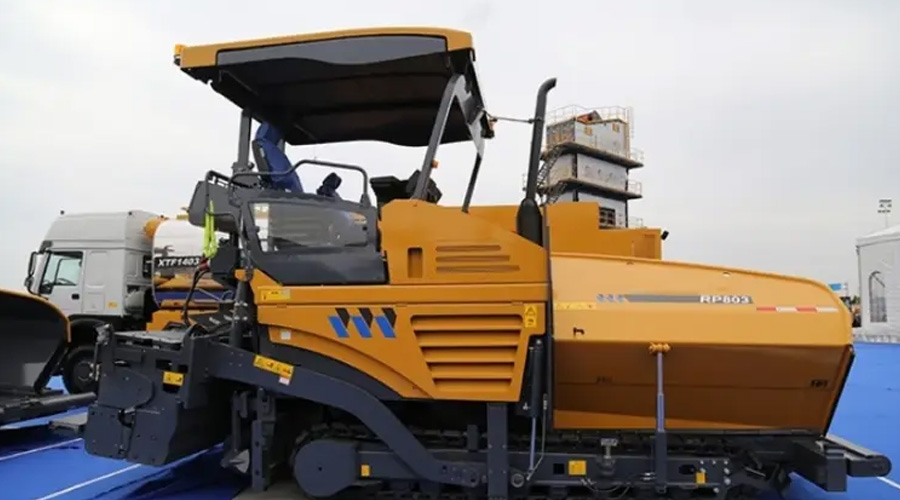
The RP1355 asphalt paver is designed for highway base and surface paving applications, especially small roads, urban roads, highway maintenance, and projects with limited working space.
A reliable road construction paver machine can improve construction efficiency while helping contractors maintain stable pavement quality.
What Is an Asphalt Paver Machine and How Does It Work?
Definition and Basic Function of an Asphalt Paver
An asphalt paver is a type of construction equipment used to distribute, level, and partially compact asphalt mixtures or other paving materials before final compaction by rollers. According to the Federal Highway Administration (FHWA), proper paving operations play an important role in achieving durable pavement performance because factors such as material consistency, placement temperature, and compaction quality directly affect road service life.
A modern road paver usually consists of several major systems, including the hopper, conveyor system, auger system, screed assembly, hydraulic system, and control system. These components work together to receive asphalt material from trucks, spread it evenly across the working width, and create a smooth pavement surface.
This equipment is not just about laying asphalt; more importantly, it can improve the uniformity of the construction. Compared to manual paving, mechanical paving has better control over thickness, surface smoothness, and construction speed.
How Does an Asphalt Paver Work?
The working process of an asphalt paver generally includes the following steps:
- Material receiving
Asphalt mixture is delivered from transport trucks and loaded into the machine hopper. - Material conveying
Conveyor systems move asphalt from the hopper toward the rear paving area. - Material distribution
Auger systems distribute the asphalt evenly across the paving width. - Leveling and initial compaction
The screed unit levels the material and provides initial compaction before roller compaction.
This process allows contractors to maintain a more uniform pavement structure, especially for large-scale road construction projects where stable output is required.
Different Types of Asphalt Pavers for Road Construction
The choice of equipment model is not arbitrary.Different site environments require varying levels of traction, mobility, and operational capability.
Tracked Asphalt Pavers
Tracked paving machines use crawler tracks instead of tires. The larger contact area provides stronger traction and lower ground pressure, making them suitable for projects involving uneven ground, soft foundations, or large paving areas.
Typical applications include:
- Highway construction
- Large infrastructure projects
- Areas requiring stable machine movement
In some operating conditions, stable operation is more important than speed, and at such times, tracked machines have an advantage over wheeled ones.
Wheeled Asphalt Pavers
Wheeled models use tires to provide higher mobility and easier movement between different construction locations. They are commonly used for urban road projects, municipal construction, and maintenance work where frequent relocation is required.
Compared with tracked machines, wheeled units usually provide:
- Faster movement between job sites
- Better flexibility in urban environments
- Easier transportation without additional equipment
Tracked vs Wheeled Asphalt Paver Comparison
| Factor | Tracked Asphalt Paver | Wheeled Asphalt Paver |
| Traction | Higher traction on difficult surfaces | Suitable for stable surfaces |
| Mobility | Lower travel speed | Faster movement between sites |
| Ground pressure | Lower | Higher |
| Common applications | Highways and large projects | Urban roads and maintenance |
The choice depends mainly on project conditions. Contractors should evaluate terrain, paving requirements, and transportation needs before purchasing.
Asphalt Paver Applications in Different Construction Projects
Highway Construction
Highway projects usually require continuous paving operations, large working widths, and stable material distribution.
A suitable asphalt road paver should be able to handle long working periods while maintaining stable paving thickness and surface performance.
Urban Roads and Municipal Projects
Road construction in cities often involves limited working spaces and must navigate complex sections like intersections, sidewalks, and side roads. In such locations, the flexibility of equipment becomes particularly crucial.
Maintenance and Specialized Road Projects
Road maintenance is not as open as new construction projects and often requires working in narrow areas. Compact equipment demonstrates greater adaptability under these conditions.
Before purchasing, contractors should focus on evaluating three aspects: size, paving capacity, and transportation integration.
Key Factors to Consider When Buying a Road Construction Paver Machine
Paving Width and Production Capacity
The paving width directly determines the operational efficiency. A wider paving range allows contractors to complete larger road sections with fewer passes, improving efficiency and reducing construction joints.
Screed System and Paving Quality
The screed system directly influences pavement smoothness and initial compaction performance. A well-designed screed helps distribute asphalt evenly and maintain consistent thickness during operation.
For contractors, screed performance is an important factor because uneven paving can increase later repair requirements and affect road durability.
Material Feeding and Hydraulic Control
Stable material feeding is essential for maintaining continuous paving quality. Uneven asphalt distribution may cause surface defects and reduce construction efficiency.
Engine Performance and Maintenance Considerations
Engine power and the convenience of maintenance are also factors that need to be carefully considered when choosing equipment. Fuel consumption, availability of parts, and whether after-sales service can keep up – all these need to be thought through in advance.
How to Choose the Right Asphalt Road Paver for Your Project?
Match Equipment Specifications with Project Requirements
Before purchasing a paving machine, buyers should evaluate:
- Required paving width
- Project scale
- Working environment
- Material type
- Transportation conditions
A smaller machine may be more suitable for urban projects, while larger equipment may be preferred for highways and major infrastructure construction.
Evaluate Total Cost of Ownership
Equipment selection should not focus only on the initial purchase price. Long-term operating costs also include maintenance, spare parts, fuel consumption, and productivity.
The U.S. Environmental Protection Agency (EPA) highlights that construction equipment efficiency and emissions performance are important considerations for reducing environmental impact and improving operational sustainability.
CNFORCE RP1355 Asphalt Paver for Road Construction Applications
The CNFORCE RP1355 is designed for highway base and surface paving applications, especially for projects requiring flexible operation and stable paving performance. This asphalt paver is suitable for small roads, urban road construction, highway maintenance, sidewalks, auxiliary lanes, and projects with limited working space.
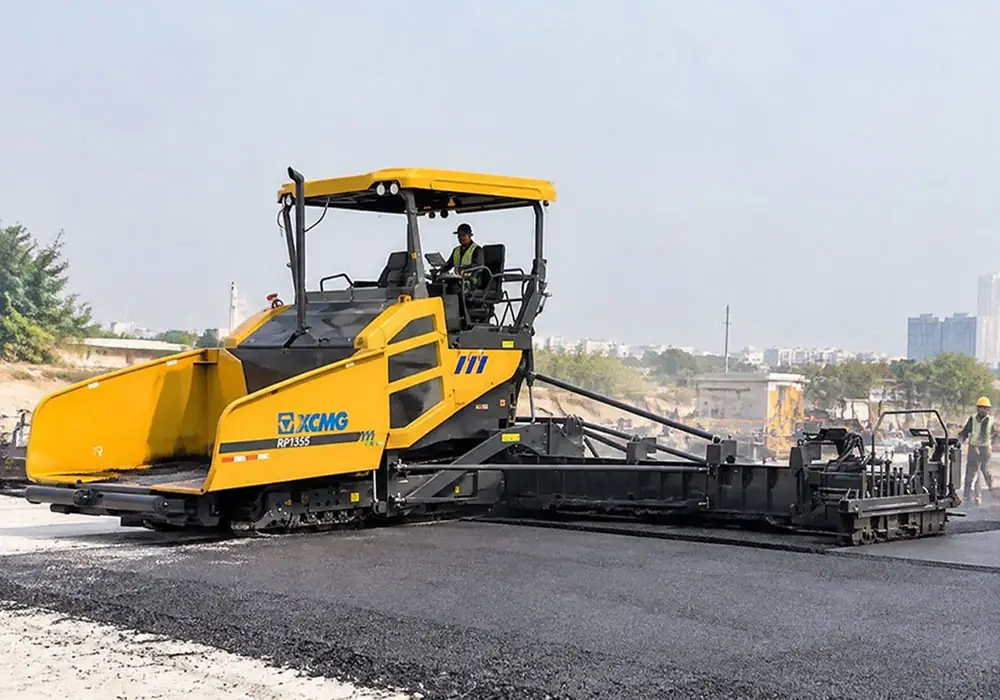
With a basic paving width of 3 meters and a maximum paving width of 12.5 meters, the RP1355 provides flexibility for different construction requirements. The machine has a hopper capacity of 16 tons and a theoretical productivity of 1300 t/h, helping contractors improve paving efficiency during continuous operations.
| Item | Specification |
| Model | RP1355 |
| Maximum paving width | 12.5 m |
| Maximum paving thickness | 550 mm |
| Hopper capacity | 16 t |
| Engine power | 241 kW |
| Total weight | 24.6–33.7 t |
The RP1355 adopts four independent full hydraulic systems for material conveying and distribution. The conveying system uses material rack control technology, while ultrasonic sensor control helps maintain stable material levels during paving operations.
In addition, the machine is equipped with a mechanically assembled screed system. The overall rigidity of the screed structure is increased by 35%, and the optional hydraulic end expansion device provides more flexible operation for different paving conditions.
For contractors looking for a reliable road construction paver machine, the RP1355 offers a practical solution with stable performance, flexible applications, and convenient maintenance support. It is a suitable choice for urban road projects, highway maintenance, and construction areas where working space is limited.
Frequently Asked Questions
Q1: What is an asphalt paver used for?
A: An asphalt paver is used to place, distribute, and level asphalt materials during road construction. It helps contractors achieve consistent pavement thickness and surface quality before final roller compaction.
Q2: What is the difference between tracked and wheeled asphalt pavers?
A: Tracked asphalt pavers provide stronger traction and lower ground pressure, making them suitable for challenging terrain. Wheeled asphalt pavers offer better mobility and are commonly used for urban roads and projects requiring frequent movement.
Q3: How do I choose the right road paver for my project?
A: Buyers should consider paving width, production capacity, construction environment, maintenance requirements, and transportation conditions. The best choice depends on the specific requirements of each project.
Q4: What are the main features of the RP1355 asphalt paver?
A: The RP1355 features a maximum paving width of 12.5 m, a 241 kW engine, hydraulic material control systems, a mechanically assembled screed, and applications for small roads, urban roads, highway maintenance, and narrow construction areas.
Conclusion
An appropriate paving plan is a result of balancing performance, working conditions, and cost. A set of worth-its-price equipment should have a stable feeding system, paving efficiency that matches, and maintenance that is straightforward.Only when all these points are in place can it be truly suitable.
The CNFORCE RP1355 offers a practical option for contractors working on urban roads, highway maintenance, and projects requiring flexible paving performance.
For your next road construction project, are you in need of a reliable asphalt paver? Contact us today to get detailed specifications, pricing information, and a suitable paving solution based on your application requirements.