Key Takeaways
Choose according to material, required payload, haul distance, terrain, loading equipment, and local road regulations.
Construction applications often require a balance between load capacity, maneuverability, and road compliance.
Mining applications place greater emphasis on durability, power, axle configuration, and repeated heavy-duty operation.
The right truck should be evaluated as part of the complete loading and hauling system, not as an isolated machine.
Introduction
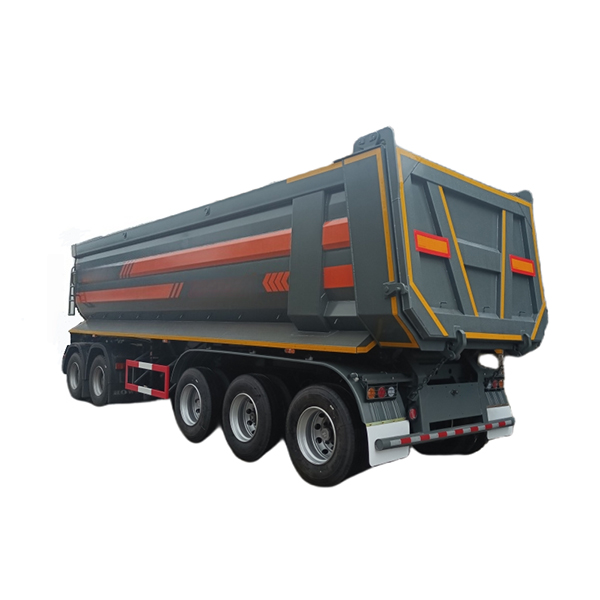
A dump truck is a commercial vehicle designed to transport bulk materials and discharge them by raising a tipping body. In construction, quarrying, mining, and infrastructure projects, a truck’s suitability for a job cannot be determined solely by the size of its cargo box. Material density, loading efficiency, road conditions, legal weight limits, and ease of unloading all influence whether a truck is truly suitable.
Start With the Application
The first question is where the vehicle will operate. A dump truck for construction may need to move between public roads and construction sites, while a vehicle used mainly in a quarry may spend most of its working time on private haul roads.
Construction and Infrastructure Projects
Typical construction materials include sand, gravel, aggregate, soil, demolition waste, and construction slag. These applications can involve frequent loading and unloading, changing work locations, and a mixture of public-road and job-site operation.
For these projects, buyers should consider:
- Required carrying capacity and body volume
- Road-legal axle and gross-weight limits
- Turning space at the job site
- Loading equipment compatibility
- Average haul distance
Weight regulations vary by country and road category. For example, the U.S. Federal Highway Administration states that federal Interstate standards include an 80,000 lb gross vehicle weight limit, with specific axle limits and Bridge Formula requirements, although exceptions and state-specific rules exist (FHWA).
Mining, Quarrying, and Heavy Material Transport
A mining dump truck generally works in more demanding conditions, particularly when transporting rock, ore, iron powder, or other dense materials. Repeated loading, rough haul roads, steep grades, and abrasive materials can increase stress on the body, chassis, axles, tires, and hydraulic system.
Not all mining operations require the largest trucks. A more reasonable approach is to consider the capacity of the loading equipment, the condition of the transportation road, the time of the operating cycle, and the required output. Only when these factors align will the selected vehicle be effective.
Match Capacity With Material and Loading Equipment
The rated capacity of a vehicle should never be considered separately from the material being transported. A cubic meter of loose soil does not weigh the same as a cubic meter of crushed rock, so body volume alone cannot determine the correct truck.
A useful starting point is:
Required truck body volume ≈ loading bucket volume × target number of passes
The actual calculation should also account for bucket fill factor, material bulk density, legal weight limits, and the truck manufacturer’s specifications.
Use the 3–5 Pass Principle
A practical fleet-planning target is often around three to five bucket passes per truck. Too few passes may mean the loading machine is oversized relative to the truck, while too many passes can increase loading time and reduce fleet efficiency.
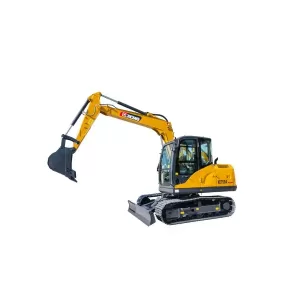
For example, if an excavator or wheel loader uses a 2 m³ bucket, a five-pass loading cycle would represent approximately 10 m³ of nominal bucket volume before considering fill factor and material characteristics. The final truck selection must still be based on the actual permissible payload and material density.
A larger truck doesn’t always save money—this is especially true for heavy duty dump truck. If the loading equipment is underpowered or slow, the truck will spend more time queuing at the loading point, which can actually drive up costs.
Evaluate Dump Truck Configuration, Body, Hydraulic System, and Chassis
Once the application and required capacity have been identified, the next step is to evaluate the truck itself. A suitable heavy duty dump truck should be considered as an integrated system in which the chassis, axles, powertrain, dump body, and hydraulic system work together. Focusing on only one specification, such as engine power or total weight, can lead to an unsuitable selection.
Hydraulic System and Dumping Performance
The hydraulic system is a key working subsystem of a dump truck, and its performance should be judged under real operating conditions. The main concerns are smooth lifting under full load, body stability during raising, and the ability to complete repeated dumping cycles without overheating or pressure loss.
In practice, problems such as slow lifting, uneven raising, or delayed lowering often indicate that the hydraulic system is not well matched to the load. These issues are more obvious when the truck is fully loaded or working on uneven ground, so the system should have an appropriate safety margin rather than only meeting minimum lifting requirements.
Maintenance is also important. Oil change intervals, sealing reliability, and ease of inspection directly affect downtime, especially in high-frequency construction or mining use.
Chassis, Axles, and Powertrain
The chassis and powertrain determine long-term durability under heavy-duty conditions. Key factors include performance under full load, rough road conditions, and frequent stop-start operation.
The chassis must resist deformation under uneven loading, while axle capacity should account for both total weight and load shifts during turning, braking, and dumping. Insufficient axle capacity can lead to faster tire wear and suspension fatigue.
The engine and transmission should be matched to real operating needs such as load, terrain, and travel distance. Underpowered setups increase fuel consumption and drivetrain stress, while poor gear matching reduces efficiency.
Suspension and tire selection also affect stability and service life. Heavy-duty leaf springs are commonly used for impact resistance, and tire load ratings must match axle and payload requirements.
Overall, the chassis, axles, engine, transmission, and suspension should be evaluated as a complete system. A mismatch in any part can reduce reliability and increase operating costs even if individual specifications look sufficient.
Consider Total Cost of Ownership
Purchase price is only one part of the economic calculation. A dump truck for construction can remain in service for years, so operating costs may have a greater impact on the overall investment.
A useful evaluation should include:
- Fuel consumption and annual operating hours
- Tire replacement and maintenance
- Hydraulic and wear-part costs
- Spare-parts availability
- Expected downtime
- Resale or replacement value
Cycle time is another important factor. A truck that carries more material per trip may appear more productive, but the advantage can disappear if loading, hauling, maneuvering, or unloading takes substantially longer.
For fleet operators, the more useful comparison is often cost per ton transported. This approach also makes it easier to compare different chassis configurations under the same operating conditions.
XGA3310D2KE: An 8×4 Option for Heavy Material Transport
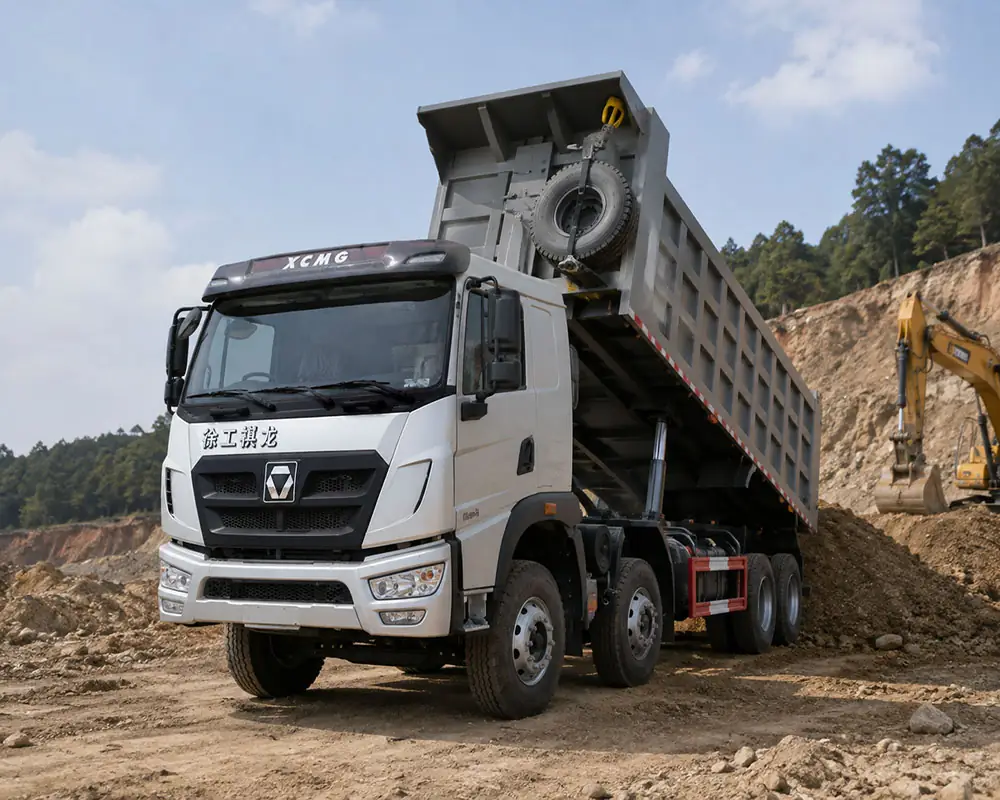
The CNFORCE XGA3310D2KE is an 8×4 dump truck designed for sand, stone, ore, ore powder, iron powder, construction slag, and other loads. Its stated total weight is 65,000 kg, while the overall dimensions are 10,855 × 2,550 × 3,450 mm (CNFORCE).
| XGA3310D2KE Specification | Value |
| Model | XGA3310D2KE |
| Drive type | 8×4 |
| Total weight | 65,000 kg |
| Power | 273 kW |
| Maximum speed | 79 km/h |
| Fuel tank | 400 L |
| Cargo body size | 7,800 × 2,300 × 1,500 mm |
| Minimum turning diameter | 26.7 m |
| Overall dimensions | 10,855 × 2,550 × 3,450 mm |
The vehicle is relevant to projects that require a high-capacity chassis for heavy material transport.However, total vehicle weight should not be confused with legal payload. The actual allowable payload depends on vehicle configuration, operating regulations, material density, and the manufacturer’s applicable specifications.
The XGA3310D2KE uses an 8×4 drive configuration and is listed with a 273 kW power output. CNFORCE also states that its dump trucks can be equipped with Weichai or Sinotruk engines, Fast gearboxes, and Hande axles, with available horsepower ranging from 245 HP to 430 HP depending on configuration.
The key assembly components are verified through CAE analysis, component bench testing, vehicle bench reliability testing, and enhanced road testing. The product page also states that spare parts for the XGA3310D2KE are available .
Final Checklist Before Ordering
Before purchasing a dump truck, procurement teams should compare the vehicle against actual project requirements.
A practical RFQ checklist should include:
- Material type, density, and expected daily volume
- Required body dimensions and configuration
- Chassis, axle, engine, and transmission specifications
- Local road and emissions requirements
- Spare parts, warranty, and technical support
- Shipping, delivery, and commissioning requirements
Safety should also be included in the procurement review. OSHA identifies dump trucks among the vehicle types involved in backover fatalities in its construction-industry data and highlights hazards such as obstructed visibility, inadequate backup alarms, and workers entering the vehicle’s path (OSHA).
FAQ
1. What is the most important factor when choosing a dump truck for construction?
A: Start with the material, required payload, haul distance, loading equipment, site conditions, and local weight regulations. These factors determine whether a particular truck configuration is practical for the project.
2. What is the difference between a 6×4 and an 8×4 dump truck?
A: A 6×4 has three axles with two driving axles, while an 8×4 generally has four axles with two driving axles. An 8×4 configuration can distribute vehicle weight across more axles, but the final choice depends on local regulations, maneuverability, and project requirements. In the U.S., FHWA states that federal Interstate standards include an 80,000 lb gross vehicle weight limit, subject to Bridge Formula requirements and applicable exceptions (FHWA).
3. How do I match a dump truck with an excavator?
A: A practical starting point is to target approximately three to five bucket passes per truck. Then adjust for bucket fill factor, material density, body volume, and the truck’s permitted payload. The objective is to keep the loading and hauling cycle balanced.
4. What makes a truck suitable for mining applications?
A: A suitable vehicle needs a configuration that matches the material, haul-road conditions, loading equipment, and operating cycle. Buyers should evaluate the body, frame, axles, suspension, powertrain, hydraulic system, tires, and parts support as a complete system.
Conclusion
Choosing the right vehicle is ultimately a matter of matching the truck to the job. Construction projects may prioritize road compliance and maneuverability, while quarrying and mining operations can place greater emphasis on structural durability and repeated heavy-load operation.
The XGA3310D2KE provides an 8×4 configuration, 273 kW power, a 65,000 kg stated total weight, and a 7,800 × 2,300 × 1,500 mm cargo body, with applications listed for materials including stone, ore, iron powder, and construction slag.
For an international B2B purchase, the best next step is to compare these specifications with the project’s material, loading equipment, road regulations, transport cycle, and after-sales requirements. This creates a more reliable basis for an RFQ and helps ensure that the selected vehicle is suitable for its intended working conditions.
If you are evaluating an 8×4 dump truck for construction, mining, or other heavy material transport, contact us for detailed specifications, configuration options, and a quotation tailored to your project requirements.