Key Takeaways
Backfill compaction depends on material type, moisture, layer thickness, and required density.
The right road roller should match the material and working environment.
Different road roller construction applications require different compaction methods and machine configurations.
A suitable road compactor should be evaluated by weight, working width, compaction mechanism, maneuverability, maintenance, and service support.
For demanding solid-fill and landfill applications, heavy-duty equipment can provide the load and working characteristics required for efficient compaction.
Why Backfill Compaction Needs the Right Road Roller
Backfill compaction is a controlled process used to increase material density and improve the stability of a constructed layer. It is important in road foundations, utility trenches, embankments, and other infrastructure projects where loose material must provide reliable support.
The challenge is that backfill materials are rarely uniform. Soil type, particle size, moisture content, and layer thickness can all affect the final compaction result. The Federal Highway Administration notes that proper compaction contributes to pavement performance and that equipment should be selected according to soil characteristics.
What Makes Backfill Compaction Challenging?
Different materials respond differently to static weight and dynamic vibration. Granular materials such as sand and gravel can respond well to vibratory compaction, while cohesive soils may require equipment that provides a different compaction action.
Working conditions can create another challenge. Backfill areas may be located beside structures, road shoulders, slopes, or other restricted spaces. The machine therefore needs enough compaction capability without becoming difficult to maneuver.
Poorly compacted backfill can settle after construction. This may contribute to surface deformation, cracking, drainage problems, or additional maintenance.
Why Material and Site Conditions Matter
A practical selection process starts with four questions: What material will be compacted? How thick will each layer be? What density is required? What are the site conditions?
Moisture is also important. FHWA guidance identifies moisture control as a significant factor for achieving effective compaction in several soil types. Contractors should therefore consider material condition and field testing requirements alongside machine specifications.
This approach makes road roller construction selection more systematic. Instead of starting with a particular machine, buyers can first define the job and then identify equipment that can meet its requirements.
How to Choose Equipment for Different Materials and Site Conditions
Soil and Granular Fill
For soil, sand, gravel, and aggregate base materials, vibratory equipment is commonly considered because dynamic force can help rearrange particles and increase density.
The required machine should still be selected according to material properties, layer thickness, and project specifications. A heavier machine is not automatically more effective if the compaction mechanism is poorly matched with the material.
Asphalt and Finished Road Surfaces
Asphalt compaction has a different objective. The equipment needs to achieve the specified density while maintaining a suitable surface finish. Tandem rollers and pneumatic tire rollers are commonly used for asphalt-related work.
This distinction is important for buyers comparing a road compactor for earthwork with equipment intended primarily for pavement finishing. The application should determine the machine configuration.
Single Drum, Double Drum, or Pneumatic Roller?
| Roller Type | Typical Application | Main Strength |
| Single Drum | Soil, backfill, aggregate | Strong soil and base compaction |
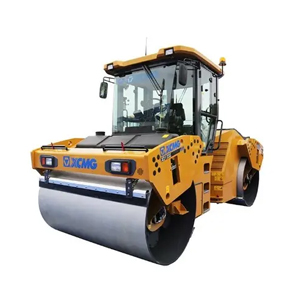
| Double Drum | Asphalt | Uniform surface finishing |
| Pneumatic Tire | Asphalt and sealing | Kneading and surface sealing |
Which Road Roller Specifications Matter Most?
Operating Weight and Drum Width
The applied compaction force is directly influenced by machine weight, whereas roller width dictates the area covered in each pass. Assessing suitability therefore requires a close look at the compaction mechanism at work and the density specifications that must be met.
A machine with a suitable working width can improve productivity on large projects, but overall dimensions also need to fit the available work area.
Vibration Frequency, Amplitude, and Compaction Force
The frequency and amplitude of a vibratory compactor are directly related to whether kinetic energy can be effectively transferred to the material. Higher values are not always better; a comprehensive judgment must be made based on the material type, paving thickness, and compaction target.
Engine, Maintenance, and Serviceability
Engine power should be considered alongside the machine’s operating conditions and expected workload. For international buyers, maintenance requirements and spare-parts availability can be just as important as initial performance.
A useful procurement review should include service intervals, access to major components, replacement parts, warranty conditions, and the supplier’s technical support capabilities.
XH263J: A Heavy-Duty Option for Solid-Fill Compaction
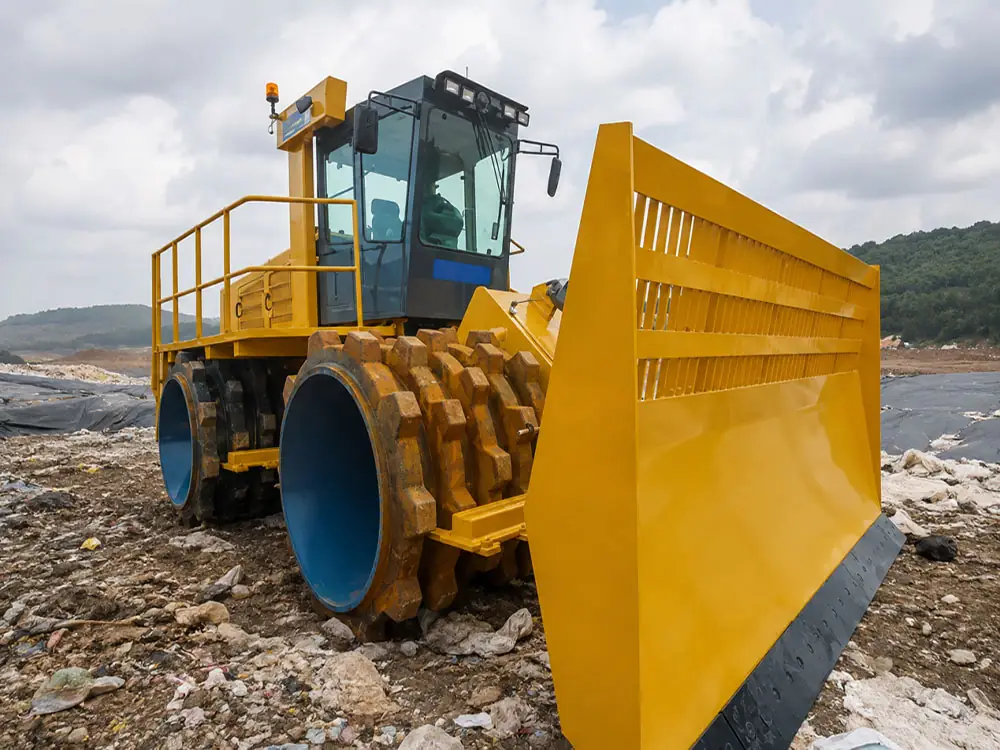
The XH263J is a heavy-duty backfill compactor road roller designed for compacting solid filler. Its main application is solid-filler compaction in landfills, helping reduce occupied volume and support longer landfill service life.
Designed for Solid-Fill and Landfill Compaction
The machine is intended for demanding solid-fill environments. Its design focuses on working conditions where the material can be irregular, and the terrain can be challenging.
The manufacturer states that the XH263J uses an articulated frame connection that allows lateral movement between frame sections, helping the wheels maintain contact with uneven ground.
Key XH263J Specifications
| Specification | XH263J |
| Total weight | 26,000 kg |
| Compaction width | 3,710 mm |
| Rated power | 192 kW |
| Speed range | 4–11 km/h |
| Front axle load | 13,000 kg |
| Rear axle load | 13,000 kg |
| Dimensions (L × W × H) | 7,680 × 3,800 × 3,800 mm |
These specifications are based on the manufacturer’s published product information.
Design Features for Challenging Working Conditions
The XH263J uses an enclosed boat-bottom frame structure designed for harsh landfill environments. Its compaction wheels feature specially arranged rolling bumps intended to provide extrusion and crushing effects during operation.
The manufacturer also specifies conical rims designed to reduce material accumulation. The machine uses a water-cooled, turbocharged Shangchai engine and has an enclosed cab equipped with heating and cooling air conditioning, a 7-inch LCD monitor, and two rear-view cameras.
For maintenance access, the cab can be tilted. An anti-rollover protection mechanism is integrated into the frame.
Where Can the XH263J Be Used?
The primary application is solid-filler and landfill compaction. It can be considered for projects where high machine weight, substantial compaction width, and a design suited to irregular solid-fill conditions are required.
Buyers should still compare the machine against their specific material, terrain, operating hours, and project specifications before making a procurement decision.
What Should B2B Buyers Check Before Purchasing?
A structured evaluation can reduce the risk of selecting a machine that does not match the site’s actual requirements.
Match the Machine to the Project
Start with the material, required density, layer thickness, working environment, and expected daily operating hours. These factors provide the basis for comparing machine specifications.
The decision can follow a simple sequence:
Material → Density Requirement → Layer Thickness → Site Conditions → Machine Capability
This method helps prevent specifications from being evaluated without a clear application context.
Consider Total Operating Cost
Purchase price isn’t the whole story. Fuel, maintenance, parts, downtime, and support all add to long‑term costs. For fleet managers, nothing is worse than waiting for spare parts—machine downtime means project delays.
Confirm Safety and Operator Requirements
Roller and compactor operations can involve rollover hazards, particularly on slopes, soft ground, wet surfaces, and unstable edges. OSHA emphasizes appropriate operator training and awareness of site-specific hazards.
Safety requirements should therefore be reviewed together with machine selection, especially when equipment will operate on irregular terrain.
FAQ
What is a road roller used for?
A: A road roller is used to compact materials such as soil, aggregate, and asphalt. The suitable configuration depends on the material, required density, layer thickness, and construction application.
What is the difference between a road roller and a road compactor?
A: The terms are often used interchangeably in construction equipment discussions. “Road compactor” can also be used more broadly for equipment designed to increase the density and stability of construction materials.
What should I check before buying a road roller?
A: Check the material application, operating weight, working width, compaction mechanism, vibration characteristics, machine dimensions, engine configuration, maintenance requirements, spare-parts availability, warranty, and supplier support.
Is the XH263J suitable for asphalt road finishing?
A: The XH263J is a heavy-duty compactor for solid filler and landfill applications. Buyers looking for asphalt finishing equipment should compare it with machinery specifically designed for asphalt compaction.
Conclusion
The quality of compaction work depends on correctly assessing the materials and site conditions. The tonnage of the equipment, wheel width, compaction characteristics, steering flexibility, maintenance requirements, safety performance, and after-sales service system—all these factors can influence the user experience.
For demanding solid-fill and landfill projects, the XH263J offers a clearly defined application profile and published specifications that buyers can evaluate against their project requirements. A careful comparison can help contractors select equipment that supports both current construction needs and long-term operating efficiency.
If you are evaluating a heavy-duty road roller for solid-fill or landfill compaction, contact us to discuss your project requirements and ask for detailed specifications, pricing, and export support for the XH263J.