Key Takeaways
Wheel loader productivity depends on the balance between engine power, bucket capacity and hydraulic cycle time.
Bucket size should match material density, rated load and truck capacity to maintain efficient loading cycles.
For buyers in Africa, Southeast Asia, Latin America and other demanding markets, engine configuration, cooling performance, emissions and parts support should be confirmed before purchase.
The ZL50GN combines a 5-ton-class rated load with a 162 kW engine, flexible bucket capacity and a claimed total cycle time of less than 10.5 seconds, making it suitable for several heavy material-handling applications.
How Engine Power Influences Wheel Loader Productivity
Engine power is one of the first specifications buyers compare when selecting a XCMG wheel loader. Power needs to be converted into useful work through the transmission, axles and hydraulic system. In practical loading operations, sufficient power helps the machine penetrate material piles, maintain traction and move loaded material without excessive loss of speed.
The relationship between power and productivity also depends on the working environment. Loose aggregate may require less breakout effort than compacted soil or rock. Long travel distances, slopes and frequent loading cycles can also increase the power demand. Therefore, a machine should be matched to the actual duty cycle instead of being selected simply because it has a higher rated engine output.
Power-to-Workload Matching
A useful purchasing approach is to consider the complete workload: material type, average travel distance, loading height, operating hours and truck size.Buyers should consider more than one aspect when evaluating wheel loader productivity. The University of Baghdad’s construction equipment guidance shows that loader production depends on factors including bucket capacity, fill factor, cycle time and operating efficiency.
For international buyers, engine configuration is another practical consideration. The available engine should meet the destination market’s emissions requirements and work reliably with the local fuel quality and climate. Buyers should confirm the exact export configuration, especially when equipment is intended for regions with high ambient temperatures or specific emissions regulations.
How Bucket Capacity Changes Loading Output
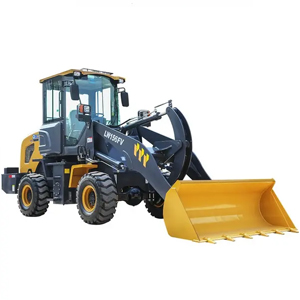
Bucket capacity directly affects how much material can be moved in each loading cycle. However, choosing the largest available bucket is not always the most productive solution for a heavy equipment wheel loader. Material density, rated operating load and bucket design all influence whether the machine can fill and carry the bucket efficiently.Bucket selection should consider machine capacity, material characteristics and the expected fill factor.
Match the Bucket to the Material
| Material / Working Condition | Main Consideration | Preferred Approach |
| Sand and loose soil | Lower material resistance | Capacity-focused bucket |
| General aggregate | Balanced loading | Standard-purpose bucket |
| Dense rock | Higher breakout resistance | Reinforced bucket |
| Quarry material | Impact and abrasion | Heavy-duty configuration |
| Stockpile loading | Fast filling and cycling | Capacity + cycle efficiency |
A larger bucket can reduce the number of cycles needed to load a truck, but only if the machine can fill and lift it without compromising stability or cycle speed. In contrast, an undersized bucket may increase the number of loading cycles and reduce hourly output.
Match the Loader With the Hauling Fleet
Truck capacity should also be considered. If a loader repeatedly needs too many passes to fill a truck, the loading operation may become inefficient. If the bucket is oversized for the machine or the truck, each cycle may become difficult to manage.
For this reason, B2B buyers should evaluate the loader and truck as one working system. The goal should be consistent, efficient loading cycles.
Why Hydraulic Cycle Time Determines Real Productivity
A loading cycle normally includes bucket filling, lifting, traveling, dumping and returning to the material pile. A XCMG wheel loader with good power but slow hydraulic response may not achieve the expected production rate because time is lost during repeated lifting and dumping movements.
A simple productivity model is:
Hourly output ≈ Material per cycle × Effective cycles per hour
Actual cycles per hour are lower than the theoretical maximum because operators need time for positioning, reversing, waiting and other site activities. Actual productivity also depends on cycle time and operating efficiency. Research from the University of Alberta identifies bucket capacity, fill factor, operating efficiency and cycle time as key variables in equipment productivity calculations.
The Main Stages of a Loading Cycle
- Dig and fill: The bucket enters the pile and collects material.
- Lift: The loader raises the filled bucket to the required height.
- Travel: The machine moves toward the truck, hopper or stockpile.
- Dump and return: Material is discharged before the machine returns for the next cycle.
Reducing unnecessary movement between these stages can have a noticeable effect on productivity. Site layout, truck positioning and operator skill therefore matter alongside hydraulic performance.
Why Hydraulic Response Matters
Hydraulic pressure, flow, control response and oil temperature all influence how consistently the loader performs its lifting and dumping functions. For operations involving long shifts or high ambient temperatures, buyers should also check the cooling arrangement and recommended hydraulic oil specifications.
The goal is not simply to achieve the shortest possible cycle. A productive machine needs to maintain predictable cycles while handling the required payload safely and consistently.
How to Evaluate a 5-Ton Wheel Loader for Different Jobsites
A ZL50GN Wheel Loader should be evaluated according to the type of work it will perform. The same machine may be used differently in an aggregate yard, construction project or quarry, so configuration and operating conditions need to be considered before purchase.
Aggregate and Stockpile Loading
Aggregate yards typically require repeated bucket loading with relatively short travel distances. Here, bucket filling, breakout performance and hydraulic response are important because the machine may perform hundreds of repeated movements during a working shift.
Quarry and Heavy Material Handling
Quarry work places greater demands on the loader’s structure, tires, bucket and drivetrain. Buyers should pay attention to breakout force, traction, frame construction and the suitability of the selected bucket for abrasive or dense materials.
Construction and Earthmoving
Construction projects can involve loading, material handling and general earthmoving. Versatility becomes more important because working conditions can change from one phase of the project to another.
Before ordering, buyers should confirm:
- Required rated load and bucket capacity.
- Material density and expected working cycle.
- Dumping height and truck or hopper dimensions.
- Engine emissions, local certification and climate requirements.
- Spare-parts availability and international logistics.
XCMG ZL50GN 5-Ton Wheel Loader: Specifications and Productivity Assessment
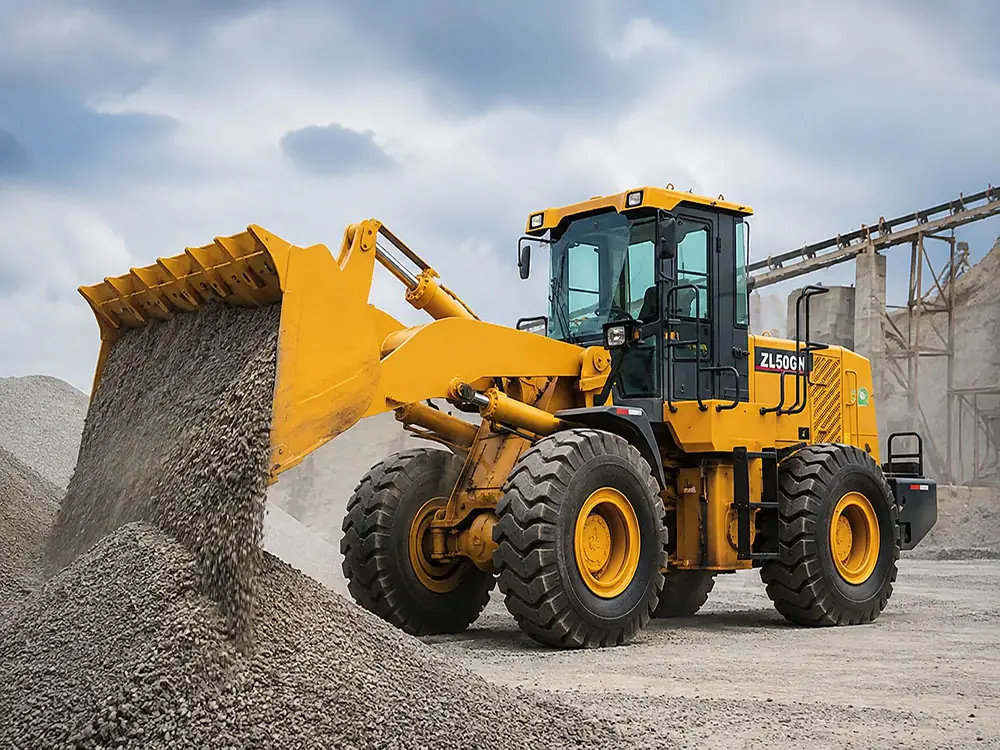
The XCMG wheel loader ZL50GN is positioned as a heavy-duty machine for earthmoving and material-handling applications. According to the current product information, it has a 5,000 kg rated operating load, a 162 kW engine and bucket capacities ranging from 2.5 to 4.5 m³.
Powertrain and Working Performance
The ZL50GN listed for international supply has an engine rated at 162 kW at 2,200 rpm. Its listed breakout force is at least 170 kN, while traction force is at least 160 kN. These specifications are relevant when the loader needs to enter stockpiles or handle materials that require higher penetration and traction.
| Specification | ZL50GN |
| Rated operating load | 5,000 kg |
| Engine rated power | 162 kW |
| Bucket capacity | 2.5–4.5 m³ |
| Breakout force | ≥170 kN |
| Traction force | ≥160 kN |
| Total cycle time | <10.5 s |
| Dump clearance at maximum lift | 3,100–3,700 mm |
| Wheelbase | 3,300 mm |
The product information also lists a total cycle time of less than 10.5 seconds. This figure serves as a useful reference for evaluating hydraulic working speed, although actual productivity will depend on travel distance, material type, operator technique and site layout.
Bucket Capacity and Application Flexibility
The machine is listed with a bucket capacity range of 2.5–4.5 m³. This gives buyers room to consider different material densities and loading requirements rather than using one bucket configuration for every application.
The official XCMG product page lists a 3.2 m³ bucket, 162 kW rated power, 17,150 kg operating weight and 5,500 kg rated load for its ZL50GN configuration, illustrating that specifications can vary by configuration and source. Buyers should therefore confirm the exact machine configuration before finalizing an order.
Structure, Clearance and Working Conditions
The supplier’s current product information describes reinforced front and rear frames with a heavy-duty box-type structure. The listed maximum-lift dump clearance ranges from 3,100 to 3,700 mm, while maximum-lift reach ranges from 1,100 to 1,220 mm. These dimensions are particularly relevant when the machine is paired with high-sided trucks or industrial hoppers.
The machine is presented for infrastructure and construction, mining and quarrying, ports and logistics, and general aggregate handling. Its suitability for a specific site should still be confirmed according to material characteristics, bucket selection, ground conditions and local operating requirements.
FAQ
Q1: What factors have the greatest effect on wheel loader productivity?
A: Engine power, bucket capacity and hydraulic cycle time are three important factors. However, material density, travel distance, truck positioning and operator efficiency also affect actual production.
Q2: Is a larger bucket always better?
A: No. Bucket capacity should match the machine’s rated load and the density of the material. An oversized bucket can affect stability and working efficiency, while an undersized bucket may require too many loading cycles.
Q3: What is the bucket capacity of the ZL50GN Wheel Loader?
A: The current supplier specification lists a range of 2.5–4.5 m³, while the official XCMG page lists a 3.2 m³ configuration. The exact bucket should be confirmed according to the intended application and export configuration.
Q4: What is the listed cycle time of the ZL50GN?
A: The supplier’s current product specification lists a total cycle time of less than 10.5 seconds. Actual field productivity will vary with operating conditions and work methods.
Q5: Where can this machine be used?
A: The ZL50GN is listed for infrastructure and construction, mining and quarrying, ports and logistics, aggregate handling and other material-moving operations. Final configuration should be selected according to the specific jobsite.
Conclusion
Wheel loader productivity is best understood as the interaction of power, bucket capacity and cycle time. Engine output supports penetration and traction, bucket capacity determines material moved per cycle, and hydraulic response affects how quickly the machine can complete repeated movements.
For buyers considering a heavy equipment wheel loader, the right choice is therefore not necessarily the machine with the highest horsepower or largest bucket. A better approach is to match the machine’s configuration with the material, truck fleet, working environment and expected duty cycle.
The XCMG ZL50GN provides a 5-ton-class solution with 162 kW rated power, flexible bucket capacity and a listed cycle time below 10.5 seconds. For international procurement, buyers can contact us to confirm the exact configuration, bucket option, technical specifications and delivery solution for their market.