Key Takeaways
- Match trailer capacity and platform dimensions to the equipment’s transport weight, overall height, and loading requirements.
- Review ramp access, ground clearance, axle configuration, and suspension before comparing trailer prices.
- Check road restrictions and permit requirements along the planned route, not only at the loading and delivery sites.
- Agree on the final configuration, technical drawings, and export requirements before production.
Introduction
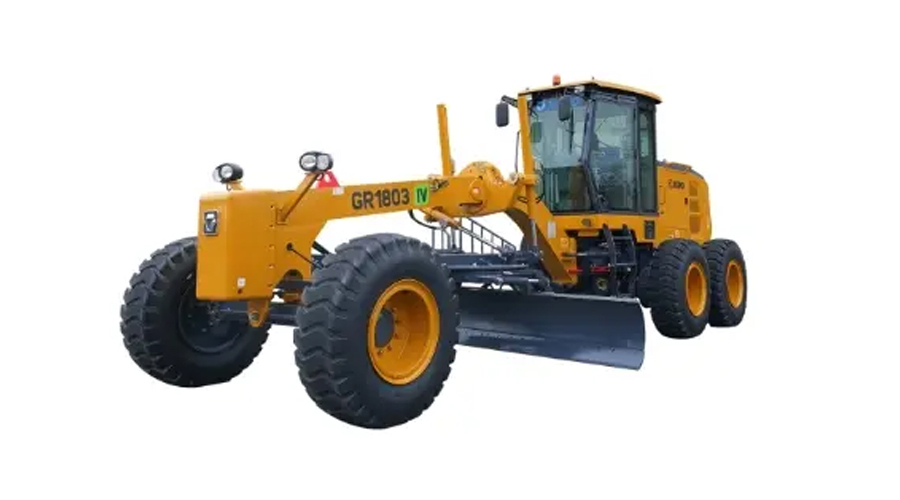
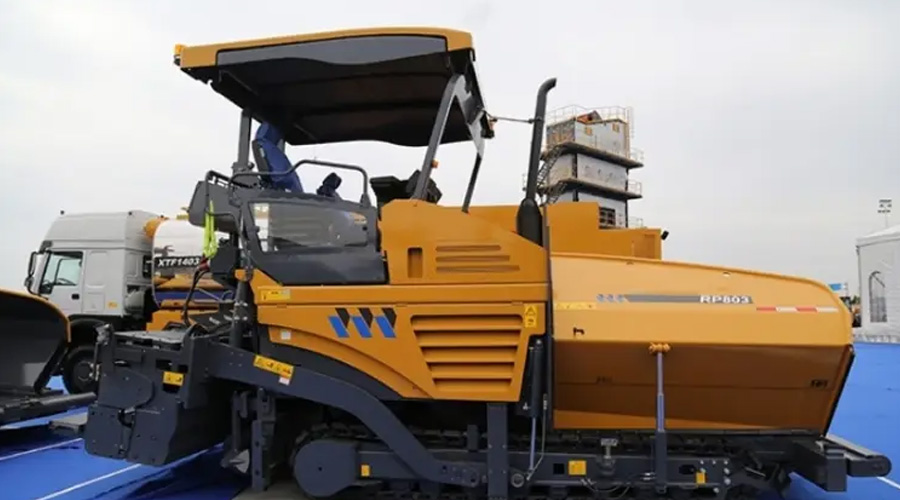
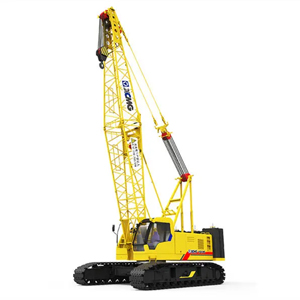
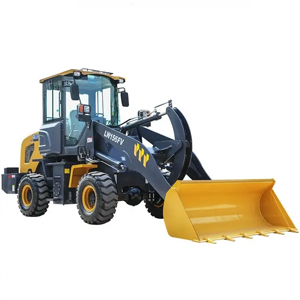
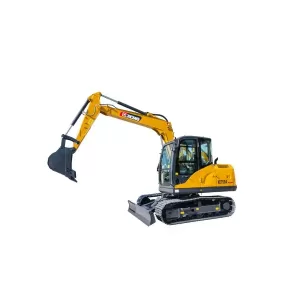
Moving excavators, loaders, cranes, and other heavy machinery takes more than a trailer with a high payload rating. The trailer needs to support the equipment safely, provide suitable loading access, and fit the road conditions along the transport route. A suitable low bed trailer can reduce the loaded transport height and make heavy machinery easier to load and move.
Match the Trailer to the Equipment
Start with the machinery itself. Its weight is important, but its dimensions, ground clearance, and loading method also affect the trailer configuration.
Payload and Load Distribution
The rated payload must cover the equipment’s transport weight and any accessories carried with it. Weight distribution matters just as much. A trailer with sufficient nominal capacity may still be unsuitable when the machinery places too much weight on a limited section of the platform.
For machinery with an uneven weight distribution, discuss the permitted loading position and axle loads with the supplier. The tractor unit’s capacity and applicable road weight limits also affect whether the complete combination is suitable.
Platform Length, Width, and Height
Measure the machinery in its actual transport configuration, including any components that will remain attached during the journey. The usable deck must support the equipment properly without excessive overhang.
Platform height deserves particular attention when moving tall machinery. A lower deck can reduce the total loaded height, but the result also depends on the equipment’s height, its position on the trailer, and the vertical clearance along the route.
Length and width require the same practical assessment. A longer or wider deck may provide better support for certain machines, but it can also affect turning space and permit requirements. For long equipment, check the usable platform length rather than relying only on the trailer’s overall length.
Check Loading Access and Road Clearance
A trailer needs to work at both ends of the journey. Site access, loading equipment, and route restrictions can all affect the suitability of a particular configuration.
Ramp Design and Loading Conditions
The loading method determines what kind of access the trailer needs. Self-propelled machinery may be driven onto the deck, while other loads require a crane or separate lifting equipment. Ramp angle, traction, and the machine’s ground clearance all influence how safely it can be loaded.
A mechanical folding ramp may be suitable for regular loading routines. Hydraulic ramps offer another option for operations where powered ramp movement is useful.
Ground Clearance and Route Restrictions
A low deck helps control overall transport height, but clearance beneath the trailer remains important. Uneven entrances, temporary access roads, and changes in road level can create problems during loading and travel. Check the approach and departure angles as well as the surfaces at both loading and unloading locations.
Public-road transport introduces additional limits. Height, width, axle loads, and gross vehicle weight may all be regulated. In the United States, the Federal Highway Administration (FHWA) explains how federal bridge-formula requirements relate vehicle weight to axle spacing. Oversize or overweight movements may also require permits under the rules that apply to the planned route.
Compare Axles, Suspension, and Structural Design
Once the equipment and route requirements are understood, assess the trailer’s load-bearing structure and running gear. These components affect how the trailer carries its load and how practical it is to maintain over time.
Axle Configuration
Axle count and rating need to suit the payload and its distribution. Additional axles can help spread the load, but axle count alone does not establish whether a trailer is road-legal. Axle spacing, tire ratings, suspension, and local regulations also affect the permitted weight.
Rather than choosing a configuration by axle count alone, review the proposed arrangement with the supplier. The tractor unit and trailer must be assessed together, including their combined weight and compatibility.
Main Beam and Platform Construction
The main beam carries a substantial part of the structural load. Material grade, section design, welding quality, and manufacturing control all contribute to the finished trailer’s suitability for its intended work.
When comparing quotations, request technical drawings and relevant inspection information. A material grade by itself cannot establish that two trailers have the same load capacity or fatigue performance. The complete structure needs to be evaluated against the intended payload and operating conditions.
Suspension and Maintenance
Mechanical suspension is often considered for its straightforward design and familiar maintenance requirements. Air suspension may suit applications with particular ride or operating needs. Actual suitability depends on the trailer design and the availability of local service support.
Maintenance planning should cover inspections, spare-parts access, road conditions, and expected operating frequency. A configuration that can be serviced conveniently in the destination market may help reduce downtime during its service life.
Understand the Total Cost of Ownership
The purchase price is only one part of the cost. A trailer that fits the machinery and route can help avoid loading difficulties, unnecessary adjustments, and operating delays.
Purchase Price and Configuration
The price of a low flatbed semi trailer can vary with payload rating, deck dimensions, axle configuration, suspension, ramp arrangement, and optional equipment. Custom dimensions or heavy-duty components may raise the initial cost, but they can be necessary for a particular machine or route.
Compare quotations on the same technical basis. Check which components are included, which options carry additional charges, and whether the quoted configuration meets the transport requirements.
Maintenance and Operating Costs
Routine expenses may include inspections, tire replacement, brake servicing, suspension maintenance, and spare parts. Ramp mechanisms and other moving components also require regular checks.
For fleets working across different regions, after-sales support and parts availability can be as important as the initial price. The most practical option is one that balances purchase cost with the expected workload and the resources available for maintenance.
Why Choose a CNFORCE Low Bed Trailer?
The right trailer configuration depends on the equipment, the working environment, and the transport plan. CNFORCE offers different configuration options for buyers to discuss with the supplier. The following published information provides a starting point for technical review and should be checked against the current product documentation before an order is placed.
| Item | Published configuration information |
| Payload | 40–80 tonnes; customized configurations may be available for heavier loads |
| Overall dimensions | Length: 13,000–16,000 mm; width: approximately 3,000 mm; height: 1,750–3,100 mm |
| Working platform | Length: 9,000–11,500 mm; height: 850–1,150 mm |
| Main beam | Q345B or Q460C steel options; submerged arc welding |
| Axles and suspension | 3- or 4-axle configurations; 13-tonne or 16-tonne axle options; mechanical or air suspension |
| Loading ramps | Spring-assisted mechanical or hydraulic folding ramp options |
Adjustable Deck Width for Wider Equipment
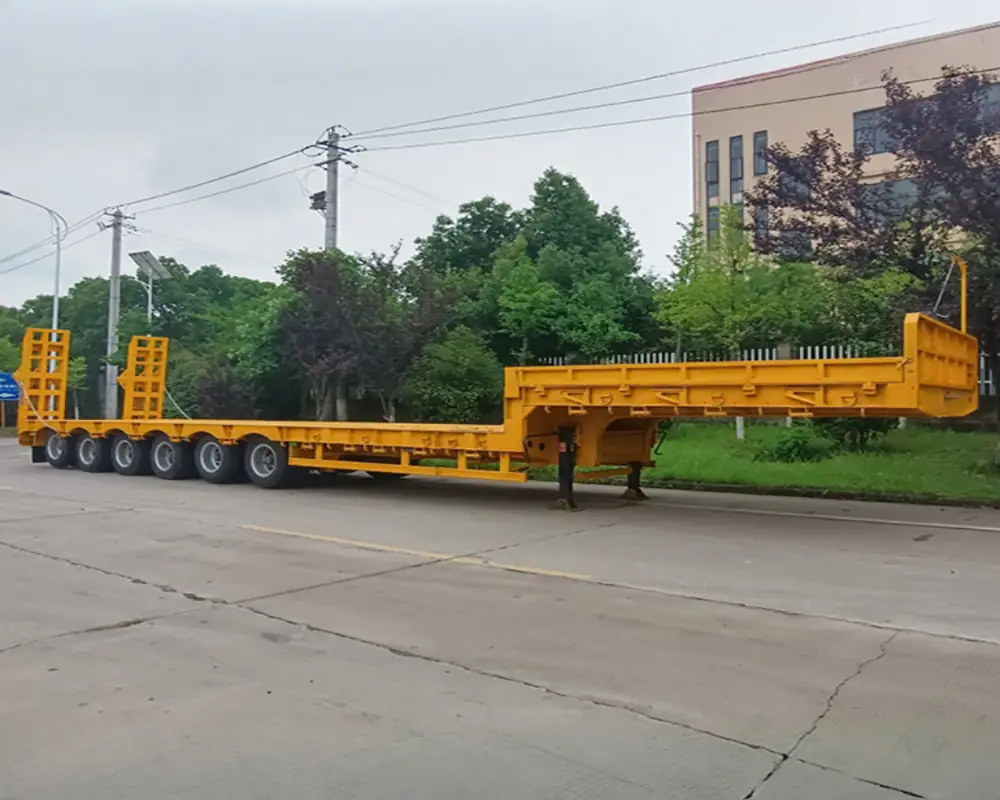
CNFORCE low bed trailers have a standard width of 3,000 mm, which can be extended to 3,500 mm with side pull-out outriggers. This additional width provides more room for machinery with wide tracks or a broad base. Before ordering, buyers should confirm the equipment’s overall width, track spacing, and support points to determine whether the extended configuration is needed.
Low Deck Height and Durable Loading Surface
The working deck height ranges from 850 to 1,150 mm, while the platform uses 4 mm or 5 mm diamond checker plate, depending on the configuration. The deck height affects loading access and overall transport height, while the plate specification should be matched to the cargo weight and loading method. Buyers can confirm these details based on the machinery dimensions, ground clearance, and loading equipment available at the site.
Kingpin and Landing Gear Options for Tractor Compatibility
The trailer supports 2.0-inch (50 mm) or 3.5-inch (90 mm) kingpin configurations and uses JOST 28-ton two-speed landing gear according to the listed specifications. These components must match the tractor unit’s fifth-wheel requirements and the trailer’s operating conditions. Confirming the kingpin size, fifth-wheel height, and connection details before production helps reduce compatibility issues during delivery and operation.
Axle, Suspension, and Braking Configurations for Heavy Loads
CNFORCE lists 3- or 4-axle configurations with 13-ton or 16-ton FUWA/BPW axles, mechanical or air suspension, and a dual-line pneumatic braking system with a WABCO relay valve and T30/30 brake chambers. These options allow the trailer configuration to be matched to the intended cargo and operating conditions. The final specification should account for loaded weight, axle-load limits, road conditions, and applicable transport regulations.
Frequently Asked Questions
What payload should I choose for a low-bed trailer?
Choose a rated payload that covers the equipment’s transport weight and accessories, then check load distribution and axle limits. The towing vehicle and applicable road restrictions also affect the suitable configuration.
Is a hydraulic ramp better than a mechanical ramp?
Neither option suits every application. Hydraulic ramps may simplify operation in some heavy-duty settings, while mechanical ramps may fit more straightforward loading routines. Compare the machine’s ground clearance, ramp angle, loading frequency, and maintenance requirements.
Can a low-bed trailer be customized for oversized machinery?
Customization may be possible depending on the required dimensions, payload, axle arrangement, and loading method. The supplier needs the machinery details and planned route to assess the proposed design.
What documents should be checked before shipment?
Requirements depend on the destination and sales agreement. Buyers should review the technical specification, commercial and shipping documents, inspection records, warranty terms, and any applicable compliance documents with the supplier before dispatch.
Do I need a permit to transport heavy equipment by road?
Permit requirements depend on the route, vehicle combination, dimensions, axle loads, and gross weight. Check the rules in every relevant jurisdiction and obtain the required permits before transport. In the United States, the Federal Motor Carrier Safety Administration (FMCSA) also provides cargo-securement requirements that may apply to the load: FMCSA — Cargo Securement Rules.
Conclusion
Choosing a suitable low-bed trailer involves more than finding enough payload capacity. The equipment’s shape, loading method, route conditions, and day-to-day use all influence whether a configuration will work in practice. A well-matched trailer can simplify loading arrangements and help operators plan heavy machinery movements with fewer avoidable adjustments.
If you are sourcing a low-bed trailer for your operation, provide the equipment dimensions, transport weight, loading requirements, towing vehicle details, planned route, and operating conditions. CNFORCE can review these requirements, help determine a suitable configuration, and provide a customized quotation.