Key Takeaways
- Match rated capacity to load weight, load center, lift height, and attachment configuration—not weight alone.
- Use the capacity chart to verify whether the truck can handle the load at the required height.
- Match the power source and tires to ventilation, shift length, floor conditions, and outdoor terrain.
- Compare complete specifications, safety documents, service support, and total ownership costs.
- Request an itemized quotation that identifies the exact configuration, included equipment, and delivery terms.
Introduction
Choosing a forklift for heavy-duty material handling starts with a practical question: what must the machine lift, how far must it lift it, and where will it operate? A truck with a high headline capacity may still be unsuitable if the load is long, the center of gravity is too far forward, or the mast cannot reach the required height.
Define these operating conditions before comparing models. This turns supplier claims into measurable requirements and helps prevent capacity mismatches, access problems, and unexpected costs after delivery.
How Do You Calculate the Capacity Required for Heavy Loads?
The heaviest load is the starting point, not the final selection criterion. Load center, lifting height, mast design, and attachments determine whether the truck can safely handle that load in the intended configuration.
Check Load Center, Not Just Load Weight
Load center is the horizontal distance from the vertical face of the forks to the load’s center of gravity. A load that extends farther forward creates a larger load moment, which can reduce the capacity available.
For example, a forklift rated at 10,000 kg at a 600 mm load center should not automatically be assumed to lift every 10,000 kg load. If a long steel bundle places its center of gravity farther forward, the original rating may no longer apply. Unevenly distributed loads can also affect stability.
Before requesting a quotation, record the maximum load weight, length, width, height, and center of gravity. Include pallets, packaging, lifting fixtures, or other materials that will be lifted together. For long or irregular loads, provide a drawing or photograph with dimensions so the supplier can assess the load configuration.
The U.S. Occupational Safety and Health Administration (OSHA) explains why load distribution and load center matter in its powered industrial truck safety guidance. The practical rule is to verify the proposed load against the manufacturer’s capacity chart and data plate, rather than estimating capacity from the product title.
Verify Capacity at the Required Lift Height
A truck’s capacity can vary with mast configuration and lifting height. Attachments such as clamps, fork extensions, and sideshifters may add weight, move the load center forward, or otherwise change the permitted capacity.
Give the supplier four details: load dimensions, required lift height, mast type, and each planned attachment. Request the capacity chart for that exact configuration. If the truck must lift a heavy load to an upper rack, confirm the allowable capacity at that height—not only the rating at a lower position.
Choose a model only when its documented capacity covers the intended load and operating conditions. If the proposed chart does not show the required configuration, request written technical confirmation before ordering.
Which Configuration Suits Your Worksite?
Power source, tires, mast dimensions, and turning space affect whether the truck can work efficiently and safely in the intended location.
Choose Diesel or Electric by Duty Cycle and Ventilation
Diesel trucks can suit outdoor yards and demanding operating schedules where refueling is practical. Buyers should account for fuel use, engine servicing, exhaust emissions, and noise. For indoor work, exhaust and ventilation require particular attention: OSHA warns that combustion-powered trucks can create hazardous air-quality conditions in enclosed or poorly ventilated spaces.
Electric trucks avoid exhaust emissions at the point of use, making them worth considering for indoor handling. Their suitability depends on battery capacity, charging time, available charging space, and whether the truck must operate across multiple shifts. Estimate daily operating hours and check whether charging opportunities match the work schedule.
Choose diesel when outdoor duty, refueling access, and site rules support it. Consider electric when indoor air quality is a priority and the battery and charging plan can support the workload.
Match Mast, Forks and Tires to the Site
Measure the lowest overhead clearance, required stacking height, aisle width, doorway width, and turning area. Check both the mast’s lowered height and its maximum lift height. A truck that can reach a rack may still be unsuitable if its lowered mast cannot pass through a doorway.
Fork length must support the load without creating unnecessary handling difficulties. Ask the supplier to match fork dimensions to the load’s length, weight distribution, and lifting points. Do not assume longer forks are always safer; the load must be adequately supported and handled within the approved configuration.
Tire selection depends on the surface. Pneumatic tires may suit outdoor yards with uneven ground, while cushion tires are commonly considered for smooth indoor floors on compatible trucks. Check for gravel, potholes, wet areas, slopes, floor joints, and transitions between indoor and outdoor work. Confirm the tire type against the truck design and the manufacturer’s recommendations.
Which Technical and Safety Details Should Buyers Compare?
Two trucks with similar rated capacities can differ in ramp performance, lifting speed, braking, maneuverability, and service needs. Compare the figures that affect the actual work instead of treating the longest specification list as the best offer.
Check Performance Under the Expected Load
Review travel speed, gradeability, lifting speed, lowering control, braking, steering, and turning radius. If the truck regularly uses ramps, check gradeability under the relevant load condition. If it handles heavy loads at height, focus on the approved capacity chart, mast configuration, and controlled lifting and lowering.
Ask whether published speed and gradeability figures apply to a loaded or unloaded truck. A maximum speed alone says little about productivity if the truck spends most of its time positioning heavy loads or moving through confined aisles.
Verify Documents, Warranty and Parts Support
Request the technical datasheet, operator’s manual, capacity plate details, applicable conformity documents, and warranty terms. Requirements vary by destination market, so confirm which safety, emissions, and machinery documents apply before purchase.
Check that the documentation matches the truck being quoted. If the mast, forks, or attachments change, ask whether the capacity rating or supporting documents also need revision. A generic brochure is not a substitute for configuration-specific information.
For service support, confirm warranty coverage and exclusions, maintenance intervals, the availability of filters and other routine parts, and how technical problems will be handled. For sites far from the supplier, ask about parts dispatch times and remote troubleshooting. These details help estimate the cost of downtime instead of focusing only on the purchase price.
How Should Buyers Compare Prices and Total Ownership Costs?
A low quotation is not necessarily the lowest-cost option if it excludes required equipment, delivery, documentation, or service support. Compare offers on the same technical and commercial basis.
Compare Like-for-Like Quotations
Purchase price varies with rated capacity, power source, mast, fork dimensions, tires, attachments, optional equipment, and destination requirements. Shipping, insurance, duties, and inland transport can also affect the delivered cost.
Ask each supplier to list the model, quantity, standard equipment, optional items, warranty, spare-parts package, delivery terms, and excluded charges. This makes it easier to identify whether a price difference comes from the machine itself or from a different scope of supply.
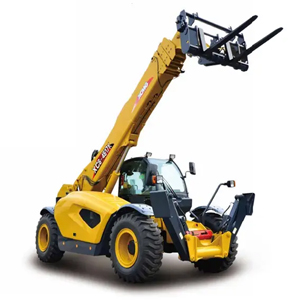
Search results may mix conventional counterbalanced forklifts with other lifting machines. A forklift telehandler or telehandler forklift listing may refer to a telescopic handler, which uses a boom to extend loads forward or lift them to height. A conventional counterbalanced truck uses a mast and forks at the front. If the job requires extended reach, evaluate a heavy duty telehandler; if it mainly involves moving palletized loads within a defined working envelope, compare counterbalanced forklifts instead. Do not compare prices until the machine category is clear.
Estimate Costs Over the Planned Ownership Period
Include purchase and delivery, fuel or electricity, scheduled maintenance, tires, wear parts, and likely downtime. Use the same ownership period and estimated operating hours for every option.
For example, a truck used across several shifts may consume more energy and require more frequent servicing than one used intermittently. A truck working on rough ground may also need a different tire replacement budget from one operating on a smooth warehouse floor.
Use supplier maintenance schedules and local energy prices to build the estimate. Separate confirmed costs from assumptions, and avoid presenting uncertain downtime or repair costs as guaranteed figures. This produces a more useful comparison than purchase price alone.
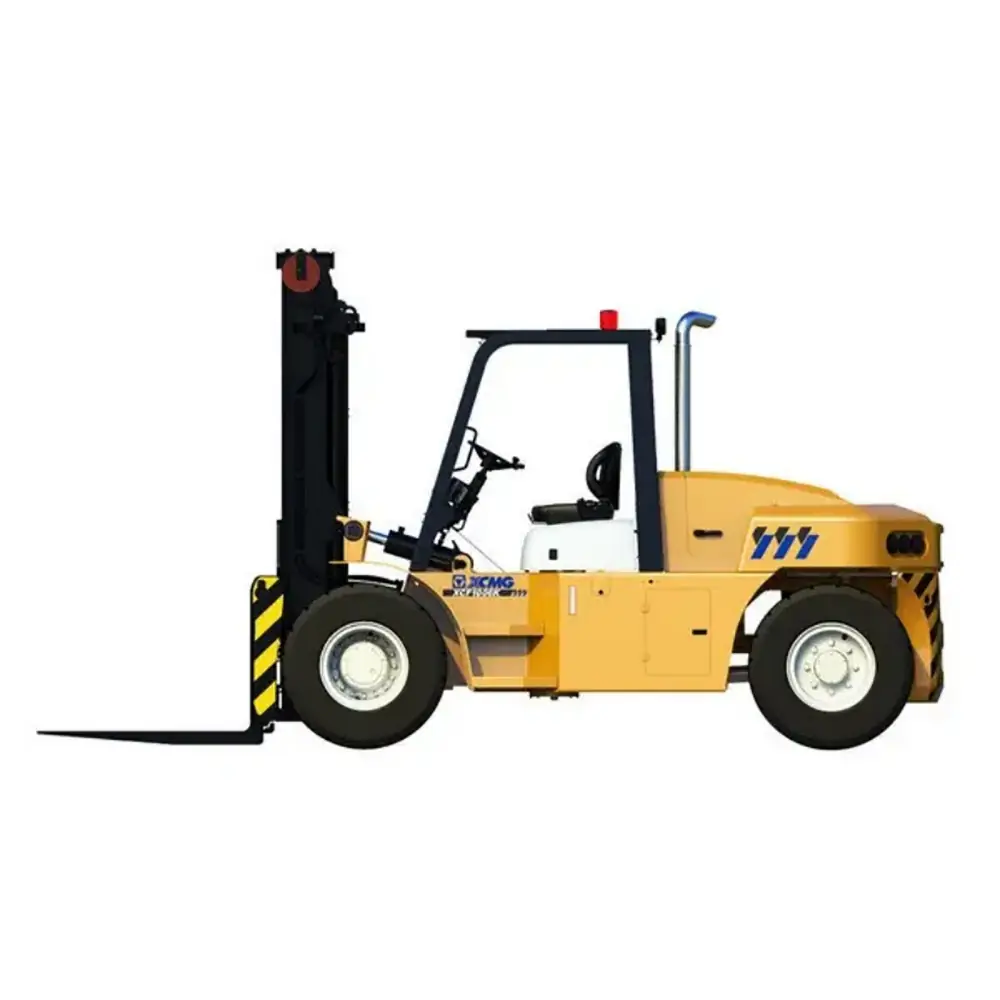
Why Consider the XCMG XCF1006K for Heavy-Duty Material Handling?
Before assessing a specific model, buyers should compare its published specifications with the load requirements, travel routes, and lifting conditions identified in the earlier sections. The following figures provide an initial reference for evaluating whether the XCF1006K merits further consideration.
| Key specification | Published information |
| Rated capacity | 10,000 kg |
| Load center | 600 mm |
| Standard lifting height | 3,000 mm |
| Power source | Diesel |
| Tires | Pneumatic |
| Full-load travel speed | 26 km/h |
| Full-load gradeability | 20% |
A Rated Capacity for Industrial Loads
The 10,000 kg rating may be relevant to heavy pallets, industrial components, and other loads that fall within the permitted operating envelope. The key check is whether the load’s center of gravity and lifting height match the rated conditions. Buyers handling long steel bundles or uneven loads should submit dimensions and load distribution details for confirmation.
Diesel Power for Outdoor Duty
The diesel configuration may suit outdoor operations where refueling and emissions requirements can be managed. For any indoor use, assess ventilation and local rules before deciding. The power source should fit the site’s operating conditions, not simply the load rating.
Pneumatic Tires for Surface Assessment
Pneumatic tires are a specification worth reviewing for yards and other surfaces that may be uneven. Buyers should still confirm ground conditions, slopes, turning space, and any indoor-outdoor transitions. Tire suitability depends on the actual surface and the truck’s approved configuration.
Use Published Performance Figures in Context
The published full-load travel speed of 26 km/h and gradeability of 20% can help screen the model against travel routes and ramp requirements. They do not replace checks of ramp conditions, load stability, braking, and site restrictions. Ask the supplier to confirm the applicable operating data for the intended configuration.
Confirm the Quoted Configuration
Before ordering, verify mast height, fork dimensions, attachments, capacity documentation, warranty, spare parts, and delivery scope. Buyers searching for a telehandler for sale should first confirm whether they need a telescopic boom or a conventional mast-and-fork truck. The XCF1006K is a counterbalanced forklift, so its suitability depends on whether the task can be completed within its lifting and handling envelope.
Frequently Asked Questions
What load can the XCF1006K handle?
Its published rated capacity is 10,000 kg at a 600 mm load center. The actual permitted load depends on the load’s center of gravity, lift height, mast configuration, and attachments. Confirm the required configuration against the applicable capacity chart before operation.
What is the standard lifting height of the XCF1006K?
The published standard lifting height is 3,000 mm. If the job requires a different height or mast arrangement, ask the supplier to confirm the available configuration and its corresponding capacity rating.
Are the XCF1006K’s published speed and gradeability sufficient for my site?
The published figures are 26 km/h travel speed and 20% gradeability at full load. Compare them with actual route length, ramp gradient, surface condition, load, and site restrictions. Request configuration-specific confirmation where these conditions are critical.
Why does load center affect rated capacity?
A load positioned farther forward creates a greater load moment, which can reduce the truck’s available capacity and affect stability. Check the rated load center and use the manufacturer’s capacity chart for long, wide, or unevenly distributed loads.
What costs should be included when comparing forklift quotations?
Compare the equipment price, delivery, energy, scheduled maintenance, tires, wear parts, warranty, spare-parts support, and potential downtime over the same ownership period. Confirm that all quotations cover the same configuration and delivery terms.
Conclusion
A productive material-handling operation depends on how well the equipment fits the complete movement of goods—not just whether it can lift a specified weight. Travel distance, turning frequency, floor conditions, stacking patterns, and the time needed to position each load all influence daily output. Identifying these factors helps buyers prioritize the features that matter most to their operation and avoid paying for capabilities they will rarely use.
A well-matched configuration can also simplify daily operation by reducing unnecessary repositioning, improving access to handling areas, and making routine maintenance easier to plan. These practical considerations deserve attention alongside capacity and purchase price when evaluating equipment for long-term use.
If you are sourcing a forklift for your operation, provide the load dimensions, required capacity, lifting height, worksite conditions, operating hours, destination country, and preferred configuration. XCMG equipment suppliers can review these requirements, help identify a suitable configuration, and provide a quotation for your application.