Key Takeaways
- The required lifting capacity of a truck-mounted crane depends on load weight and working radius, not maximum lifting capacity alone.
- A telescopic boom changes the working distance, while the rotation range determines which directions the crane can cover.
- Hydraulic flow mainly affects movement speed, while hydraulic pressure helps verify hydraulic component specifications.
- Crane weight, installation position, and truck capacity determine whether enough payload remains after installation.
Introduction
A truck crane combines cargo transport with on-site lifting. Its suitability depends on where the load is located, how much it weighs, and how high it needs to be lifted.
A heavy load handled close to the truck has different requirements from a lighter load that must be placed farther away. Start with the load weight, working radius, and lifting height, then assess the boom, hydraulic system, and truck requirements.
Working Conditions Determine the Required Lifting Capacity
Load weight tells you how much the crane needs to lift, while working radius shows how far the load is from the crane. Together, they determine the lifting capacity available at the target position.
The Load Chart Shows How Much Weight Can Be Lifted at Different Working Radii
A crane does not provide the same lifting capacity at every working position. According to the UK Health and Safety Executive (HSE), when the safe working load depends on operating radius or equipment configuration, the corresponding safe working load information should be provided. This makes the load chart the key reference when checking a specific lifting position.
Working radius is generally the horizontal distance between the crane’s center of rotation and the vertical line through the load’s center of gravity. As this distance increases, the lifting moment also increases, so the allowable load normally decreases.
For example, a crane with a maximum lifting capacity of 12,000 kg cannot automatically lift an 8,000 kg load at every position. The allowable capacity may be lower than 8,000 kg when the load is placed farther from the crane.
A load close to the truck can be checked against the capacity at a shorter working radius. As the lifting distance increases, the corresponding load chart position must be checked again. If the rated capacity is insufficient, the load needs to be handled at a shorter radius or with a higher-capacity crane.
Lifting Height Determines How High the Load Can Be Placed
Maximum lifting height represents the highest range the crane can reach, but that height is not necessarily available at every working radius. Boom angle, boom length, and load position also affect the actual lifting height.
High-level lifting should be assessed at the target working radius rather than from the maximum height figure alone. If the required height cannot be reached at that position, the crane configuration needs a greater usable lifting range.
Boom and Rotation Range Determine Where the Load Can Reach
Once the required load and height are clear, the next question is whether the boom can reach the required position and cover the necessary directions. These factors determine the crane’s practical working area around the truck.
A Telescopic Boom Adjusts the Working Distance
A telescopic boom changes its length to cover different lifting distances. A shorter boom suits loads close to the truck, while extension allows the crane to reach positions farther away.
A longer boom, however, can also increase the working radius and reduce the allowable load.
For a telescopic truck crane, long-reach lifting should be assessed using the load chart at the extended working radius. Maximum boom length alone does not show how much weight the crane can lift at that distance.
The Rotation Range Determines the Available Positioning Directions
The rotation range determines which areas around the truck the boom can cover. Continuous 360° rotation allows the boom to operate in different directions around the vehicle.
This is useful when loading or unloading from the side, rear, or multiple positions around the truck. Actual coverage still depends on truck dimensions, installation position, and available site space.
The Hydraulic System Affects Crane Movement Speed and Operating Performance
In a hydraulic truck crane, hydraulic flow and hydraulic pressure serve different purposes. Flow mainly affects movement speed, while pressure indicates the working specification of the hydraulic system.
Hydraulic Flow Mainly Affects Movement Speed
Hydraulic flow determines how much oil reaches the hydraulic actuators over a given period, so it affects the speed of boom extension and other hydraulic movements.
It also affects how quickly the crane can complete lifting and positioning movements. During repeated lifting, moving, and positioning, faster hydraulic movements can shorten the time required for each lifting cycle.
For frequent loading and unloading, hydraulic flow should match the required operating speed. For occasional lifting, lifting capacity is more important than simply selecting a higher flow rate.
Hydraulic Pressure Verifies the Hydraulic System Specifications
Hydraulic pressure indicates the working pressure specification of the hydraulic system. Pumps, control valves, and cylinders must operate within suitable pressure ranges, so this value helps verify whether the hydraulic components are correctly matched.
Use hydraulic pressure to confirm hydraulic system specifications rather than estimate lifting capacity. The actual lifting capacity still needs to be confirmed through the load chart and rated lifting data.
Truck Compatibility Determines Whether the Crane Can Be Used in Practice
The crane must match the truck as well as the lifting task. Crane weight, installation position, axle loads, and vehicle mobility all affect the final vehicle combination.
Crane Weight Directly Uses Part of the Truck’s Payload
Once installed, the crane becomes part of the truck’s total weight. The mounting structure and other necessary equipment also consume part of the available payload.
When the truck needs to carry cargo after installation, the remaining payload should be calculated before the chassis is confirmed. If it cannot cover the planned cargo weight, a truck with a higher payload capacity is required.
The Installation Position Affects Axle Loads and Loading Space
The mounting position changes weight distribution between the axles and also reduces the available cargo space.
According to the U.S. National Highway Traffic Safety Administration (NHTSA), GVWR is the maximum vehicle weight specified by the manufacturer, while GAWR refers to the load-carrying capacity of an individual axle system. These figures help buyers check the vehicle’s total weight and axle loads after crane installation.
A crane may remain within the truck’s total payload limit but still overload one axle. The installation position may then need to be changed, or a different chassis selected, so that both total vehicle weight and axle loads remain within their limits.
Truck Mobility Determines Where the Crane Can Work
A crane may have enough lifting capacity but still be unsuitable when the truck cannot reach the work area. Truck size, turning ability, road width, and available space all affect access.
A mobile truck crane must also be able to reach and position at the lifting point. Narrow roads, urban construction areas, and confined loading sites can limit access even when the crane has enough lifting capacity.
CNFORCE SQ12ZK3Q Core Configuration
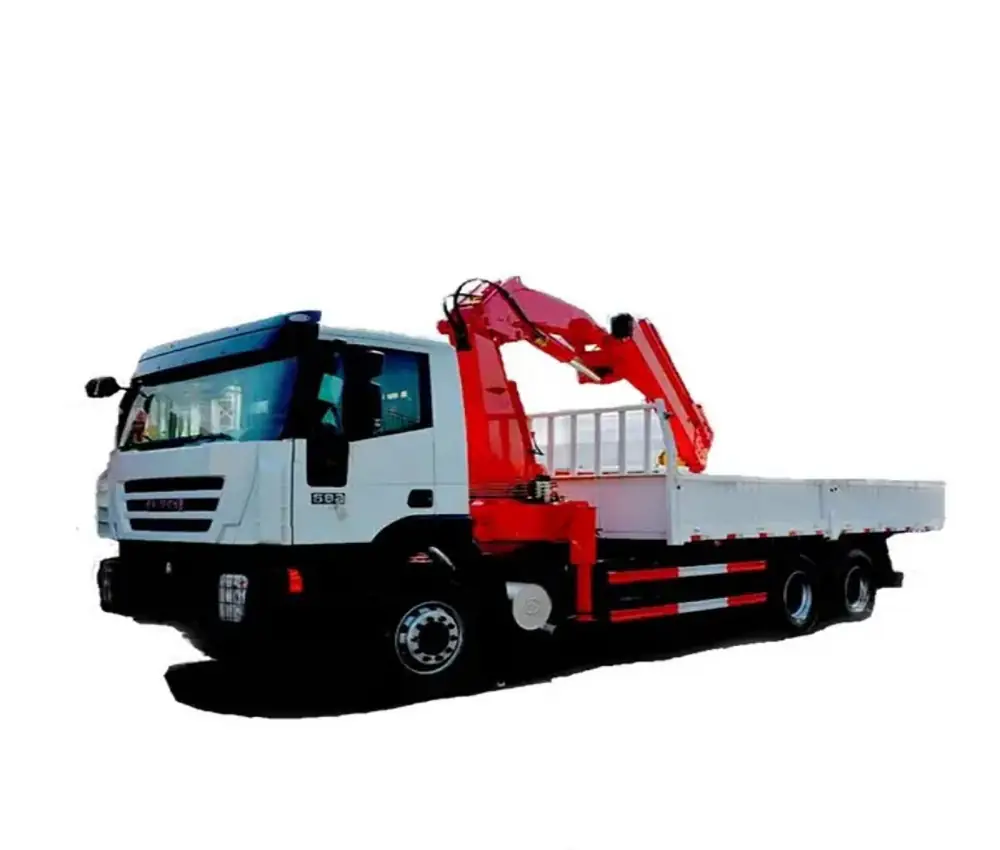
The CNFORCE SQ12ZK3Q is a 12-ton telescopic truck-mounted crane for applications that combine cargo transport with on-site lifting.
| Key Specification | SQ12ZK3Q |
| Maximum lifting capacity | 12,000 kg |
| Rated lifting moment | 30 t.m |
| Maximum lifting height | 12 m |
| Maximum hydraulic pressure | 30 MPa |
| Crane weight | 4,130 kg |
12,000 kg Maximum Lifting Capacity
The 12,000 kg rating defines the crane’s maximum lifting class, but it does not mean that 12,000 kg can be lifted at every working position.
As the load approaches 12,000 kg, the load chart becomes essential. The rated capacity at the target working radius must be sufficient for the actual load. If it is lower, the lifting position or crane capacity needs to change.
30 t.m Rated Lifting Moment
The 30 t.m rated lifting moment describes the relationship between load weight and working distance. For the same load, placing it farther from the crane creates a greater moment requirement.
This makes the rated lifting moment useful for understanding the crane’s lifting capability, but it should not be used alone to determine the allowable load. For long-reach lifting, the load chart at the target working radius remains the more direct reference.
12 m Maximum Lifting Height
The 12 m maximum lifting height indicates the crane’s maximum vertical lifting range. The actual height available during a lifting operation also depends on working radius and boom angle.
For high-level applications, the required height needs to be considered together with the load position. A 12 m maximum figure does not mean the crane can reach 12 m at every working radius.
Telescopic Boom and 360° Continuous Rotation
The telescopic boom adjusts the working distance, while continuous 360° rotation allows the boom to work in different directions around the truck.
Together, these features support lifting tasks that involve different distances and loading positions around the vehicle. The actual working area still depends on the truck layout and available site space.
30 MPa Maximum Hydraulic Pressure
The 30 MPa maximum hydraulic pressure indicates the working pressure specification of the hydraulic system.
This figure can be used to check the pressure requirements of the hydraulic pump, control valves, cylinders, and other components. It should not replace the load chart when determining lifting capacity.
4,130 kg Crane Weight
The 4,130 kg crane weight becomes part of the truck’s total weight after installation.
When the truck also needs to carry cargo, the remaining payload must be calculated, and the final vehicle weight and axle loads should remain within the applicable GVWR and GAWR limits.
Frequently Asked Questions
What Type of Lifting Tasks Is the CNFORCE SQ12ZK3Q Suitable For?
The SQ12ZK3Q is designed for applications that combine cargo transport with on-site lifting, including construction sites, yards, warehouses, and other locations where the same vehicle needs to transport and lift materials.
What Should Buyers Confirm Before Installing the SQ12ZK3Q on a Truck?
Check the truck’s payload, chassis dimensions, GVWR, axle loads, installation position, and remaining cargo space. When the crane and cargo together exceed the vehicle or axle limits, a different chassis or installation arrangement is required.
What Information Should Be Provided When Requesting a Quotation for the SQ12ZK3Q?
Provide the cargo weight, lifting position, required lifting height, approximate working radius, truck chassis information, and intended application. These details allow the supplier to check the required lifting capacity and configuration against the actual task.
Why Is a Crane Load Chart Important When Planning a Lifting Task?
A load chart shows the allowable capacity at different working radii and configurations. When the capacity at the target position is below the cargo weight, the working radius must be reduced or a higher-capacity crane selected.
Does a Heavier Load Always Require a Higher-Capacity Truck-Mounted Cranes?
Not necessarily. A lighter load placed farther from the crane can require more lifting capacity than a heavier load handled close to it. The cargo weight should be compared with the rated capacity at the actual working radius before the crane size is confirmed.
Conclusion
Choosing a truck-mounted crane starts with the actual lifting task. For heavier loads, the rated capacity at the required working radius is the key reference. For high-level lifting, the usable height at that radius needs to be confirmed. Long-reach work requires attention to the load chart after boom extension, while multi-directional loading makes the rotation range important. Frequent lifting also makes hydraulic flow relevant to operating speed.
The truck must also have enough remaining payload and axle capacity after installation. If you are looking for a 12-ton truck-mounted crane, the CNFORCE SQ12ZK3Q provides a 12,000 kg maximum lifting capacity, 30 t.m rated lifting moment, 12 m maximum lifting height, and 4,130 kg crane weight.
If you are planning a lifting and transport application, send CNFORCE your load weight, lifting height, working radius, and truck chassis specifications to discuss a suitable configuration for the SQ12ZK3Q.