Key Takeaways
• The right side lifter should match the container size, load weight, and handling needs.
• The working site should provide enough space and suitable ground conditions for loading and unloading.
• Buyers should compare lifting capacity, power, control method, and container securing features.
• The final choice should be based on daily handling needs rather than lifting capacity alone.
Introduction
Choosing a side lifter involves more than checking its maximum lifting capacity. The container size, load weight, handling task, and working site all affect which model is suitable.
A suitable model should handle the required load and fit the way containers are loaded, unloaded, and transported. If the equipment does not match the actual working conditions, lifting and positioning containers can become more difficult and less efficient.
The first step is to understand what the equipment needs to handle in your daily work. This provides a practical basis for comparing different models.
How to Determine the Basic Specifications of a Side Lifter?
Start with the container size, load weight, and handling task to define the basic requirements.
Choose the Right Container Size and Compatibility
Choose a model that matches the container sizes you handle most often.
If a transport company regularly handles both 20ft and 40ft containers, choosing a model that supports both sizes can reduce the need for different lifting equipment. If most jobs involve only 20ft containers, a model designed for that size may be sufficient.
Container sizes can be identified by checking their dimensions and relevant markings. ISO 668:2020, published by the International Organization for Standardization (ISO), defines the dimensions and ratings of Series 1 freight containers. This provides a standard reference for identifying common container sizes. Buyers should still check the equipment specifications to confirm that the selected equipment is compatible with the containers they handle.
Determine the Required Lifting Capacity
The lifting capacity should meet or exceed the maximum total load you expect to handle.
When determining the required capacity, consider both the container and its cargo, rather than the cargo weight alone. If your work often involves heavily loaded 40ft containers, a higher-capacity model may be more suitable than one that only just meets the required capacity.
For safe and stable operation, the equipment should always be operated within its rated capacity.
Match the Side Lifter to the Handling Task
The right equipment should match the way containers are handled during daily operations.
Consider whether your work mainly involves loading containers from the ground, unloading them at delivery sites, or transferring containers between vehicles. The frequency of these tasks and the locations where they take place can also affect the type of equipment you need.
A standard shipping container trailer may be suitable for transporting containers between two warehouses with fixed lifting equipment. A side lifter may be more suitable when containers also need to be loaded or unloaded at customer sites or other locations where lifting equipment is not readily available.
How to Check Whether a Side Lifter Fits the Working Environment?
After defining the basic specifications, make sure the equipment can work properly at your actual locations.
Evaluate Ground Conditions and Stabilizer Requirements
The U.S. Occupational Safety and Health Administration (OSHA) states that suitable ground conditions are important for keeping lifting equipment stable.
This is especially important when a side lifter works at construction sites, warehouses, or on unpaved ground. Uneven or soft ground can affect the stability of the equipment during lifting.
So, before purchasing, check whether there is enough space to extend the support legs and whether the ground is firm enough to provide stable support.
Check the Space Available for Side Loading
Side loading requires enough open space beside the vehicle. Walls, fences, parked vehicles, buildings, and stored materials can reduce the available lifting area.
For example, a site may have enough room for the truck to enter but not enough space beside it to complete the lifting operation. In this case, the container may not be placed in the required position, which can make loading or unloading difficult.
So, before purchasing, check the space beside the vehicle as well as the area where the container will be placed. A simple site check can help confirm whether the selected model will fit the actual working area.
Consider the Transport Route and Operating Locations
A side lifter used across multiple locations may face different ground, space, and access conditions.
A model that works well at one site may not be equally suitable at another. This can affect how easily containers can be loaded, unloaded, and positioned.
Before purchasing, consider the conditions along your regular transport routes and at the locations where containers are handled. The selected model should be suitable for the range of conditions it is expected to encounter.
Which Features Should You Compare When Choosing a Side Lifter?
Once the basic requirements are clear, compare the features that affect daily use.
Compare the Hydraulic System and Power Configuration
The hydraulic system and power source should provide enough power and control for the containers you need to handle.
When comparing models, check whether the hydraulic system can provide smooth and stable lifting under the expected load. For frequent handling of heavy containers, also check whether the engine or other power source provides sufficient power for the lifting operation.
The power configuration should also match the way the vehicle will be used. If your work often involves heavy containers, a model with suitable hydraulic performance and power may be a better choice.
Evaluate the Control Method and Operating Convenience
The control method can affect how easily the operator can position and handle the container.
When comparing models, check whether the operator can clearly see the container and control its movement during lifting. The controls should allow the operator to make adjustments smoothly and maintain a clear view of the working area.
Remote control is one option that can provide greater operating flexibility. It allows the operator to control the lifting movement from a suitable position while keeping the container in view, which can be useful when the vehicle itself does not provide a clear view.
Check Container Locking and Transport Security
The container should be properly secured after it has been loaded.
When comparing models, check how the container is connected and held during lifting and transport. A suitable locking method helps keep the container in place while the vehicle is moving.
This is an important part of the purchase decision because lifting performance alone does not cover the complete handling process. Buyers comparing a side-loading solution with a container lift trailer should also consider how the container is secured during transportation.
Why Choose the CNFORCE MQH37A 37 Ton Side Lifter?
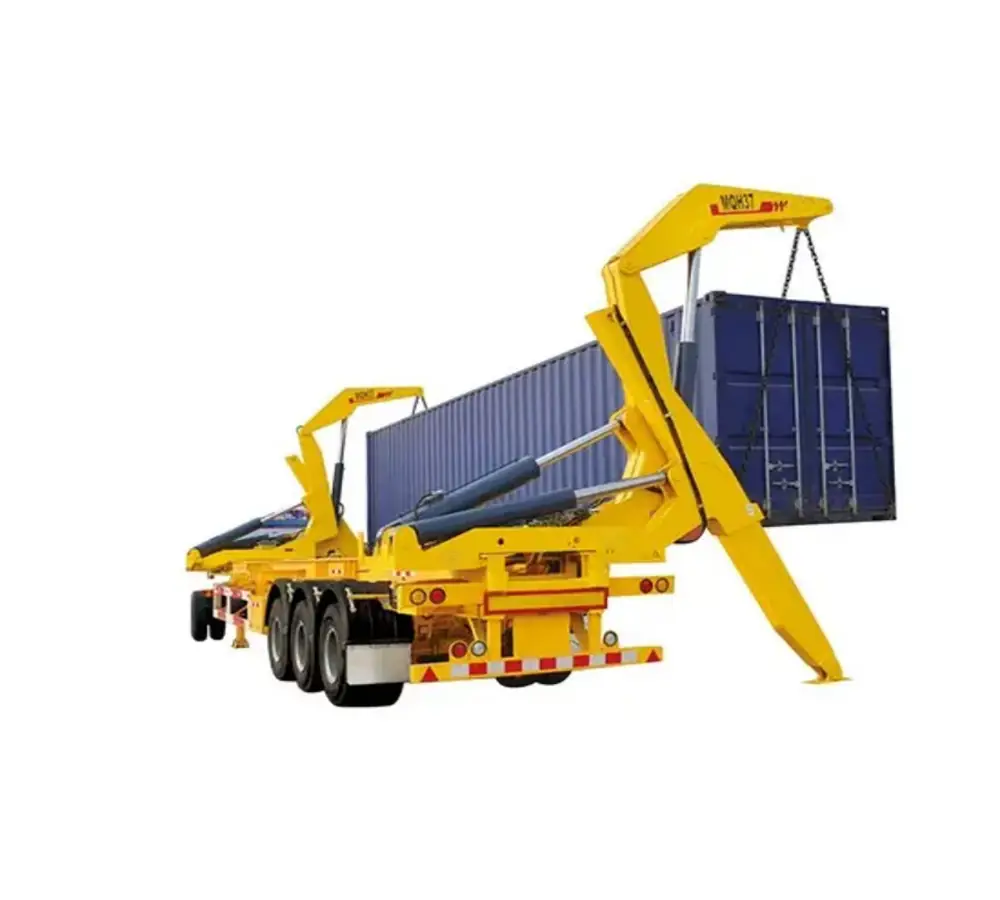
The selection criteria above provide a basis for evaluating whether a specific model fits a particular operation. The CNFORCE MQH37A can then be assessed based on its configuration, operating functions, and key specifications.
| Specification | MQH37A |
| Lifting Capacity | 37,000 kg |
| Container Size | 20ft / 40ft |
| Engine Output | 36.5 kW @ 2,600 rpm |
| Gross Mass | 52,000 kg |
| Crane Unit Tare | 7,000 kg |
One Configuration for 20ft and 40ft Containers
The MQH37A is configured to handle both 20ft and 40ft standard shipping containers.
For operators that regularly handle both container lengths, this provides a broader working range within one vehicle configuration. It can simplify equipment planning when container requirements vary between customers, transport jobs, or delivery locations.
This configuration is particularly relevant for buyers who do not want their daily operations to be limited to a single container size.
Independent Power for More Flexible Operations
The MQH37A uses an independent engine to power its lifting system, giving the vehicle its own lifting power during container handling.
This configuration can reduce dependence on fixed lifting arrangements when containers need to be handled at different locations. The same vehicle can carry the container and perform the required lifting operation, which can simplify handling when working locations change frequently.
For buyers, this means the vehicle configuration can be considered for operations where lifting requirements are not limited to a single fixed site.
Wireless Control for Better Operator Visibility
The MQH37A uses wireless remote control for its lifting operation.
The operator can control the lifting movement while maintaining a direct view of the container. This allows the operator to adjust the lifting movement according to the container’s position and the surrounding working area.
For operations where container placement requires close visual observation, this control arrangement can make the lifting process easier to monitor.
Container Securing Across the Transport Stage
The MQH37A includes container securing features to support the transition from lifting to transportation.
Once the container has been positioned on the vehicle, it needs to remain properly held during transport. The securing arrangement therefore forms an important part of the vehicle configuration, rather than being separate from the lifting process.
For buyers, this means the selected equipment should be evaluated as a complete handling solution, covering both container positioning and the transport stage that follows.
Frequently Asked Questions
What Is the Difference Between a Side Lifter and a Container Trailer?
A side lifter combines container transportation with an integrated lifting function. A container trailer is mainly designed to transport containers and normally requires external lifting equipment for loading and unloading.
What Type of Operation Is the MQH37A Suitable For?
The MQH37A is suited to container transport operations that require both lifting and transportation across different locations. It can be considered when operators regularly handle different container sizes and need a vehicle configuration that can support container handling as part of the transport operation.
What Should Buyers Confirm Before Ordering a CNFORCE MQH37A?
Buyers should confirm the container sizes and maximum loads expected in daily operation, together with the locations where the vehicle will be used. Transport requirements, operating conditions, and the expected frequency of container handling should also be communicated before the final configuration is confirmed.
How Does the MQH37A’s Gross Mass Affect Vehicle Selection?
Gross mass represents the total weight of the vehicle in its specified configuration. The MQH37A has a gross mass of 52,000 kg. Buyers should consider this figure together with the expected container load and applicable transport requirements when evaluating the vehicle.
What Does Rated Lifting Capacity Mean for a Side Lifter?
Rated lifting capacity refers to the maximum load a side lifter is designed to lift under specified operating conditions. Buyers should consider the total container load, including both the container and its cargo, and ensure that the equipment is operated within its rated capacity.
Conclusion
Selecting the right side lifter requires more than comparing lifting capacity. Container size, total load, handling tasks, working conditions, and operating requirements should all be considered before making a purchase.
For operators handling different container sizes across multiple locations, the CNFORCE MQH37A combines container lifting and transportation in one vehicle configuration. This can simplify equipment planning when container handling needs vary between jobs and locations.
With its practical configuration for container handling and transport, the MQH37A can be considered for operations that need a flexible solution for regular container movement.If you need help choosing a suitable model for your container handling needs, contact CNFORCE for more information and support.