Wrecker trucks (road rescue tow trucks) are essential special vehicles for urban traffic maintenance, highway accident disposal and parking lot management. Different vehicle failures, road obstructions and traffic accidents require matched wrecker models for standardized disposal. Many rescue teams cannot accurately match truck types with working scenarios, resulting in low efficiency, secondary vehicle damage and potential safety hazards. This article introduces the mainstream types and practical application scenarios of wrecker trucks based on real road rescue experience.
1. Flatbed Wrecker Truck | Universal Urban Rescue Model
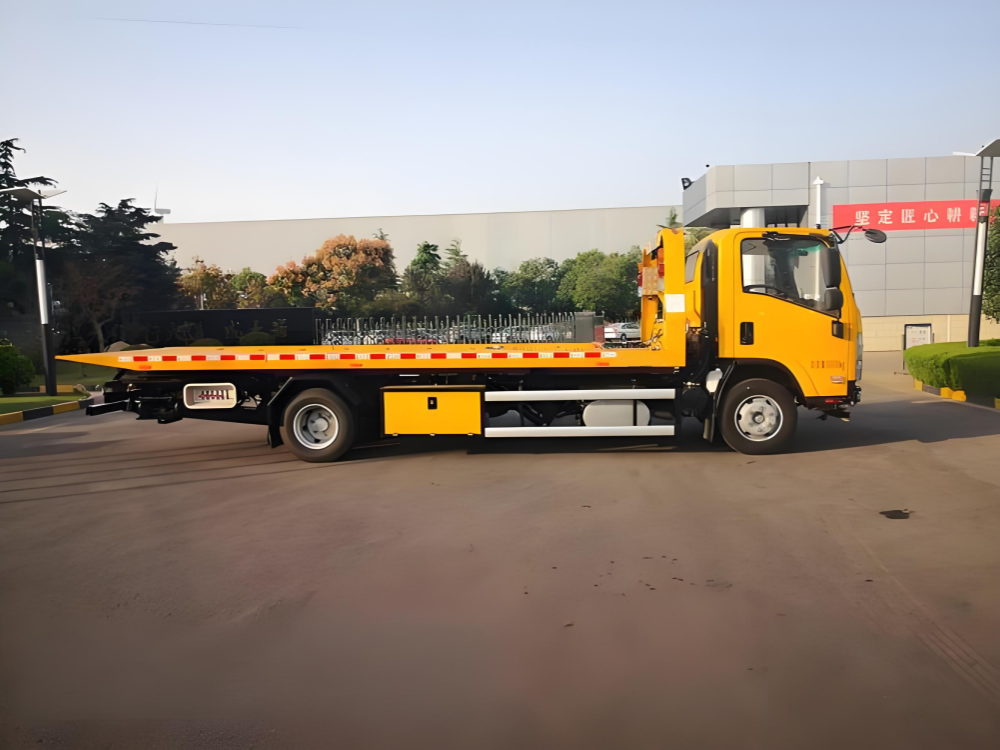
The flatbed wrecker is the most widely used basic rescue vehicle in urban areas. Equipped with a hydraulic tilt and sliding flat platform and rear traction arm, it supports one flatbed loading plus one rear towing, commonly known as one-truck dual rescue. Featuring flexible operation and mild loading mode, it causes little damage to faulty vehicles.
Practical Uses
It is mainly used for rescuing sedans, SUVs and small vans. Suitable for daily road breakdown rescue, parking lot illegal towing, community road obstruction clearance and minor fault transfer. The full flat bearing design keeps the vehicle tires suspended during transportation, effectively protecting the chassis, gearbox and wheels from secondary wear. It is the standard model for urban traffic management and civil rescue companies.
Limitations: Only applicable for light-duty passenger cars, unable to lift or rescue heavy trucks and overturned large vehicles.
2. Integrated Tow-Crane Wrecker | Medium-Sized Accident Rescue Model
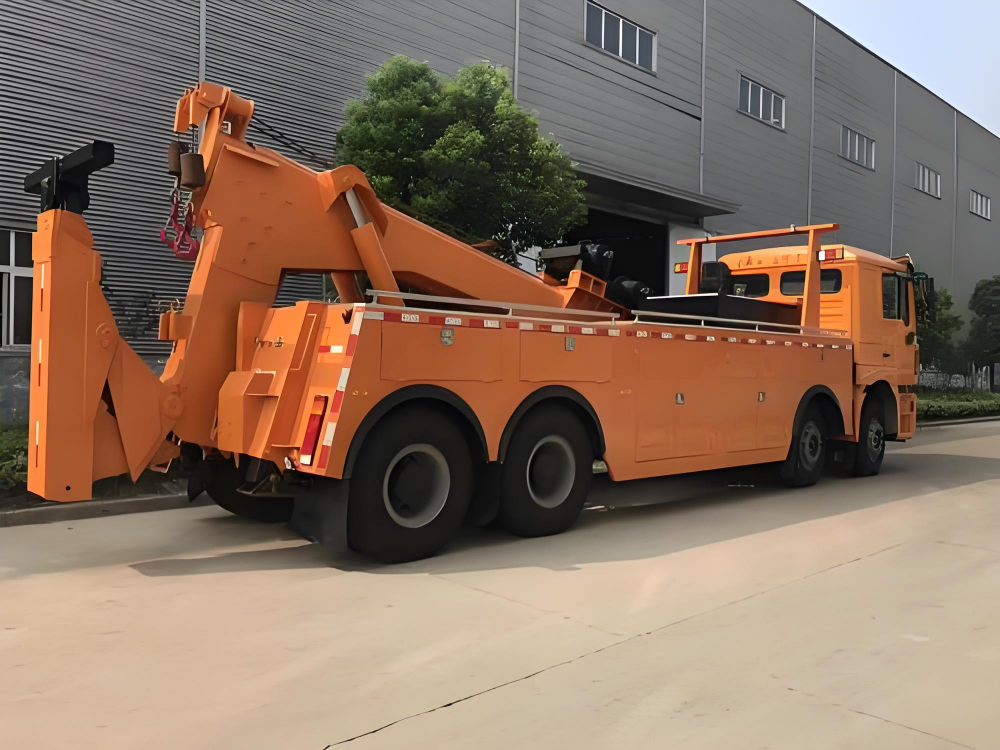
The integrated tow-crane wrecker adopts an integrated structure of towing arm and lifting arm, with compact body and fast response. It needs no accessory replacement and can complete vehicle lifting, towing and simple rescue operations in a short time.
Practical Uses
Ideal for minor accidents on urban expressways, national and provincial highways. It handles light truck breakdown, roadside slipping, tire locking and chassis bottoming faults. It can quickly right and tow vehicles stuck on road shoulders to clear traffic congestion, making up for the inability of flatbed wreckers to handle simple vehicle trapping problems.
Limitations: Limited lifting capacity, not suitable for heavy-duty vehicle rollover and heavy accident rescue.
3. Separated Tow-Crane Wrecker | Professional Highway Rescue Model
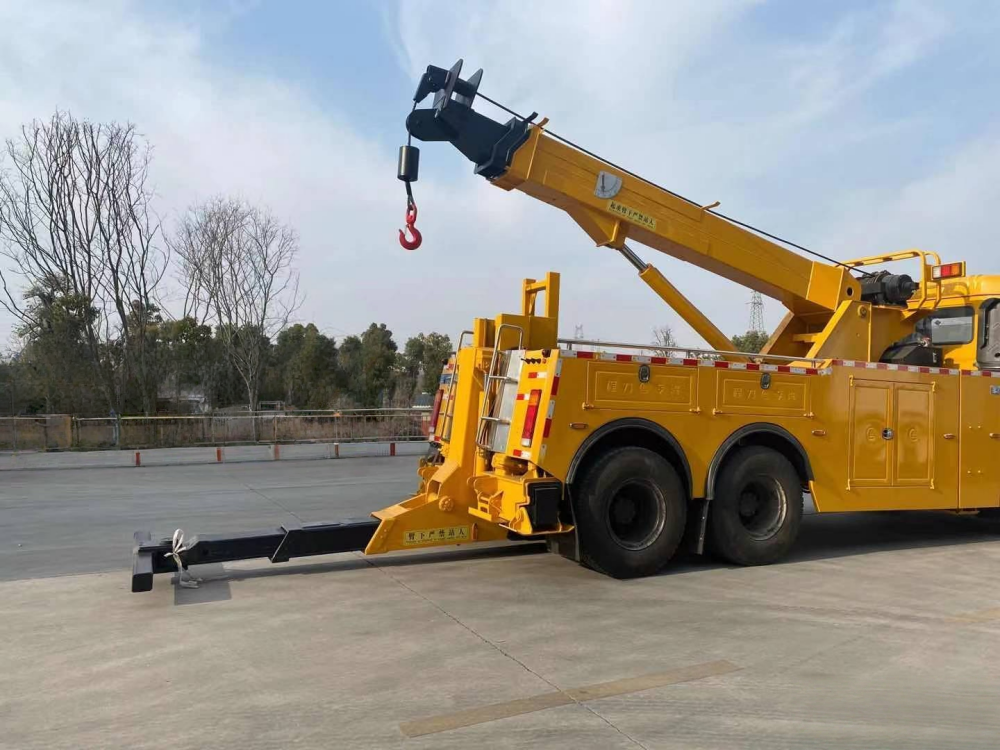
The separated tow-crane wrecker is a professional medium and heavy-duty rescue device. The independent crane and towing arm work separately, with rotating and telescopic lifting functions and strong load-bearing capacity. It is the mainstream equipment for formal highway rescue teams.
Practical Uses
It is used for rescuing medium-sized trucks and large passenger buses, dealing with highway accidents, vehicle roadside sinking, slight rollover and complex road condition trapping. The independent lifting structure realizes precise hoisting and force dispersion, safely righting vehicles on slopes and soft roadbeds and reducing rescue damage.
4. Heavy-Duty Rotary Crane Wrecker | Severe Accident Special Model
Equipped with a full-rotation hydraulic heavy crane, the heavy-duty wrecker has large lifting tonnage and stable operation performance. Built on a heavy-duty truck chassis, it is specially designed for extreme road rescue scenarios.
Practical Uses
It exclusively handles severe traffic accidents and heavy vehicle faults, including semi-trailer rollover, heavy truck trapping, full vehicle road deviation and heavy cargo overturning. It completes high-difficulty operations such as integral vehicle righting, heavy lifting and obstacle removal. It is only equipped by professional highway rescue and road administration departments for extreme emergency rescue.
5. Mini Light Wrecker | Narrow Space Special Model
The mini wrecker features narrow body and flexible steering, capable of entering confined spaces where large wreckers cannot reach. It is lightweight, flexible and highly efficient for frequent small-scale cleaning work.
Practical Uses
Suitable for underground garages, commercial parking lots, community narrow roads and alleyways. Mainly used for illegal parking clearance and small car fault towing in narrow environments, meeting refined daily traffic management demands.
6. Professional Scenario Selection Guide
1. Urban daily rescue and parking lot management: Choose flatbed wrecker trucks for high protection and high efficiency;
2. National/provincial highway minor vehicle trapping: Choose integrated tow-crane wreckers for fast response;
3. Highway medium-sized vehicle accident rescue: Choose separated tow-crane wreckers for stable and safe operation;
4. Heavy truck rollover and severe road accidents: Choose heavy-duty rotary crane wreckers;
5. Underground garages and narrow road cleaning: Choose mini light wreckers.
7. Conclusion
Each type of wrecker truck has fixed applicable scenarios without absolute advantages or disadvantages. Flatbed wreckers focus on daily general transportation, tow-crane models specialize in accident rescue, heavy rotary cranes cope with extreme dangers, and mini wreckers adapt to narrow spaces. Reasonable equipment configuration based on actual service scenarios can ensure standardized and safe rescue while improving overall traffic operation efficiency.